 Snaring
the Bohunk
Snaring
the Bohunk
How
the Man-Catchers of the Northwest Lure the Helpless Laborer to Intolerable
Conditions in the End-of-Steel Villages
By W.
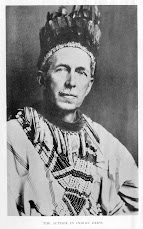
LACEY AMY, Author of “Finding a Railroad Route O’er the Northern Rockies”
From The
Advance Advocate, published by The International Brotherhood of Maintenance of Way Employes Detroit, Mich., October 1, 1913 No. 10 VOL. XXII
Notes about this article: First, I preserved the spelling, ‘Employes’
as used in this 1913 magazine. This piece took a long time to locate. The
search for the writings of Lacey Amy is now in its second year. The original
reference to this story was through Google Books, which has many deficiencies
for those of us in Canada, supposedly because of copyright issues…The reference
located, indicated the publication The
Railroad and Current Mechanics, (R&CM)
XVII (May, 1913), 274-84. The terrific magazine index at http://www.philsp.com/ appears to indicate
there is no such issue!!! An enquiry at the Library of Congress, resulted in
Cheryl Adams of LoC, sending the Table of Contents for May 1913 of the magazine
Railroad Man’s Magazine, which
presumably indicates that R&CM
did not yet exist, again!!! Anyhow, by doggedly using Google search, another
magazine appeared, Advance Advocate,
with the article and Lori B. Bessler, Reference Librarian with Library Archives
of Wisconsin Historical Society, kindly supplied a perfect PDF file, yesterday.
Some poking around this morning, showed that some of the issues of Advance
Advocate are available on the Hathi Trust website, which sadly again
has issues with Canada! Finally, the reader should notice the reference on the
last line of this post which confounds! Anyhow here is the article:
Doggedly,
dully, despondently, a line of weary men winds eastward along the rugged tote
road that clings to the mountainside a thousand feet above the tumbling Frazer
River.
In the
tar-papered, canvas-roofed hospital at Fitzhugh the helpless doctors watch the
cold hand of pneumonia grip the unresisting foreigner whose dying wish they
cannot interpret.
Beside the
railway grade a cross of rough boards at the head of a rudely fenced mound
bears only the name, “Robert Mathers. U. S. A.”
Beneath the
terrible whirlpools and rapids of the Frazer Cañon scores of men sleep
forgotten and unnamed.
When the order
goes out for the laying of steel it is not the cost in men that is reckoned.
When a railway cuts and blasts and digs its relentless way through a mountain
pass like the Yellowhead of the Northern Canadian Rockies the payment in human
lives is the chapter of construction that is never unfolded.
Wandering
Americans, derelict Englishmen, Poles, Swedes, Italians, Hungarians, Bulgarians
and Russians who have yielded to the temptation of foreign gold, drop from the
lists of the living unnoticed and unmourned.
These are the
penalties of construction: the uncounted cost of humanity of the demands of
commerce; the payment in blood for the gain in gold.
That long chapter
of the pitilessness of progress in the history of the construction of the Grand
Trunk Pacific through the Yellowhead Pass is not the less interesting because
it is unwritten. Danger to human life makes absorbing reading; but the
contractor cannot be expected to recognize the whims of the public.
That wonderful
“system,” the most complete in modern life, that entices the bohunk—as the
laborer is called—into the mountains and keeps him there under the untrammeled
control of his taskmasters, is at its highest point of development in the
chloroforming of the public.
Its anxiety for
privacy is not necessarily an acknowledgment of fault—the contractor has too
lofty an idea of his share in the advance of civilization for that—but an
appreciation of the suffering bohunk, ignorant, unsophisticated, unversed in
the ways of the new country, stolid and uncomplaining, as the ideal object for
hysterical sympathy.
The hands of the
contractors are too busy with the vagaries of such a man to allow him the added
weight of popular sentiment.
Besides, there is
that which the contractor dare not publish. Even the callous would cry out at
the revelation. Truly, the greatness of the system is in its own concealment.
Between the
contractor and the bohunk is a constant struggle of wits. The first has all the
advantage of brains, experience, dollars, and the remoteness of the law, but
the second stands almost on a level through his disregard for all restraint
save the human fist.
At the first
stage of negotiations the bohunk is at a disadvantage. The employment agent is
willing to promise anything. Agents in the eastern provinces and in the United
States, who know nothing of conditions, and care less, pocket their commissions
and leave the contractor to settle with a disgusted workman.
At
Mile 53, B. C., a lump of a youth wandering hungrily around the cookhouse caught
my attention. The day before I had noticed his big shock of fair hair and his
face unaccustomed to the razor. This day, as I came from a hearty dinner, his
hollow eyes and ravenous face spoke plainly of starvation. I spoke to him and,
after he had eaten with the avidity of long hunger, controlled only by the
embarrassment of novelty, he told me his story—one of a score I heard.
Boy
Helpless in Wilderness.
A week before,
full of the idea of getting into an engineers’ camp on construction as a
start to an engineer’s career, he had approached an employment agent in
Edmonton.
Of course the
agent had just what the boy wanted, and, after the commission had been paid,
the boy was shipped into the mountains.
Only as far as
Fitzhugh could the young fellow buy his way, and the next seventy miles he
covered on foot or bumpers.
When he arrived
there was no position for him; the contractors have nothing to do with the
engineers’ camps. The only thing open to him was work on the grade with the
foreigners a hundred miles further on in the wilderness, and this he would not
accept.
For a day he had wearily watched us coming
satisfied from the cookhouse, but there was no way to slip in unnoticed where a
man stood at the door and collected tickets.
I bought him
several meals, and one early morning, just before the uncertain train left for
Fitzhugh, he came to my tent and bade me a shaky farewell. He was going to try
to steal a ride out.
He would accept
no money. He was in a humor that would make him shoot the man who opposed him.
I never saw him again. Perhaps the train-agent had pity on him.
The agent in the
employment office at Edmonton, Alberta, is the last public step of the system.
The door closes on the bohunk as soon as he leaves the front and, with the
shutting off of the outside glare, he passes immediately into the clutch of the
man-catcher, a trusted employee who is a vital part of the struggle to keep the
grade manned.
How
Man-Catchers Work.
The man-catcher
is a big personality, strong in mind and muscle, a man whose pay-check calls
for diplomacy, daring, bluff, and heavy fists.
At the door of
the employment office his hand closes on the bohunk and grips until the end of
steel is reached. Alone he must handle thousands of lawless, reckless
foreigners. Alone he must watch their every mood, anticipate every moment of
repentence, rush them along to the tune of his own wishes, and finally deliver
them to the camps far in the mountains.
Back and forth
between the work and civilization he flits, bringing in a half hundred men
today; turning back a half-dozen deserters tomorrow, and rushing out to the
front for another gang before the last has made up its slow mind.
Promising,
threatening, wheedling, even fighting viciously, he spends every waking hour in
the effort to convince the “hunk” that the work of construction is best for his
pocket—or his skin. The man-catcher is a strategist first, but always a slugger
and bully.
At Mile 28, B.
C., the end of steel at that time, a man-catcher unloaded a crowd of foreigners
for the grade many miles beyond. Weighted down with the variety of impedimenta
affected by the bohunk, they staggered along the rough grade
to Mile 44.
Then, tired and
disgusted, they determined to turn back. The arguments and petitions of the
man-catcher had no effect. Thereupon he promptly backed against a rock, drew a
revolver, and fired straight into the crowd.
One man took the
bullet in his hip—and the rest trudged terrified on to the end of grade.
Sneered
at New Victims.
Later an
itinerant constable heard of the affair and arrested the man-catcher. He was
fined one hundred dollars. It was a cheap gang at that. Only one man-catcher
has been fined for carrying a revolver—just one—and his estate would draw
the first week’s wages of a man-catcher without a revolver.
Arrived a couple
of miles from the end of steel and the main construction camp where the train
dumps its living load, the bohunk is like a stranger in a great city.
The man-catcher
has completed his work at that point and is glad to drop the responsibility.
Two hundred
foreigners stepped off the train one night there at the far edge of the
Rockies. On a siding about forty box cars poured forth their clamoring occupants
to meet the crowd that climbed doubtfully from the colonist coaches of the
train.
There was no word
of greeting, no smile of welcome; only a few sneers and gibes and gapes of
frank curiosity at the men who willingly undertook to sell themselves into the
life they were living.
Perhaps the old
hands were of a different nationality and knew not how to welcome, but it was more
like the sophomore criticising the freshmen without the restraint of
civilization.
The newcomers
dropped stiffly from the platforms, looking hesitating about at their future
home, blinking feebly at the cynical workmen drawn up, hands in pockets, to
laugh at them as they had been laughed at a month or two before.
Inside
the Jaws of Death.
Some of them
struck up the track for the first empty cars that offered a roof. The rest
wandered into the bush beside the track leading to Sand Creek, an end-of-steel
village not far away.
It was the first
step in “doing as the Romans do.” For the end-of-steel village is the beginning
for most of them—as it is the end of many.
An end-of-steel
village is a wart on the face of the earth. It is a blemish no doctor treats;
it goes on fostering its own corruption until it spreads to the poor bohunk
wild for excitement and relief and forgetfulness.
It settles down
just three miles from the very end of steel, for the contractor maintains
control of that three-mile radius and does his best to keep the men from the
baneful influence.
The score of log
shacks that form the village extend along an indefinite street and close in on
the visiting bohunk after a wink of invitation.
But inside are
jaws of death. Pool-rooms are the most respectable of the buildings, and the
entire gamut of crime and debauchery is covered, down to the little hut whose
red blind is its advertisement.
“Free Bunk House”
is the sign over the door of a dirty hovel provided in the end- of-steel
village by the contractors with the knowledge that the life of drink and carousal
there is best met by a place close at hand wherein to sleep it off.
Perhaps the
bohunk reports for work next day—perhaps he doesn’t. Some of them make their
last report with a doped glass in their hands or a knife between their ribs.
Divekeepers
Fleece the Bohunks.
In Sand Creek one
night a dozen gambling hells were drawing their last cents from some bohunks
blind with the glare and blare of the excitement.
A crowd surged
out from one bright door. It was following a struggling, tearing pair of
men—one the proprietor of the place and the other a bohunk.
“It’s such drunks
as you put this place on the bum!” shrieked the proprietor.
The sentiment,
not the humor of it, caught the crowd and there was a cheer of applause. A
group of men ran from the doors of surrounding shacks. There was a sudden
furious mix-up in the mob —and the next minute they were tossing to one side
the limp body of the foreign workman.
There is no
chance for the poor bohunk in an end-of-steel village where all the
divekeepers club together for their mutual welfare.
The character of
the bohunk himself is largely responsible for the dangers of construction.
There in the
wilds the foreign nature of him maintains its course unimpeded. His instincts
bring his own destruction, his resistance to sanitary control makes him his own
victim, his carelessness adds daily to the list of dead and injured.
Civilization is
too far distant to force him into conformity with its rules. The contractor has
not the power, even if he possessed the wish, to incur the opposition of the
foreigner to sensible conservation.
The bohunk sees
no necessity, except under compulsion, of observing anything but his own
untamed desires. He sickens, he dies—it is fate, just fate. He kills himself
or his friend—it is not his business except to revenge.
Late one night
last summer the engineers at Mile 47 were awakened by agonized cries from the
grade below.
Poisoned
by Desperate Tramps.
Rushing down,
they found a half-clad bohunk lying on the rocks, evidently in the throes of
death. With great difficulty they carried him down the five-hundred-foot cliff
to the barracks of the provincial police on the banks of the Frazer River.
Two hours later
the man died, but he had managed to unfold a tale that was not uncommon in the
Yellowhead Pass.
With two unknown
companions he had been tramping
out to the front. For supper that
night he had been given a cake by one of his companions. Its bitter taste was
remembered when a terrible pain seized him a few minutes later. When he attempted
to escape along the grade to the barracks his erstwhile friends stripped him of
everything but his underclothing.
The murderers
were never caught. Among the thousands on construction two foreigners can too
easily escape detection—and no questions are asked of the bohunk.
Force is the only
arbiter of their quarrels. The pistol may be less bright than it was years ago
and the knife better concealed, but both still flash at slight provocation.
When the result
is fatal none saw it happen or can speak intelligible English. Many an unmarked
grave awaits the random spade of the years to come. Men with wounds of evident pistol or knife origin
conceal them so long as they dare, and then receive medical attention in stolid
silence.
The law cannot
requite them; some day they will be well enough to hold the knife again.
One Sunday
morning, on the irregular train between the end-of-steel and Fitzhugh the
railway divisional point of the mountain section, a big Swede sat sullenly
nursing a bandaged hand.
Driven
Insane by Wound.
Suddenly he
sprang into the aisle and tore up and down in a frenzy of pain that he bad long
been fighting. After a fierce struggle we managed to force him into the baggage
car and there unbound his swollen hand.
A long cut on the
back of it, evidently the slash of a knife, had been concealed so long that the
poison had driven him momentarily insane. From my medicine case I was able to
give temporary relief, but only constant bathing kept the man down during that
long ten-hours’ trip through the mountains to the Fitzhugh hospital over the
seventy miles of unballasted railway.
The Swede stubbornly
insisted that he had fallen on a piece of glass, but a friend admitted that his
antagonist in the fight was in the hospital with a bullet through his chest.
When the knife
cut would not heal the wounded man had first applied soap, then a piece of
pork, and at length, when the poison was sealed in the wound, peroxide of
hydrogen.
Perhaps he
recovered. If he did there has probably been another fight since—if the
bullet-hole through the chest resulted as fortunately.
Many of the
maddest fights can be laid to the account of the horrible concoctions of liquor
surreptitiously served in the Pass.
Bad
Liquor Smuggled In.
The laws of
construction forbid liquor, but that only adds to the profit of the whisky
runners. Eight dollars a bottle—more than four days’ earnings, after meals are
paid for—is not a prohibitive price for the bohunk to pay.
At the
end-of-steel villages the liquor is doped with poisons that sap fear and
vitality alike.
Police and
contractor combine against the whisky runner, but the cry for more is too
insistent, the reward of success too great. Baggage is searched, wandering men
are questioned, but the discovered liquor is only a small fraction of what
reaches cache near the camps.
Lying one night
on the shores of a lake beside the grade I was awakened by a sudden noise from
the blackness over the water. An instant later another sound came from a
different direction and close along the shore beside me.
Then a deep silence
fell. It was broken quickly by the rattle and splash of furious rowing out on
the lake, answered close at hand by equally energetic paddling.
For some time the
course of the chase could be followed by the noise. It was evident the rowers
were drawing away from the lone paddler. The pursuer stopped, a revolver shot
rang out, but the rowing continued.
Next morning I
learned that another load of liquor had succeeded in slipping past a dangerous
point on the grade, a favorite watching place of the police where the mountains
crowd tightly down to the water’s edge and passage is possible only by the
narrow grade or by water.
Eat
Dynamite in Bravado.
The whisky
runners had taken to the water far back on the grade, and sailing silently
before the wind under cover of the darkness, had been revealed to the watching
policeman only by an accidental noise.
Within the next
five miles they would be forced to the shore by the rapids of the Frazer, and
would creep forward to their cache through the forests of the wider valley.
Where foreigners,
rocks, dynamite, axes, and cliffs mingle accidents are bound to happen; but the
majority of them come from carelessness. Ignorance and familiarity are certain
to pay a heavy toll to dynamite and rock slide. The worst dynamite disaster
occurred in the fall of 1911, when a heedless act blew a gang of eight to the
big list of fatalities.
The little shacks
sunk in the sides of the mountains far from any camp reveal the care of the
contractor* in the storing of that which the “rock-hogs” treat as lightly as a
stick of candy—a simile all’ the more appropriate since bits of dynamite are
sometimes actually eaten in bravado.
The system of
construction is itself a menace to the workmen. The actual work of a mile of
grade may be divided among a score of little contractors, many of whom perform
their portion with the assistance of a few friends or relatives.
A couple of men
will dig or blast through a score of feet only, and since their one idea is to
make all the profit possible. there exist conditions that insure the minimum
of safety.
Trusting to luck,
they neglect precautions obviously demanded by the work to be performed.
Dynamite is carelessly placed, the distance of retirement for the blast is
inadequate, and no time is wasted in waiting for unfired charges.
Dirty
Quarters Breed Disease.
Into a huge bank
that must be removed they' run a weak crib that may crumple like paper beneath
the pressure of the earth. Inefficiently housed and fed, they think to profit
at the cost of their bodies; and they fall victims to every disease that
threatens.
Pneumonia and
typhoid fever are fought single-handed by the contractors. The penalties
exacted by neglect of sanitary precautions never impress themselves on the
men. Inconvenience and momentary discomfort are more disagreeable to the bohunk
than germs.
The dangers of
typhoid are preferable to the bore of cleanliness.
The selection of
a camp’s location is an important care. A contractor pitches his camp on a
dimpling mountain stream, but the. best of conditions are negatived by the
carelessness of the bohunk. He dies without self-censure, or recovers without
a lesson, recklessly spreading the disease among those who realize the danger.
The stream that
seemed so permanent when the camp was located may have been but the irregular
flow of mountain rains or uncertain glaciers, and the week afterward the bed
may be dry.
Perhaps a mile
above the first camp another contractor locates, mindful only of his own
convenience. Immediately safety ceases for the camp below.
During 1912 the
freedom from typhoid was unusual, but the previous two years had their moments
when something like a panic seized the workmen. The number of deaths among the
engineers in 1910 proved what a general menace the bohunk can be.
Gang
Buried in Slide.
Indigenous to
mountain construction are snow and rock slides that sweep away grade or tote
road with Little warning. Here and there a thunder of rock from the heights
above tears down upon these trails of men and blots everything out before it
in a smother of debris—and none can tell of the wandering bohunks who went down
with the slide.
Five hundred feet
below grade in the shadow of Mount Robson a li^ige gouge a hundred feet deep is
torn in the opposite bank of the Frazer River.
A year ago a
mountain lake that had nestled thousands of feet up in the mountains unknown
to the engineers and contractors broke through its banks, rushed down upon the
grade, swept it smooth to the last shovel, and bored its countless tons of
water and rock into the valley a half mile below.
During the rains
of the early spring of 1912 a gang of foreigners was trudging in to work. They
were warned by workmen they passed that the tote road was dangerous. and while
still within sight, the warning was verified.
The entire gang
was caught helpless in the rush of an immense snow-slide. Only one was rescued
alive. The rest smothered before they could be released.
It is not the
dread of these dangers that drives the bohunk back through the mountains at the
end of his first month’s work. Men pass into the shadows of the hills hopeful
for the profit of their hands, but their fickleness and instability seldom
allow them to remain to the realization of their hopes.
Still hoping,
still unsettled, they wander listlessly back to civilization. Ever the stream
of weary workers pours out through the Pass, staggering, lifeless, sick of
everything behind, the victims of their own vacillation.
Through that four
hundred miles to Edmonton they fight their way or drift down to Port George on
the river currents; eating when the chance offers; trudging over tote road or
grade, or hugging the bumpers—all to reach that new life ahead that is ever
beckoning.
Unprepared they
commence the long trek. Trusting to unsettled mountain passes they may walk for
days with no more to eat than the berries beside the trail, or drop exhausted
to await the mercies of the tramps who follow.
A gang of
engineers in rapid travel down to Fort George came upon a lone bohunk wearily
making his way out from construction. With more than three hundred miles of
manless wilds before him he had but two pounds of rice in his “turkey”—no gun,
no fishing tackle, nothing but a dogged blindness to the future.
Taking what the
engineers offered, he sat down to lighten the load by eating to his capacity.
In the cañons and
rapids of the Frazer the Goat and Giscom Rapids, and the great canon, that
monster of relentless fury—lie the hidden remains of bohunks who have tried
this seemingly easy, down-grade escape from construction.
At every log-jam
are piled their crude rafts and broken scows, silent testimony of the scores
who have disappeared. Any scowman, any laborer along the banks can tell of the
sinking men he has helplessly watched.
The contractors
have not been guiltless in this easy method of transportation. One of them sent
a boat-load of fifty-three through the cañon, a risk that savored so strongly
of attempted manslaughter that it is hard to see the humor in the laughing
description of how the Italians prayed and the Swedes cursed as the scow began to
stand on end in the whirlpools that line the perilous course.
Another
contractor, after starting his engine. shoved it, with an Indian aboard, into
the currents above the cañon. All the Indian could do was to hang on, and only
the fortunate flooding of the engine below the rapids enable him to paddle
ashore. The story is invariably ended with the laughing remark, “or the damned
thing would have been going yet.”
To run the scows
through these river dangers the contractors keep expert river- men and Indians,
but even they sometimes fail to clear the great hole of one dangerous
whirlpool or the rocks that, protrude from the boiling waters.
A rude railway
has been built around the cañon, and now all the supplies that admit of it are
trans-shipped by this method. Those who realize the danger walk around the
point that juts out to form the narrow gulch through which the waters rush, and
from the cliffs above look down on the scowmen in their struggle for life.
One has caught in
his camera the hopeless fight of four Indians, once as they entered the race
of water, and next as they were disappearing to their deaths in the whirlpool;
but the pictures will never be published.
The chief
engineer of construction looked on as his spinning boat, in the charge of two Indians,
whirled its freight of supplies into the water while the Indians hung
desperately to the ropes as the boat stood on end in the whirlpool.
The treatment of
the bohunk far beyond the end of steel will never be fully known. Along steel
the contractor realizes the necessity of meeting the ease of desertion and the
possible visits of annoying reformers with conditions that make life worth living.
But far in on
grade, away beyond the reach of visitors, where the bohunk in flight from his
work takes life in hand, and where detention may be practiced with
immunity—there it is different.
The bohunk who
struggles out knows not the ropes of publicity, or imagines the life he left
characteristic of the country—and is silent. Or he babbles loudly, extravagantly,
with the imagination of the excitable foreigner. And the public is nonplused
for a moment—and then turns to the latest scandal.
Away in there
life is necessarily severe. The conveniences and comforts of steel are
impossible, and frequently the complaints arc based on our demands from civilization.
One dollar a month is deducted
from the men’s wages and, on grade, most of that dollar is profit. There can be
no doubt of the imperfections of the service. Suffering men are often treated
with scant consideration; innumerable instances of this could be given.
In the wilds
there has been found a system that is close to peonage; for the men scarcely
dare resist the absolute power of the only authority present, and retreat into
the wilds is seriously perilous.
But it is easy to
blame too harshly. The bohunk is ignorant and careless, conveniences are
impossible, the law is very far away, and the work must be performed by
reluctant workmen.
The railway is
blameless. The construction is solely in the hands of the contractors. In
fact, the railway company is as sedulously kept in ignorance as is the public.
Blame attaches to
the contractors. While not directly responsible for much that merits criticism,
they have the power to stop it.
It is the dearth
of men, not inherent heartlessness, that is the trouble.
Along that
several thousand miles of unbroken mountain and forest six thousand men cannot
perform the work of sixty-thousand without some one suffering.
It is little
wonder that the methods employed make theorists rave. Only the contractor
knows that the strictly legal ways of civilization would provide only a big
junket for the foreigner of fuse and shovel.
The government of
Canada has not been blind to conditions. Commissions, secret and open, have
investigated. The reports would make interesting reading. For reasons
sufficient these reports have not been made public, nor will they be.
Gradually the
government is being forced into a position of inspection over construction.
The public of Canada and of the United States is being aroused. The Consul-General
of the United States at Winnipeg has made formal complaint and further
announcements are expected in the near future.
And the reckoning will
be complete—
Courtesy
Railroad and Current Mechanics.