I wanted a place to store this great little article on Paiwari making and the science behind it. My appologies to the author for copying it without permission, but it is an obscure article and hard to locate. (The author may write me if he wants it removed.)/drf
The Science Behind Paiwari Making by
Indians
From
Earliest Recorded Use of Biotechnology Procedures in Guyana by Seelochan Beharry PhD. http://www.pantribalconfederacy.com/
and specifically, http://www.pantribalconfederacy.com/confederacy/News/pdf/Earliest_Recorded_Biotechnology.pdf
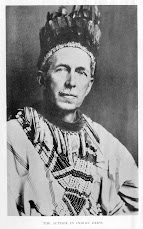
The late Sir Everard F. im Thurn
(MA. Oxon, b1852 - d1932) published (1883) a work entitled: “Among the Indians of Guiana: Being Sketches Chiefly
Anthropologic from the Interior of British Guiana.” I have in my
possession a copy of the Dover
Publications Inc, New York,
1967 (Library of congress #66-30384). This Dover edition first published in 1967 is an
unabridged and unaltered republication of the
work originally published by Kegan, Paul, and Trenton Co, 1883.
There are detailed descriptions of
how Cassava bread is made, with variations under different conditions when the cassava is scarce. However, we want to focus on the earliest recorded incidence of ‘Biotechnology’
procedures in British Guiana. (This is from my contemporary readings of our national
historical documentation – I am of course subject to correction by evidence to the contrary by the
experts in this field.)
On Page 263 of the abovementioned work (over a century ago), we
read: “Much cassava, after being made into bread, is further
transformed into paiwari, the chief Indian beverage. Astounding quantities of
this are consumed at special drinking bouts, of which we shall hear more
presently. But paiwari is
also largely used at other times;
and indeed as long as there is any
cassava to be had, a stock of this liquor is always kept ready. Whenever the men return from
hunting, and whenever a stranger comes
into the house, it is drunk. And women and children – even the
youngest babies – drink it.”
“Cassava bread which is to be
transformed into paiwari, is
made as that for other purposes; but
it is thicker, and is baked, or rather
burned, until it is quite black. It is then
broken into smaller fragments, and is mixed with water in a large jar or pot.
The larger fragments are picked out and chewed by the
women, who do this while moving
about and performing their usual
household work; and the masses are
again replaced in the jar. As soon
as this jar is sufficiently filled, its contents, after being well stirred, are
slightly boiled, and are then poured
into the trough. More and more is
added to the liquor in the trough. More and more is added to the liquor in the
trough until it is full.”
“The mixture is then allowed to stand for some
days, until it is sufficiently fermented – a process which is said to be much
accelerated by the mastication of the bread. Sometimes
a little juice of sugarcane is added to sweeten the
liquor. The result is a brownish liquor –looking like coffee with a great deal
of milk in it - with a sub-acid, but not unpleasant taste. Some of the
True Caribs, it is said, and some of
the Brazilian tribes, manage to prepare
paiwari, and to procure a proper
degree of fermentation, by simply boiling, without resorting to the very disagreeable but more orthodox chewing
process; but paiwari produced in this way is said to be of very inferior
flavour.”
“In some
parts of the country, instead of paiwari, both for festivals and for
ordinary occasions, a much pleasanter drink is used. This is casiri, which is made of sweetpotatoes
and sugar-cane. A little cassava is sometimes
added. Generally, though not always, it is prepared simply by boiling the ingredients, and allowing them
to ferment. It has a pretty pink colour, due to the
sweet potatoes; and when well made it tastes not unlike thin claret. ……”
For those who love to eat and have
done some science, we would remember
that digestion of food begins in the
mouth – i.e. chewing breaks down the
size of the food particles to
smaller and smaller-sized ones. This chewing is necessary so that we can have the maximum surface area of the
food exposed to the saliva – produced
by the salivary glands in the mouth. This chewing therefore
also maximises the efficiency of the catalytic process that occurs in the presence of saliva. The saliva produced in the mouth contains an enzyme called human salivary
amylase also called ptyalin (among other
chemicals) which is mainly called alpha amylase that breaks down a complex carbohydrate such as starch (polymer of
glucose) into simple sugars (monosaccharide, disaccharide or trisaccharide e.g.
such as glucose, maltose, maltotriose, respectively, and “limited dextrin”). The
alpha amylase enzyme is present in very small amounts in the
saliva. Usually, in any biological enzymatic process only a small amount of the catalyst is needed. The alpha amylase enzyme
(like other enzymes) here works best
at a particular pH (i.e. a measure of acidity or alkalinity) range (in this
case slightly alkaline, 7.4). (Incidentally, the
saliva also contains another enzyme
called lysozyme that lyses (breaks down) bacteria, in addition to other anti-bacterial compounds.)
This saliva helps to sterilise any
bacteria that would remain on any improperly washed or handled cassava. Hence the saliva destroys any bacteria present as well as
breaking down starch to form glucose, maltose, maltotriose and “limited
dextrin”- done by alpha amylase and lysozyme, respectively.
The stirring mentioned above also
allows for maximum exposure to the
enzymatic processes – thereby
maximising the efficiency of the catalytic breakdown of starch into maltose. The
heating to a slight boiling denatures (kills) the
enzymes - thereby stopping the catalytic action of the
enzyme (alpha amylase). This phase of the
production process is over. The heating to a boiling also acts as sterilization
step – since heat kills bacteria, viruses, and other
living micro-organisms that may also be present.
The sterilised maltose is now ready
for the next step - fermentation of
simple sugar i.e. maltose into alcohol. (Incidentally, from
cane sugar we extract the sucrose (a
disaccharide) which is then
fermented to give alcohol.). Unfortunately, I found no detailed record of how the fermentation process was/is initiated,
controlled, and stopped. Maybe those with this knowledge or experience can
kindly let us know.
We see from
the above that the old making of paiwari is indeed complex
science - and the participants
involved intuitively must have some
understanding of the biological chemistry
or biochemistry involved. Today such a complex
process would be in the realm of
applied science i.e. biotechnology, since it involved the
use of biological materials in a complex
production process.
Next time, we see Amerindians I hope
that we have more respect for their
immense knowledge. If we look carefully without prejudice, we can learn a lot
from them.
They do have a lot to teach us – we just have to be open-minded.
I taught biochemistry at UG,
regrettably I was not aware at time that there
was a good local example of the
application of early biotechnology in Guyana. I never learnt about this
until I was doing some research about
the ‘Rupununi Uprising.’ Who knows what other
gems are there to be discovered and
record before they are lost.
These liqueurs (paiwari and casiri) can probably be produced for commercial exploitation using alpha-amylase. Besides the use sweet potatoes in casiri, fruits such as ‘jamoon,’ goose-berry, tamarind,
and/or other local fruits can be
used to make flavoured liqueurs. This would provide an additional market for
cassava–based products. This would be a good enterprise for DDL or some adventurous group of young entrepreneurs.
Hope that next time we can all
celebrate Amerindian Heritage month with a new found respect for their contribution and knowledge – in addition to their knowledge in forestry, botany, zoology, and their environmental awareness.
Seelochan Beharry PhD.
also another
article