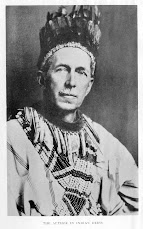
This continues the story from the book, Thirty Years in the Jungle, an autobiography by A. Hyatt Verrill, 1929. Previous
Chapter 3 Marooned in the
Forest
Leaving the bird-skins with the
chief, who promised to send them on to Laudat, we resumed our interrupted
journey towards Morne Diablotin.
There, at nearly a mile above
the sea, on the
upper slopes of this loftiest peak in the
Lesser Antilles, we spent nearly two weeks,
searching the former haunts of the mysterious Devil-bird. It was not pleasant work,
for we were constantly in a cloud, our garments were never dry, and, although
in the tropics the temperature fell to below 50° F. at
night and a bitter cold and chilly wind swept across the
mountain. Often, for days at a time, we were isolated from
all the rest of the world. Below us was a vast, undulating, billowy
sea of clouds; above us clouds hid the
mountain top from sight. Our visible
world was a few square rods of rough, almost bare rock and tufa as silent as the grave.
Possibly one or two
Devil-birds survived on Dominica, but our
most careful search failed to reveal their
presence, and even the trained dogs
could not smell one out. So, abandoning all hopes at last, we packed up,
descended the mountain, and headed
for the interior of the island, for a locality where, my companions assured me, we could find many rare birds.
It was a delightful spot after the
cold and dreary mountain top, a tongue of partly cleared land with a flashing
mountain stream flowing around it in a horseshoe bend, and with the high bush extending for countless miles on every
side. A small but fairly comfortable
hut had been built upon the little
peninsula to accommodate a
Government survey party several years previously, and here we established
ourselves. It proved a very rich and promising
collecting ground, and my specimens accumulated rapidly. In fact, it was such
an excellent locality that I decided to extend my stay, and as provisions were
getting low I despatched Rolles to the
nearest settlement—a two days' journey away—to secure a fresh supply of food.
Agoutis, pigeons and other game were
abundant, and we still had enough flour, cassava and other
provisions to serve Leon, Beche and myself for four or five days, so we felt
perfectly safe on that score. But we had not thought of unforeseen
contingencies arising. On the second
day rain fell in torrents from
morning until night, and by the
morning of the third day the stream was a raging torrent roaring around the little point of land, tearing at the banks, sweeping great trees along with it, and
filled with branches, logs and tree-trunks that were tossed about like
match-sticks upon the turbid flood.
Even then
we did not realize the danger that
threatened us. The hut was dry and comfortable,
it was high enough above the stream
to be safe, and though I chafed at the
inclement weather, which prevented
me from collecting, we were not
worried. The fourth day found us practically out of food, but Rolles we felt
sure would be back in a few hours, and all was well. But Rolles did not appear.
Then for the first time matters
began to look serious. We had eaten our last provisions, but as the rain had slackened Leon suggested that he should go on
a hunt for game while I gathered the plantains that grew about the
house, and waited for Rolles, whom
we felt sure would be back, even if a little delayed by the
rains.
But ten minutes after Leon
set out he returned, a strange expression upon his face. And as in broken English
he explained matters I felt we were in a dilemma. Unsuspected by us, the river had cut across the
neck of land at the back of the house and we were on an island completely cut off, and surrounded by a raging,
impassable torrent. Our only food was the
few green plantains; and Rolles was still absent! But even had he appeared it
would not have helped us in the
least, for he could no more reach us than we could escape from our temporary prison, and there
was no sign of the rain ceasing or the river falling. That day we dined on green
bananas and land crabs, and very few of these.
The next day our rations were reduced to snails, a couple of stray lizards and
an unwary snake. Snails, snakes and lizards might sustain life and satisfy
hunger if in sufficient numbers; but our supply was woefully limited, and three
half-famished men sat gloomily
speculating on whether we would be
forced to resort to cannibalism in the
end.
The next day we carefully gathered the
remains of previous meals; parrot and pigeon bones, plantain and yam rinds, and
any other garbage we could find and,
quite oblivious of the thick mould
and the numerous insects feasting
upon it, we used the offal for a
soup which, I must confess, tasted better than any soup I have ever had before or
since. That day, to add to our misery, Rolles appeared on the opposite side of the
stream. There he was, not five hundred feet distant, laden with food and yet as
far from us as though on another planet. We shouted to him, told him our plight
and, after a time, decided to attempt to get the
provisions by means of a liana or "bush rope" as a last resort.
Working feverishly, we gathered
lengths of tough vines, knotted them
together, and attaching one end to a
billet of wood we waded into the
eddies and threw the stick as far as
possible into the rushing waters. Leon
had calculated the flow of the current to a nicety, and as the bobbing billet rushed down stream and the coil of lianas unwound it moved steadily nearer
and nearer to
Rolles, who was waiting for it up to his armpits in the
river. With a wild hurrah we saw him seize it, and, a moment
later, he had fastened his basket to tin-improvised line. We were elated. At
last food was within our grasp, and we were already licking our chops in
anticipation of the feast we would
have. The food was well covered and tightly bound in plantain leaves which were
practically a waterproof covering. But even if the
provisions were wet, what did it matter? The cassava could be dried or
made into cakes, the salt meat and
codfish would not be injured by a little wetting, and the
canned goods and lard were impervious to water. Lustily we hauled in the precious cargo. It was more than half-way
across. It was almost within reach when, just as we felt sure that it was safe,
a huge log came leaping, hurdling down the
stream, and with horror we saw it launch itself upon our rope. It was all over
in an instant. Throwing its length half out of water, gyrating madly as if in
demoniacal joy at what it had done, the
log went careering down stream, carrying our precious food and the severed rope with it.
Utterly discouraged, feeling
more famished than ever, we sat down regardless of the
pouring rain and gazed hopelessly across the
river. Rolles shouted to us, waved his hands, and turning, vanished in the forest. He, too, was foodless or nearly so, and
it behooved him to make the best
speed back to the settlement in his
own interests.
For the
next three days we were marooned on a desert island. Not even a snail nor slug
could be found; not a nut, root, fruit nor tuber that was edible, and I learned
then what hunger really is. But the third day was clear, no rain fell, and on the morning of the
fourth day the river had appreciably
fallen. To be sure it was still high, it ran like a mill-race, and branches
still covered its muddy surface. But it was as well to drown as to starve, and with stout staffs to aid us
we took our lives in our hands and waded into the
stream. Slipping, bracing ourselves to the
rush of the current, dodging
floating limbs by hairbreadths, half-swimming at times, we forced our way
across and at last clambered safely out on the
opposite shore.
Half-drowned, wholly famished
as we were, yet we made better time through that forest than ever men had made
before. Bad as the trail was, and
made inexpressibly worse by nearly a week of steady rain, we scarcely noticed it,
for before us, shutting out all other
thoughts, all other sensations, was the vision of food. Once Leon stepped upon a thorn that
penetrated an inch into his bare foot. But he scarcely hesitated. With a curse
he jerked the thorn from his flesh and hurried on. Twice I barked my shins
against rough logs, but I did not even feel the
pain and was utterly unaware of the
fact until, at the end of the journey, I discovered my trouser legs red with
blood.
Five hours of this, and with
a wild shout Leon
pointed ahead to where bright sunlight showed through the
trees. Breaking into a run, we raced forward towards a solitary hut in a small
clearing. No one was at home, but
within the deserted house we found a
jug of molasses and a slab of rank salt codfish. And never, in all my life, has
any food tasted as delicious, as welcome
as that odorous salt fish and black, sticky treacle that we gulped down like
ravenous wolves. Then, the first
pangs of our hunger satisfied, we took matters more calmly. A single coconut
tree towered above the hut, and
Beche climbed this and threw down a dozen or more green nuts. Having finished these, and having thus completely
exhausted the edible resources of the place, we headed for the
nearest settlement in the Layou
Valley,
arriving at the estate of Mr. Alec
Riviere at sundown.
It was while I was staying
with Mr. Riviere that I heard of some
of the inexplicable occurrences I
have already mentioned. Unlike most of the
coloured islanders, he had absolutely no faith in the
supernatural and scoffed openly at Jumbies and Obeah. Neither
could his veracity and trustworthiness be questioned, and yet he told me of
events which he had personally witnessed which were positively uncanny. For
example, there was the story of Papá Kali, an old African Obeah man who
dwelt in the near-by village.
Riviere was a cacao planter, and for a long time he had been greatly annoyed by
thieves who had helped themselves
almost nightly to the finest of his
ripe cacao pods. Every effort to catch or even to discover the rascals had failed, and Riviere had about made
up his mind to stand the losses as
best he might when one of his friends suggested employing an Obeah man.
"Even if he doesn't find
the thieves he can frighten them," the
man argued. "They all believe in Obeah, you know, and if they find an Obeah man is on the
job they'll be too jolly well scared
to steal any more pods. Just call in old Papá Kali, and see if I'm not
right."
Rather
averse to apparently recognizing the
Obeah man's powers, Riviere decided to try the
experiment, and the old African was
duly summoned. Having heard the
case, he asked that all the
employees of the estate should be
called. When all had gathered about the front of the
house, the wizened, big-footed (to
be a proper Obeah man one must have a foot or leg affected by elephantiasis)
old negro mounted the high front
steps and peered with his red, ape-like eyes at the
sea of black, brown and yellow faces of the
thoroughly frightened crowd before him. Then, mumbling some
unintelligible words in his African dialect, he waved his horse-tail wand (another essential part of the
Obeah man's equipment) and fumbling in his wallet (supposedly made of human skin)
he drew out a little bundle of red rags and feathers.
Holding this up so that all could see, he cried, "Garde bien! Garde
bien! See what Papa Kail holds. Eh, Eh, some
one here is the thief. Papá Kali
knows but will not tell. No, no, if Papá Kali told, M'sieu Reviere would not
believe. But Papá Kali will throw this little friend of the
devil into the air and the one it strikes will be the
thief."
As he finished he tossed the charm forward, while a terrified half-smothered cry arose from
the assembled people. Riviere was
watching every movement and smiling to himself at such tomfoolery.
But as the Obeah charm left Papá
Kali's hand he uttered an exclamation of amazement and stared incredulously. As
if endowed with life and purpose, the
bunch of rags veered to one side, sailed over the
heads of the people, and struck the mulatto overseer who unexpectedly appeared from beyond the
building at that moment. With a
curse he leaped aside and then broke
into a hearty laugh. Picking up the
charm he hurled it back at the old
African. "That much for you and your Obeah," he cried in patois.
"Try it again, you old humbug!"
Papá Kali cackled, nodded his
head and stretched a claw-like hand towards Riviere for the
half-crown he demanded as his fee. "Eh, eh, M'sieu," he
exclaimed, as he turned to hobble away. "Papá Kali knows. Papá Kali never
fails."
"The old rascal!"
cried Riviere as the overseer joined
him and the assembled labourers
dispersed. "Pocketed a half-crown just for tossing a few rags into the air. And hitting you, Noel, at that! Wonder what
he would have said if you hadn't bobbed up and his rags had fallen on the ground."
But the
next day Noel, the trusted overseer,
was missing and a week later Riviere received a letter from
St. Thomas.
"Papá Kali was right," were the
words Riviere read. "I was the
thief and I have left Dominica for ever.
I could not be easy until I confessed to it.—Noel."
"I don't know what to
think," Riviere replied when I asked him how he accounted for it. "I
suppose it was just a coincidence, but it was a most astonishing coincidence
that Noel should have appeared at the
precise moment he did, that the charm should have veered so far out of its
course and should have struck him, and that he should have been the thief. I don't believe in Obeah, but sometimes I feel that perhaps, after all, Papá Kali
knows something of which you and I
know nothing." Then, after a few moments'
thought, "I suppose you have heard of the
showers of stones?" he asked.
"More or less," I
replied. "But I've never believed the
yarns—all the natives' superstition,
of course."
"I wonder," he
observed with a laugh. "I thought so myself until I actually witnessed one
of the showers."
"The devil you
did!" I exclaimed, my interest aroused. "Where was it, and what was
it like?"
"It was in Roseau," he replied.
"About three years ago. I was walking along a side street one evening when
I noticed a crowd gathered at a
corner and all watching a little hut a few rods away. Wondering what had
happened, I pushed my way into the
throng and was told that a shower of stones was falling on the house and that the
same house had been showered several times previously. Laughing at the idea, I pushed forward until I had an
unobstructed view of the house
and—well, you may believe me or not, I gasped. It was a perfectly clear
moonlight night, not a cloud in the
sky, not a breath of wind, and yet stones or some
solid objects were pattering down from
somewhere upon the shingled roof of the
house. I could hear them, and what
is more I could see them. They
glittered in the moonlight, bounded
off the shingles, and fell tinkling
on to the cobbles of the street. It was the
most uncanny, most incredible thing I have ever seen. I felt much as I expect I
should feel if I saw a ghost, and I had a strange tingling of my scalp. It was
incredible, absolutely impossible, but it was happening just the same.
"I stood there fascinated for fully five minutes, and then the
shower of stones suddenly ceased, a sigh of thankfulness and relief arose from the
onlookers, and very quietly and swiftly they
dispersed. As I turned to leave, feeling as if I had been dreaming and
wondering if I and the others had been subjected to some
hypnotic influence, I glanced at the
pavement. Little objects glistened on the
cobbles, and, stooping, I picked up a handful of them.
Just a moment and I'll show them to you."
Rising, Riviere entered another room
and returned with a small paper box which he handed to me. It was filled with
clear quartz crystals, which, as far as is known, do not occur anywhere upon the island. I could not, and never have been able
to, offer any theory in explanation
of the phenomenon.
I could not doubt Riviere's word—and yet; but later I had an almost identical
story of the shower of stones related
to me by the resident British
doctor, and the Governor of the islands assured me that he too had witnessed
such showers in Grenada. More, he actually had spent a night in company with his brother
in a house subject to the mysterious
showers. But in this case the stones
fell inside the house instead
of on the roof. Several times in one
night the two were awakened by
stones falling upon them and, so
numerous and large were the stones,
that the Governor and his brother were forced to beat a hasty retreat and to seek
refuge in the open. When morning
came they re-entered the house and gathered
more than a peck of pebbles.
Finally, there was a most mysterious and inexplicable
occurrence that came under my own observation on a subsequent visit to Dominica.
An elderly gentleman who was
suffering from chronic asthma had come to the
island for his health. He lived at the
only hotel, a few blocks from the market place, and was somewhat
eccentric. He invariably wore tweed clothes,
knickers, a Panama hat with a pugaree, and hence was a conspicuous and
well-known figure. And as he was fond of conversing with the
negroes, and was given to bestowing pennies upon every ragged beggar he met, he
was a great favourite with the
natives. It was his custom to leave the hotel each morning, take a short walk to the market, the
water-front or the post office, all
within three or four blocks of the
hotel, and, when the condition of
his health warranted he would sometimes
stroll as far as the Goodwill
Bridge, the fort or the library. So, when on a certain morning he
remarked to the proprietress of the hotel that he was going to the post office, it occasioned no comment. But as it was rather
later than usual for his stroll she cautioned him to be back in half an hour
for breakfast. As he started up the
street she remarked to her son that he appeared unusually feeble, and she
wondered if she should not have sent a boy along with him. Then the matter dropped from
her mind, until at breakfast time he had not returned. Even then she was not worried; but, thinking he had
absent-mindedly forgotten the hour,
she sent a servant to find him. The servant went to the
post office, walked the length of the water-front, searched the
market, hurried to the fort and
library, and made inquiries of every one she met. But there
was no sign of the missing man, and
no one had seen him. Alarmed, she hurried back and reported matters. Feeling
sure her guest had been taken suddenly ill and had sought refuge in some house, the
proprietress of the hotel reported the matter to the
police, and a house-to-house search was at once started. But without result. Then
the search was extended.
There are but three roads
leading out of the town, one passing
over the Goodwill
Bridge, the
second passing over the Bath
Bridge,
and the third passing the fort, which is used as a police barracks and
where a sentry is constantly on duty. The constable here knew the
missing man well, but he swore he had not passed the
fort. At the Goodwill Bridge an aged beggar,
to whom the
missing man had frequently given pennies, insisted he had not been that way,
and his statement was substantiated by a constable on duty and by other persons. On the
last road a truck laden with limes had broken down and had completely blocked the
approach to the bridge since six
o'clock. A bevy of labourers had been working there
since the accident and not one of them had seen the
man, although, had he gone that way, he would have been forced to clamber over the spilled limes in order to reach the bridge. It appeared as if the
missing man had vanished into thin air; but the
search was continued diligently until two o'clock. Then, utterly at a loss, the searchers, myself included, together with the
inspector of police, met in the fort
and discussed matters, trying to form some
theory to account for the mysterious disappearance. While we were talking,
a policeman arrived and, saluting the
inspector, reported that he had just come
in from Rosalie, a town on the opposite side of the
island, whence he had been transferred to Roseau.
Then, having made his report and having been dismissed by his inspector, he
hesitated.
"There is something I would like to mention, sir," he
said. "Just as I was passing the
Mountain
Lake I
noticed a gentleman standing by the
lake's edge, and poking at the
water-weeds with his umbrella. Thinking he was a stranger and did not know the danger, I shouted to him, warning him not to go
too near the edge of the lake. He looked up and nodded, and just then a cloud drifted by and I lost sight of him and
came along. I've been feeling I should have made sure he heeded my warning,
sir."
"What time was
that?" asked the inspector.
"At 7.30, sir,"
replied the constable promptly. "I had glanced at my watch as I came
over the ridge by the rest-house and it was then
7.25. It would be about five minutes later that I passed the
lake."
"What sort of a man was
he? How was he dressed?" I demanded the
inspector.
"An elderly man, sir. He
was dressed in tweeds—short trousers, and wore a palm hat with a pugaree,
sir."
We looked at one another and gasped. Here was this policeman, just in from Rosalie—a man who could never have seen the missing man, who did not even know he was
missing—calmly giving us an exact description of the
man we sought and claiming he had seen him at a spot a full four hours from Roseau by horseback, and that he had seen him
within ten minutes after he had left the
hotel that morning.
It was absolutely impossible,
incredible and uncanny. No human being, much less a weak, sick man scarcely
able to walk a mile, could have gone from
Roseau to the
Mountain
Lake in
less than five hours, not to mention ten minutes.
And yet, so obviously sincere
was the constable, that we set out
at once for the distant Mountain
Lake.
Needless to say, there was no sign
of the missing man, and from that day to this no trace of him has ever been
found, despite the fact that his
family offered huge rewards for any information regarding his fate.
No doubt there are some
perfectly natural and perhaps simple explanations for these
and many more seeming mysterious, even occult, occurrences in the islands. But no one has ever been able
satisfactorily to explain them, and
it is little wonder that the
credulous and superstitious coloured people attribute them
to Obeah, witchcraft and supernatural agencies. And it is not strange that,
under the circumstances and
conditions, the Obeah men and women thrive and prosper, for anyone who has lived
long in the islands must admit that they do perform some
remarkable feats.
Personally I am convinced that
they are usually, if not always,
natural hypnotists capable of greatly influencing the coloured folk, and by
auto-suggestion and hypnotism causing them
to do, see and hear things desired by the
Obeah practitioner. And equally there
can be no doubt that they are past
masters of poisoning and possess a wonderful knowledge of poisonous native
herbs, roots and seeds, many of which are unknown to science.
But somehow
their charms, their
spells and their powers appear to be
utterly worthless when applied to white persons. I never found an Obeah man who
could tell me where to secure a certain species of bird I desired, nor did a
most potent charm—presented to me by a most horrible-looking old Obeah man to
whom I had tossed a shilling out of
pity for his big feet and ulcers—prove efficacious in protecting me from illness and harm, as he had claimed it would.
Despite the fetish, I contracted
yellow fever, although the natives
of course felt convinced that it was the
amulet that saved my life. But I prefer to think that it was the kind, unremitting and tender care of the Laudat people. Realizing I was suffering from the
dread malady—contracted in the
swampy land near Prince Rupert's
Bay—I hurried to the little village
in the mountains.
More dead than alive after the arduous trip made despite my high fever, I threw
myself upon my hard bed in the
humble hut, fully expecting that my bones would find a resting-place in the little cemetery on the
mountain-side. Too ill to care what happened, tortured by burning fever and bursting
head, I stared dully, half-consciously at the
hewn rafters and thatch of the roof.
Poised ready to spring, an immense wolf-spider was directly above me, while a
few inches distant a huge "drummer" cockroach was waving his long
antennae as if suspicious of his mortal enemy lurking so near. Listlessly
wondering whether the cockroach in his fright would fall upon me or
whether the
spider would miss its mark and drop on to my face, I closed my eyes. When I
again opened them and glanced up to
where the insect tragedy was being
enacted, neither spider nor
cockroach was there. A faint sound
near me caused me to turn my head. Le Brun stood beside my bed, her face
beaming and holding a bowl of steaming broth in her hands.
"Eh! Eh!" she
exclaimed. "M'sieu is well; le Bon Dieu has heard our prayers. Oui,
M'sieu, every day have I prayed and so hard, so very hard that M'sieu
should live. And now M'sieu is better; he knows Le Brun and he must eat. Oui,
M'sieu, it is the will of God and the fever has gone."
It was true. I was weak,
weary, emaciated, but free from pain
and fever, and I marvelled at the
miracle, for not until later did I learn that six weeks had passed since I had
seen the spider and its prey above
me. Six weeks of oblivion for me; six weeks of delirious ravings, raging fever,
sleepless nights, unremitting care and constant prayers by the kindly Laudat people among whom fate had cast my lot. Yet after all it was Le Bon
Dieu who held my fate in His hands and—well, I like to think that He did hearken
to Le Brun's "so hard" prayers.
Many a land have I visited
since then. I have roamed every fair
island in the Antilles,
and jungle and jungle life have become
old stories. I have had many an adventure far more exciting than any of my
experiences in Dominica, and I
have come nearer to death's door
than when I lay for six weeks unconscious with "Yellow Jack." But
still my first trip to the jungle
remains most vivid in my memory, and I have a warm spot in my heart for lovely Dominica.
Many times have I returned to the
island, many times have I gone hundreds, thousands of miles out of my way to
again visit it. And always I have been welcomed
like a king by the Laudat people and
the golden-skinned Caribs. Old Andre
and his wife passed away years ago. Smiling Beche is a dignified chief. Rolles
is grey-headed, and Leon's
broad shoulders are bent with the
years that have passed. Laudats whom I
first knew as naked brown kiddies have grown to men and women
with kiddies of their own, and buxom Le Brun is a stout but still beaming grandmother. But despite the
changes that forty years have wrought in the
island, and the people, Laudat
remains almost unaltered. The same houses are occupied by members of the same families as of old; the
mountain stream still tumbles in a flashing cataract into the rocky pool where the
girls frolic and swim like wood-nymphs in the
shade of the drooping tree-ferns and
Bois Riviere trees. The people still gather
of evenings to tell Jumbie tales and singe the
wings of the hapless "La
Belles," and, when we meet, Leon, Rolles and I again live over the old times and laugh together
over my Carib girl "bargain," and the
meal of mouldy bones and plantain rinds on which we dined when marooned in the forest. And good-hearted, jolly old Le Brun, who
nursed me back to life and health, declares that she still "so hard"
prays to Le Bon Dieu that M'sieu may live for ever. But I am afraid that even
her Bon Dieu cannot grant that prayer.
Chapter 4 Off to Central
America
THERE is a strange,
mysterious lure to the tropics; an
irresistible fascination to the
jungle. Rare indeed is the man who
does not return again and again, once he has breathed
tropical air and has tasted jungle life.
 So, once having got the tropics in my blood, having experienced the mystery, the
fascination of the jungle, I longed
for the dazzling sun, nodding palms,
dim, cool forests, rank jungles and the
indescribable feel and smells of the
tropics. And I again set sail for lands where civilization was but a form,
where Nature was in the raw, where
vast untamed jungle was still untrod by human feet, and where danger and death
lurked behind the smiling mask of
Nature.
This time, Central
America was my destination, my object zoological collections as
before. I sailed on a Spanish ship, a bark-rigged steamship that, whenever the wind was fair, spread her broad white wings and
sailed far more knots than she steamed.
To the
easy-going Iberians time and schedules meant little or nothing. We were
supposed to remain in Havana harbour two days;
but a week slipped by before the Panama
steamed out past grim old Morro.
Time did not hang heavily
upon our hands. Havana in those days was a very
different Havana from
the Havana of to-day. The "blood and
gold" of Spain
flew above forts and public buildings, the
houses were pink, blue, mauve and buff; there
were no cinemas, no electric signs, no trams, no motor-cars, no tourists and no
sanitation. The narrow cobbled streets were sinks of iniquity and filth, an
occasional sputtering oil lamp glimmered faintly at the
corners, leaving the surroundings in
inky blackness. And when one strayed from
the vicinity of the plaza and its gay night life of the cafes, one carried a ready pistol in hand and
kept to the middle of the street if one did not wish to be found a
huddled, stripped corpse with a dagger thrust under the
collar-bone when the morning dawned.
Havana, in
short, was redolent of Old Spain where romance,
adventure and vice stalked hand in hand, where thugs and yellow fever were
equally prevalent, and where blindfolded patriots and firing-squads were far
more regular occurrences than daily papers. But, taken as a whole, I found Havana a far more
fascinating city then than it is
to-day.
The same could not be said of
Santiago de Cuba,
for it was an unspeakably filthy, unkempt, fever-ridden town; steaming hot,
odorous beyond words, and festering in the
sun like some foul ulcer. Few spots
that I know in the tropics have so
greatly changed in the past forty
years, for to-day Santiago
is a model city in as far as cleanliness and sanitation go, although still as
hot during the summer months as of
yore.
 Crossing the azure Caribbean, our next port of call was La
Guaira, where our accommodating
skipper offered to hold his ship for an extra day in order that some of the
passengers might journey across the
mountains to Caracas.
At Cartagena we took on a
deck-load of negroes and negresses, together
with their chattels, livestock,
fruit and vegetables which they were
taking to the Colon market, for a
disastrous fire had almost completely
destroyed the Isthmian port, and the dusky Cartagena profiteers were taking advantage
of their next-door neighbours'
distress and intended to make hay while the
sun shone. Unfortunately for them,
we ran into rough weather after
leaving Cartagena, and men, women
and children, fruit and vegetables, fowls and pigs, cattle and parrots, monkeys
and goats, steamer-chairs and household utensils, were hopelessly, inextricably
mixed.
Colon at that time was a smouldering mass of
charred ruins, with less that a dozen buildings left standing. Among these was the
stone customs house, the stone church, De Lessep's house, and a flimsy
native restaurant which, by some
miracle or freak of fate, had remained unscorched as the
flames roared on every side of it. But even without the
fire, Colon
would have been a sad-looking spot.
The French had abandoned their efforts at digging the
Canal, great skeleton-like dredges lay rusting and deserted beside the banks of the
big ditch; rank jungle had overgrown workshops and railway lines; hundreds of
thousands of pounds' worth of machinery lay neglected and abandoned everywhere,
and endless rows of tiny crosses on Monkey Hill testified to the appalling number of human lives the ill-starred attempt had cost. No white man cared
to stop longer than he was forced to in a spot so notorious for yellow fever,
and while I had no fear of the
malady, being of course immune, yet I was not sorry to leave the devastated town. Little did I think that I would
yet see the great Canal completed and would see Colon rise, phoenixlike, from its ashes to become
a bustling, important port; that I would ever see the
miasmic swamps and rank jungles replaced by asphalt roads, delightful parks and
gardens with immense modern docks and imposing buildings where the forsaken machinery had lain rusting in the sun; that I would ever see the pestilential Isthmus transformed to one of the most healthful localities in the world, with dread Yellow Jack stamped out for
ever.
Twenty-four hours after
leaving Colon
we came to anchor off Port Limon, and my voyage was at an end.
Few railways can compare with that of Costa
Rica in as far as scenery and engineering feats are
concerned, and as we crossed the
level coast lands, with their dense
jungle and teeming wild life, and climbed steadily up the
foothills of the Cordilleras,
there was plenty to hold the interest of the
most blasé traveller. Parrots, macaws, parroquets, tanagers of gorgeous
colours, humming-birds, orioles, troopials, toucans, kingfishers, cotingas and
scores of other tropical birds of
gaudy plumage were on every side. Spoonbills, herons, egrets, boatbills, ducks
and waders rose in clouds from
jungle pools and lagoons. Gorgeous amazing flowers blazed amid the greenery. The vegetation was a riot of palms,
ferns, bamboos, strange trees, vines and tropical plants. Troops of white-faced
capuchin, long-limbed red spider-monkeys and tiny squirrel-monkeys raced
chattering through the trees at the approach of the
snorting locomotive and roaring
train.
Frequently, graceful deer
would dash a few yards from the tracks and stand gazing curiously but unafraid
at the passing train, and over and
over again, as we roared over a bridge or swung around the
borders of a dismal black bayou, huge alligators would scramble from their
resting-places on logs and banks and would splash like amphibian tanks into the depths of the
water. In such places, too, where the
surface was freckled with lily leaves and water plants, we caught glimpses of the dainty jacanas—trim,
brown-bodied, yellow-winged birds whose long toes enabled them to run nimbly over the
floating leaves until, taking flight, they
fluttered off like great yellow-winged butterflies. Insects were not lacking,
either. Immense blue or
emerald-green morphos sailed majestically through the
shadows, velvet-black butterflies with wings splashed with scarlet, green or
orange flitted about, immense brown and steel-blue owls'-heads, phantom-like ghost-moths and other
gorgeous Lepidoptera were ever in sight, and among them were the
strange, piebald
butterflies that, alone of all the
butterfly tribe, emit a curious, musical, clicking note.
As the
train climbed higher and higher, struggling up long steep grades, swinging
about sharp hairpin curves, rumbling over spider-web-like bridges spanning
torrents hundreds of feet below, or roaring through long tunnels, and ever with
the vast green sea of jungle on
every side, I realized for the first
time what a real tropical wilderness was like. I had thought Dominica's
high bush marvellous, but the whole
of that island could have been dropped bodily between any of these Costa Rican mountains and would have been completely lost to view. Seen from the
train the jungle appeared like a
solid wall of green of a thousand shades, set off here and there by towering trees gorgeous in masses of bloom forming splotches of orange, gold, magenta, lilac,
scarlet and while against the green
background. Hundreds of acres of crimson and orange wild plantains blazed like
tongues of flame at the forest edge,
and wherever there was a cleared
space beside the railway there was spread a dazzling carpel of scarlet
salvais.
Upon my first visit to Costa Rica
things were pretty primitive, and one took the
"rough with the smooth,"
as my Jamaican camp-boy used to put it. And most of it was rough!
In those days there was no extradition treaty in force between
Costa Rica and the United States,
and as a result every crook and criminal who had found Uncle Sam's territory
too hot for comfort, and who could
get away, had turned towards Costa Rica as a safe spot in which to be free and
unrestrained. Among the men I met
were Mississippi River professional gamblers,
train robbers, "Wild Western" gunmen, highwaymen, murderers, and a
member of the famous Jesse James
gang. To their credit be it said
that the majority had reformed and
were peaceful and honest citizens. Several of the
most notorious bandits and gunmen were employed by construction companies as guards for their
pay-cars and cashiers; others had
become ranchers or had taken to
railroading, while a few lived a life of ease on their
ill-gotten spoils. The ex-member of Jesse James's gang was the most thoroughly henpecked man I have ever seen.
His diminutive wife ruled him with an iron hand, and, on one occasion, when in
a fit of boisterous hilarity he began shooting bottles off the shelves in a bar, his better if not bigger half
arrived on the scene, seized him by the ear, and cuffing him like a misbehaving small
boy, led him off to bed.
San José, when we arrived, was rather
the worse for a recent earthquake,
and a good portion of the facade of the cathedral,
many walls, the larger part of a
church, and a few houses had been demolished, giving the
really charming city the effect of
having been subjected to shell fire.
At that time, too, Costa Rica
was one of those comic-opera
republics where revolutions are served with morning coffee, and almost as
regularly. During my stay at San José
we had three revolutions within three months, but they
were far more amusing than serious, although to the
outside world they were pictured by the Press as riotous insurrections accompanied by fighting and bloodshed.
The first of the trio was so quiet, peaceful, and so thoroughly
well organized that very few realized it had taken place until it was over and
a new President was occupying the
palace.
It was the
custom for the
President of the Republic to attend
Mass in the cathedral
on Sunday, accompanied by a
body-guard of picked troops and the
officers of the army in full
fighting equipment, rifles and all. On this particular Sunday, as the troops passed out of the
church they found themselves confronted by a crowd of rough-looking campaneros
(countrymen) with cocked pistols, who immediately disarmed the surprised soldiers, whose guns were not loaded, and with
profuse apologies made the President
a prisoner. The cuartel or barracks, the
palace and other Government
buildings had already been seized, a new executive was already enjoying his
predecessor's wines and cigars in the
palace, and without a shot having been fired the
Government changed hands, and every one seemed satisfied.
The second revolution was
more noisy and obvious, but almost as innocuous as the
first. A few desultory shots were exchanged here and there
without visible results, and the
federal and insurrecto troops met face to face in a small plaza near the centre of the
town. One side of this plaza was occupied by the
Hotel Frances, the opposite side by the remaining front wall of a church which had been
demolished by the recent
earthquakes. Instantly firing began, and for nearly an hour there was a continual fusillade of musketry. Just
how many rounds the rebels fired
will probably never be known, but the
federals succeeded in discharging something
over two thousand cartridges. Then, the
ammunition of both sides having been exhausted the
two factions cast aside their
useless rifles, and drawing machetes, engaged in a hand-to-hand, free-for-all
fight. The net result of the
fireworks exhibition was one waiter in the
hotel shot in the knee, and the entire annihilation of the
stucco on the church wall from ten feet above the
earth to the summit. Half a dozen
soldiers slashed and cut, several score uniforms torn to ribbons, and a few
fingers chopped off, were the total
casualties of the second phase of
this "desperate battle," as the
Press called it.
Throughout these disturbing (?) times, foreigners were never
threatened nor molested, and with few exceptions were free to go where and as they pleased. Indeed, the
officers of both sides were most solicitous for the
safety of foreigners in their midst.
During the third political upset my
wife and I were stopped by an officer, who might have been a brigadier-general or
a field-marshal judging from the magnificence of his uniform, and who, with the most profuse and abject apologies, begged us not
to enter that particular street, explaining that a machine-gun was trained on the thoroughfare in expectation of an attack by the opposition, and that, should we be in the line of fire when the
raid took place, we might be injured.
In short, the Costa Rican idea of warfare savoured far more of
entertainment than of hostilities, while the
"army" was a perfect farce. The soldiery was entirely composed of conscripts, mainly young Indian or
half-caste boys who, previous to being drafted, had never worn shoes, had seldom worn what might be called clothing, and who had
never handled a gun in their lives.
They had no idea of politics, no interest in presidents or governments, and
could never be made to understand why they
should be expected to shoot, bayonet or otherwise
injure or kill some friendly young paisano
just because some ambitious
Caballero wished to feather his nest
with the fat pickings of a corrupt
and easy-going Government. They were miserably fed, more miserably housed, and
were never paid, and their only
"outfit" consisted of a cheap shako, an ill-fitting
"uniform" of blue drill and a pair of heavy cowhide boots which were
so uncomfortable that they were usually worn suspended by a thong over the shoulders.
Far too considerate of their magnificent attire and highly polished boots
to walk in the streets, the officers would stroll along on the sidewalks, twirling their
moustaches, clinking their spurs and
ogling the women,
while the little "calico army"
would come trotting along a block or
two behind, guns at every angle, bare feet pattering through the dust, talking and laughing like schoolboys on a
holiday, and making no attempt at keeping time with the
diminutive drummer and even more diminutive fifer who invariably played or
attempted to play two different tunes, and whose chief object in life seemed to be to drown the other
out. Discipline, of course, was non-existent.
But despite this, the little "calico army" could give a
mighty good account of itself when it came to guerrilla warfare against an hereditary
foe. Personal courage was not lacking; the
soldiers, like all Indians, were intensely patriotic and cherished hatred of an
enemy, and in the jungle they were thoroughly at home.
In repeated set-to's with the
Nicaraguans they had come off with flying colours, and, in later years,
when a few years ago there was a
brief state of war between Costa Rica and Panama, the
one thought of the Panamanians was
to put as much space as possible between themselves
and the Costa Rican troops.
Moreover, even if Costa Rica
at the time of my first visit could
not enforce peace and could not maintain a stable Government, it could and did
enforce sanitation and cleanliness, which, in a tropical land, arc far more
important matters. I have never seen a cleaner nor more orderly city. All the streets were swept, scoured and flushed daily,
and anyone who by accident or design dropped a fruit skin, a bit of paper or
any other litter in the street was liable to instant arrest by the lynx-eyed secret police. And it was in striking
and delightful contrast to Cuba
and Venezuela
in as far as law and order were concerned. The city was well lit by
electricity; thugs, footpads and robbers were unknown, and a man or woman could go anywhere at any hour of the day or night in perfect safety. Despite the presence of many notorious foreign crooks in their midst, the
Costa Ricans were the most honest
and unsophisticated of people. I have seen a countryman, in the market, place a roll of bills amounting to
hundreds of pesos upon a table and wander off to gossip and dicker with friends
and acquaintances, feeling perfectly sure that his money was as safe as in a
bank, as was the case.
Chapter 5 In the
Costa Rican Jungles
HAVING conferred with a
number of people—both native and foreign—who were familiar with the country, and having studied the collections in the
really excellent Museo National in San
José, I selected Jimenez as the
most promising locality to start
collecting.
Jimenez was surrounded by
jungle. On one side was the jungle
of the level land bordering the river, on the
other the
jungle of the mountain-side.
The lowland jungle was dense,
almost impenetrable, a true jungle of tangled vines, saw-grass, thorny shrubs
and palms growing breast-high beneath the
immense trees with their wide-spread,
sprawling roots and dangling network of lianas. Close to the
river it was thicker than anywhere else, with growths of great canes so strong,
tough and dense that they formed
almost a solid wall. But in spots there
was some open ground beneath the trees, and here was a splendid collecting
ground. Here, too, were deer, ocelot, peccaries, jaguar, puma and tapir; there were crocodiles and boas, and here I first
came into contact with the
army-ants.
I had noticed an unusual
number of ant-thrushes and flycatchers hovering about, and having shot two that
I wanted I hurried forward to retrieve them.
The place had been roughly cleared, and the
felled tree-trunks, the branches and
broken limbs littered the ground.
Stepping upon a log the better to search for my specimens, I glanced
about and caught sight of one of them
lodged among some dead branches a
few yards away. Never dreaming of any danger, I jumped from
the log and the
next instant fairly howled. I felt as if I had sprung into a pot of boiling
lead. A thousand red-hot pincers seemed to be searing the
flesh of my ankles and legs. Yelling with pain, I glanced down to find my legs
almost hidden under a moving black mass, while between the
branches and trash underfoot the
ground seemed to heave and move and undulate. Instantly I realized what had
happened. I had jumped into a column of army-ants! And I lost no time in
jumping out. Fortunately for me it was only a small army—scarcely a
regiment—perhaps two feet in width, and yet, although scarcely ten seconds elapsed
between the time I leaped from the
log until I was back on it again, ants were swarming over me from feet to waist, and my legs were dripping blood from thousands of bites. Fortunately, too, the bite of the
army-ant is not poisonous, and aside from
the pain of the
innumerable wounds no ill results followed. Of course I made no further attempts to secure my birds, which, within five
minutes, were unquestionably reduced to a few feathers
and clean-picked bones. And to add to my troubles I had to watch hundreds of
birds which I particularly desired as they
flitted from perch to perch above the ant army and snapped up the
insects that rose in swarms at the
ants' approach. I could have shot scores of birds which I had never seen
previously, and which I never saw again; but to do so would have been needless,
inexcusable slaughter, for once they
fell within the range of that
resistless, ravenous column of ants they
were gone for ever.
Later I had many encounters
with the army-ants, and on one
occasion, while spending the night
in a shack on the mountain side, the hut was visited by an army of the creatures while we slept. As we were in hammocks
we were not
molested, for an ant will not travel over a rough hair rope. But every living
thing within the house was utterly
destroyed. Not a roach, fly, moth nor wood-ant remained, and a good-sized
tapir, which we had killed in the
afternoon and had hung up outside the
hut, was completely devoured. Only the ragged hide and bones remained to tell of the ants' visit. As silently as they had come
they had vanished, and I shuddered
to think of what might have been our fate had we been sleeping on cots instead
of in hammocks. Personally I have never known of human beings being killed and
devoured by army-ants, but I have heard well-authenticated
reports of such cases. One was in Brazil,
where two Brazilian officers of a river gunboat, returning to their vessel after an hilarious evening in a
village, decided to take a rest by the
wayside, and fell into a drunken slumber. When they
did not put in an appearance in the
morning the crew of the gunboat started to search for them and found only their
skeletons and clothes, mute
testimonials to their horrible fate.
To anyone not familiar with the army-ants and their
habits, such things may seem incredible. But it must be remembered that these ant armies are often several hundred feet in
width and extend for miles across country. They are strictly carnivorous and
will devour anything in the way of
animal matter, and they arc as
thoroughly well organized and trained as any human army. They have scouts,
shock-corps, engineers and even a hospital-corps. Although blind, they act with perfect precision and coordination,
and nothing but a good-sized stream or fire will check their
advance.
In case an obstruction, a
gulley or even a small stream, is met, the
engineers hurry about seeking some
spot to surmount the obstacle,
tearing down obstructions and even forming living bridges of their own bodies over which the
army crosses. In case of an injury or a wound to one of the
members the hospital corps hurries
up and examines the disabled ant. If
his wounds are slight, he is taken to one side or the
rear and cared for. Broken legs are amputated, and in case of serious injuries
which render it impossible for the
individual to proceed, he is promptly
put to death. Just what sense guides them,
or how they communicate
with one another, is not known; but
apparently they are devoid of the sense of smell, for frequently some insect, such as a walking leaf or walking-stick
insect, or even a reptile or toad, when unable to escape from an army of the
ants, will remain motionless, and the
voracious ants will crawl over the
creature without injuring it, and without realizing that it is a living thing
and legitimate prey. Needless to say, after my first experience with these insects, I looked before I leaped in future,
and proceeded very cautiously whenever I noticed unusual numbers of birds gathering in one locality.
It was not long after my
painful experience with the ants
that I came very close to putting an abrupt end to my adventures through another piece of carelessness on my part.
I had been collecting in rather swampy ground near the
river and was watching a bird feeding in a tree-top near. Close to where I
stood was a good-sized palm tree of a species which is entirely supported by a
truss-work of roots springing from the trunk several feet above the
earth. Wishing to study the bird
through my glasses, I reached back and rested my gun against the palm tree. Presently, having made sure the bird was a species I wished to secure, I
replaced my glasses, and without taking my eyes from
the bird, reached behind me for my
gun. Something, some sixth sense or intuition or "hunch" or
whatever one might call it, warned me that something
was wrong and forced me to turn. And just in time. Coiled among the roots of the
palm, his broad, arrow-shaped, flat head drawn back to strike, and less than six inches from my outstretched hand, was a huge moccasin snake,
one of the most venomous of reptiles. An inch more and his fangs would
have been buried in my hand and, without antidotes and miles from any human being as I was, my case would have been
hopeless. But as a rule snakes of any kind are by no means common in the
jungle, and are probably the least
of all dangers one must face.
This particular part of the jungle was a favourite haunt of tapir, for these beasts are fond of water and spend a great
part of their lives in the streams. They are almost amphibious in habits,
and when pursued or frightened invariably seek refuge in the
water. As a rule they are very shy
and wary, and although so large and apparently clumsy, yet they can move with astonishing quickness, travelling
rapidly and noiselessly through the thickest
jungle. I often saw their trails,
but as it is almost hopeless to track a tapir and secure a shot, unless aided
by trained dogs, I paid no attention to them.
In the type of jungle inhabited by the tapirs, sun-bitterns are abundant, and the natives claim that the
tapirs are warned of man's presence by these
birds. Whether or not this is so, I
cannot say, but as the sun-bitterns
usually flit off like huge butterflies when they
see a human being, there is no
reason why an animal as intelligent as the
tapir should not profit by the
signal conveyed by the birds’ flight.
The only trouble is that, as a matter of fact, the
tapir is even more shy than the
sun-bittern, and possesses far keener eyesight and sharper ears than any other denizen of the
jungle.
Although I have since shot
many a tapir, I shall never forget my first hunt here in the
lowland jungles near Jimenez. On that particular morning Juan and I had been
hunting near the bank of the river, and as we approached the water Juan suddenly halted, beckoned to me and
pointed to a patch of soft bare earth.
"Danta" (tapir), he whispered. Sure enough, clearly imprinted
in the soft ground, were the deep marks of a tapir's feet. Also, they were evidently very fresh, for the water had not yet oozed into the impressions, and in whispers Juan assured me the beast had passed within ten minutes.
Here at last was a possible
chance of coming upon the beast unawares, and with cocked and ready
weapons we set off along the trail,
which led towards a dense growth of canes and bamboos a short distance away.
Every few yards we could pick
up the tapir's spoor, and at any
instant I expected to catch sight of the
big beast. At the edge of the cane-brake the
tracks led into the dense growth
along a narrow but well-marked game trail.
How such a big-bodied, clumsy
creature as a tapir could have traversed that narrow pathway was a mystery to
me, for it was barely wide enough to permit us to pass, and I felt sure that,
if the tapir were near, we should
presently hear him crashing through the
canes ahead. But a query to Juan brought only a caution for silence in reply,
and with all my senses and energies devoted to avoiding stepping on dead canes
or causing the close-growing bamboos
to rustle, I followed in Juan's footsteps.
That the
beast was only a very short distance ahead of us was obvious. In one spot the leaves pressed into the
mud by the tapir had not begun to
wilt, in another a big black and
yellow beetle, crushed under the
tapir's foot, was still feebly struggling. And where the
animal had crossed a tiny rill the
water had not yet smoothed over the imprint of his feet in the
sandy bottom of the brook. But no sound of the
big beast's passage, no cracking or rattling of canes was audible, although
Juan, sniffing the damp heavy air,
declared that he could smell the
creature. For fully an hour we trailed that elusive tapir through the cane-brake. A dozen times I saw birds that I
wished to add to my collections; but I refrained from
shooting in the hope that we might
eventually bring down the tapir. Twice,
small brocket deer
sprang up and fled like shadows into the
depths of the labyrinth of giant
grass, and once a small herd of peccaries rose from
their wallows and, grunting and
squealing, trotted off.
At last Juan stopped and
pointed to the trail. There were the footprints of two tapirs instead of one,
and beside them the imprints of a human foot and a boot. We were
going in circles and following the
same tapir over the same trail we
had travelled before!
Evidently this was an endless
job, and we conferred in whispers as to our next move. A short distance back we
had passed a small open glade, and I suggested I should take my stand there and wait while Juan continued along the trail, the
expectation being that the tapir
would continue to move on ahead of Juan and would eventually arrive at the opening again.
This seemed an excellent
plan, and one I had often found successful with deer and other game that use regular runs, and so, retracing
my steps, I entered the glade,
seated myself on a log well hidden in the
canes, and prepared to wait for the
appearance of the tapir.
It was very quiet and very
warm. Insects chirped and trilled among the
canes; a tiny, red-crowned mannikin uttered its odd grunting squeak as it
sought industriously for food among the
bamboos; a black and white ant-thrush complained
querulously as it minced about; and a saucy flycatcher scolded at me from a trail tag vine. Slowly the
minutes dragged, and no sound of either
tapir or Juan came from the impenetrable depths of the
cane-brake. I was getting decidedly drowsy, and was on the
point of shouting to Juan and abandoning the
hunt, when something caused me to
turn my head. With a startled exclamation I sprang to my feet, tripped, and
sprawled backward among a bunch of dead canes. Within six feet of where I sat,
appearing gigantic to my amazed eyes, the
long-snouted head and heavy forequarters of a tapir had burst from the
canes! It was so wholly unexpected, so surprising, that it seemed more like a
dream than a reality, and while I knew perfectly well that the beast was harmless there
was something decidedly terrifying
in his appearance.
His little red-rimmed
pig-like eyes gleamed viciously, his proboscis was drawn up and wrinkled,
exposing yellow ugly-looking teeth, and the
ridge of stiff hair on his neck fairly bristled with anger. I had but the fraction of a second to note all this, for the tapir, far more surprised and frightened than
myself, was rushing directly towards me.
Struggling to extricate
myself from the
tangle of canes and to cock my gun, I regained my feet only to be knocked
backwards by the snorting,
fear-maddened beast, whose mud-caked body seemed as big as that of an elephant
as he tore past me. Rising to one knee, I levelled my rifle and fired twice as the beast vanished in the
canes on the opposite side of the glade.
The next instant Juan
appeared where a moment before the tapir had materialized. Hurrying forward, we
soon found blood-stains on the earth
and leaves, and hoping to come upon the wounded creature and finish him, we cautiously
followed the ever-increasing red
splotches. Suddenly Juan, who was in advance, gave a triumphant shout. Lying
upon its side, sprawled across a projecting root, was the
tapir—stone dead.
 Golden Yellow
Hair and Hazel Eyes


 MELODIOUS, NOT
GUTTURAL
 Perhaps the
most curious fact about Tule is that the men and women do not pronounce the
language alike. The boys are taught a masculine pronunciation of each word,
whereas the girls learn what the scientists have termed a “feminine lisp” for
the same word. Thus, where Olo and Chepu, the boys under examination, use the
sound Ch, Margarita, the girl, uses Ts. She uses the S sound where they use the
masculine Sh, and Y and L where they use K and R. They describe the chieftain
as “sakla,” while Margarita calls the
word “sayla.” The boys say “chapu” when they mean “white." but
Margarita says “tseppi.”
 Remnants of
the stragglers from such a migration may be represented by the White Indians,
who have lived for centuries in the mountains adjoining the Atlantic shore of
the Isthmus, where they would naturally be if they had dropped out of the
southward march. The affinity of their language, in syntax and vocabulary, with
the Norse language, is one support to this theory. Another support is their
assertion (yet to be verified by further explorations that are now in
contemplation) that the untouched wilderness of inner
 EMERGENCE OF
THE WHITE MAN
 On the other
hand, they have pigment in the retina and cornea, as most albinoes have not.
Instead of the characteristic pink eyes of the usual albino, they have hazel
eyes, that is to say, blue pigmentation overlaid with patches of brown.
Nevertheless, Dr. James B. Davenport, who is one of the great biologists of our
time, believes that the White Indians are albinoes. He finds them unique, however,
in their numbers. Nowhere else, he says, has so high a percentage of a population
been albino—in this case so numerous as to amount to a quasi-race. And if, as
he believes, they are an albino side-line of the San Blas Indians, they
indicate an extraordinarily interesting field of scientific study of that tribe
itself, offering the most favorable opportunity to learn more about a phenomenon
of biology that is extremely helpful to that science. Controlled study of
albinism in rats and mice and rabbits has been one of the most useful instruments
that science has had in working out the laws of heredity, for this
characteristic lends itself to positive experimentation capable of easy
mathematical analysis. Of how much greater interest and value would it be to
follow the corresponding results working out among human beings in the normal
course of everyday living.
 These four
theories cover what seem to be all the possible solutions to the puzzle. Of
course I make no pretensions to scientific knowledge, and would not expect my
opinion to weigh with those of any of the men quoted above; but speaking purely
as a layman whose only qualifications are many years of close contact with
aboriginal peoples in many parts of the world, I have from the first felt
strongly that the true explanation lies either in heredity from ancient whites
who once settled in America, or in biological mutation of white offspring from
brown parents. Whatever the final conclusion of the scientists may be, I shall
feel that my work in tracing these people to their home land and bringing them
to the attention of the world has been worthwhile, especially when a scientist
of such distinction as Dr. Ales Hrdlicka says that “the phenomenon deserves a
thorough investigation, and Mr. Marsh deserves the thanks of American and
British anthropologists for having brought to their attention a subject of
considerable scientific interest and importance.”
 If scientists
finally agree that the White Indians are true examples of the process of
mutation, we shall be able not only to see that biological evolution at work,
but also to study the origins of our own civilization in the lives of people of
our own day.