Showing posts with label Connecticut. Show all posts

Monday, 7 November 2011

Connecticut Men Who Sailed

Connecticut Men Who Sailed In Tiny Cockleshells of Boats Built Rich Sea Trade In Which Cash Hardly Ever Figured

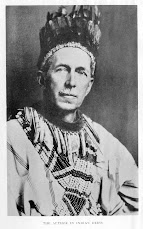
A. Hyatt Verrill

The Hartford Courant; Jan 5, 1936; researched by Alan Schenker, digitized by Doug Frizzle, Nov 2011.

Luck Alone At the Helm On Voyages

Inland Farmers, Ignorant Of Navigation, Put to Sea For Any Port They Might Strike

All Transactions Based On Barter

Lumber, Cloth, Nails, Flour and Tobacco Traded for Rum, Sugar, Molasses and Indigo

Nowadays, when we are accustomed to using paper and silver currency, bank checks and drafts, when all commerce and trade is conducted on a monetary basis, we rarely stop to think of the difficulties our pioneer ancestors met in the days when actual currency was seldom seen. And few persons are aware of the means by which this difficulty was overcome or what a highly important part actual barter played in the history of New England and New England's commerce.

Wampum Scorned By Whites.

In their dealings with the Indians, the early settlers, of course found barter was necessary. The redmen had no use for shillings or pence but they had their own currency in the form of wampum or "peak." And here it may be of interest to explain that both these terms were derived from the Algonquin word "Warapumpeag" or "Yanpunpeeg," meaning "Strings of white beads." (Wamp or Yanp—white; Umpi or Unpe—a string of beads and Ag or Eg meaning more than one or many). Among most of the eastern tribes wampum was the standard of exchange, the blue being worth several times as much as the white, but with the arrival of the whitemen with entirely new goods, and desiring furs rather than shell beads, a new medium of exchange became essential. As a result a more or less uniform and recognized system of relative values was established with the standard, as we might say, based on some particular animal pelt.

Marten Skin As Standard.

My own great-great-grandfather, who maintained a trading post in Maine adopted the marten as his standard, and the system he followed was typical of all the outlying communities at that time. A marten pelt had a value of either half a pound of tobacco, four ounces of gunpowder, two yards of calico or two pounds of flour. Mink skins had one-half the trade value of marten but varied somewhat from year to year, and all other pelts were estimated on the trade value of marten skins. In cases where there was a small balance over, the "change" was made in articles of small exchange value, such as beads, lead, hoop iron, pins, and so forth.

Similar methods were followed in all business deals. Grain and corn brought to the mill were ground in exchange for a certain portion of the meal or flour, and logs were sawed in return for one board or plank in every five cut in the mill.

Good Profits to Be Had.

Once each year the furs, skins and forest products which had been obtained were taken to some coast town where they were disposed of for debit notes, supplies and various goods for trade. It may appear at first thought, as though there could be little or no gain by trading powder and shot or cutlery for furs, and then bartering the pelts for more ammunition and hardware. But as a matter of fact, there were immense profits to be made. Thus a marten skin, for which the trader had given four ounces of gunpowder, might be sold in Portland or Boston for several pounds of powder, which in turn would buy 10 or 12 marten skins.

In most portions of New England, however, the beaver skin was the ordinary accepted "standard." and instead of keeping accounts, recording sales and other transactions in terms of pounds, shillings and pence, they were kept in terms of beaver skins. It is recorded that Samoset sold an area of land to the British for "50 beavers." Not that the chief received payment for the real estate in beavers' pelts, which would have been about the last things he needed, but in powder and shot, hatchets and blankets, cloth, beads and trinkets to the value of 50 beaver skins. Very often, in the old documents still preserved, there is mention of cattle, household goods, grain and produce, even the cost of building ships, having been paid for in "beavers."

Currency Practically Disappears.

But very frequently no genuine beaver skins were passed from hand to hand, the actual deal being made in equivalents of beaver pelts. Indeed, so universal and well recognized did this "beaver" standard become that for greater convenience coins or tokens were struck bearing a rude figure of a beaver and which were known as "beavers." These took the place of true currency and had the value of a prime beaver skin. This led to the widely adopted use of tokens, usually of lead, brass or copper, which for a number of years served throughout New England in place of real money. They were issued by established merchants and shipping firms in the coastwise towns and were stamped with the values of the existing British coins in circulation. Real currency being extremely scarce, it was retained by the merchants and shipping firms for the purpose of liquidating taxes, port charges, customs dues and other debts which called for payment in specie, the artisans, laborers and public at large being paid in tokens which were accepted at their face value, although their worth depended entirely upon the integrity and financial status of those who issued them, the tokens being in effect, merely promissary notes, as one might say.

Even up to 50 years ago many of these old New England tokens were in use to some extent, and I can remember when, as a boy in Maine, I bought many a stick of candy, and many a marble, kite or other toy with brass tokens given to me by my grandmother along with big copper pennies and half-pennies. Often, too, these tokens greatly simplified the problems of international exchange, and many of the New England ship owners issued tokens which passed current in the British, Dutch and French West Indies as well as in New England.

Although beaver skins had become a widely recognized standard or basis of all trade values in northern New England, the settlers in the southern sections had established their own "standards" based on local products and commodities. Thus, in Connecticut, oxen, corn, salt pork and hides were the units; on which all barter was based, and were regarded as legal tender in payment of local debts and transactions, being commonly called "country money." Thus, in a contract made on June 13, 1717, between a Mr. Whiting of Hartford and Comfort Davis, it was provided that Davis, who "hath hired my whale bote to go awhalyng to Fishers Islande," was to "pay 20 shillings for the use of "bote and gere", and three pounds "if she bee loste and they get nothinge," payment to be made in "such goodes as I may use to my advantyge." It was also agreed that if Davis were successful and took a whale, that he should pay Mr. Whiting the sum of three pounds 10 shillings "in oyle from ye fish."

In another contract made in 1681, Hugh Mould of New London agreed to build a ship, the "Alexander and Martha" for a one-eighth share in the vessel and "merchantible goodes" to the value of 165 pounds.

But it was in ocean commerce that barter really came into its own. Trade was truly trade in those days, and New England's ship masters were the greatest of all traders. The first small vessels to be built were confined to the coastwise trade carrying cloth, household goods, powder and shot, hardware and similar articles from the larger towns to outlying settlements where the products of civilization were exchanged for furs, gums, wampum, sassafras roots and other native products. Often the little trading vessels sailed from place to place with no definite objective, and trading wherever they found it to the best advantage.

Used “Hiede of Lether."

But there was a regularly established trade between Connecticut and Virginia, with a "hiede of lether" as the established "standard" of barter. In the papers of Captain John Coite, owner of the pink "Providence," of Middletown, there is a schedule of trade values based on the hide as a standard. According to this, one and one-half pounds of hides equalled one pound of buckskin. One pound of hides equalled two pounds of old iron, and two pounds of hides equalled one pound of old pewter, and it was provided that the "leaste buckskin" should "weigh not less than four and one-half pounds. In this list of "country money" or "merchantable pay," the relative trade values of corn, wheat, pease, salt beef and pork were set down, as well as wampum, the blue wampum being worth a bushel of wheat per fathom while a fathom of the while shell beads would purchase only a bushel of corn. As the monetary values of grain and some other commodities were noted, the blue wampum was worth four shillings a fathom and the white one shilling and six pence in actual cash—provided there was cash in circulation.

Striking Out for West Indies

It was not long before the farmer-sailors of New England discovered that trading ox hides for buckskin, salt pork for codfish and pewter plates for wampum and furs with their neighboring colonists was not a very lucrative form of commerce. But farther asea were the West Indies replete with sugar, rum, molasses and other goods in great demand, and the New England skippers decided to try their hands at bartering in the islands. It seems incredible that men who tilled their inland farms beside the Connecticut and in the valleys of New England, and whose only vessels were the tiny open sloops of 10 or 12 tons burden should ever have dreamed of attempting ocean voyages to the Antilles. Yet for many years these little craft hailing from Hartford, Glastonbury, Middletown, Windsor, Thompsonville and even Springfield made trip after trip to the West Indies and even to South America. It was such men braving the Atlantic and the Caribbean Sea in their tiny cockleshells of home-built boats, who were the pioneers of New England's vast West Indian trade and laid the foundations of America's once famous merchant marine.

Destination Hardly Mattered.

Possessing the most rudimentary ideas of navigation, entirely ignorant of the use of the quadrant, incapable of taking an observation without charts, depending wholly upon inaccurate compasses and dead reckoning, and with only a man and a boy as their crew, they sailed away on their long voyages to the tropics. It is not at all surprising that these daring New Englanders rarely reached the destination for which they sailed. The wonder is that they ever survived. But they could scarcely miss the West Indian islands altogether, and one island served their purpose about as well as another. And having once reached the Antilles they could sail from island to island, bartering their cargoes and eventually sailing back to New England with their sloops deep laden with tropical products.

The logs or rather the journals of these adventurous, fearless traders make most interesting, and often humorous, reading. As a usual thing more time was consumed in sailing down the rivers to the Sound than on the voyage from Long Island Sound to the West Indies or South America. And judging by their quaintly written comments, the skippers considered "makeinge the open sea" a greater feat of seamanship than the ocean voyage to the Antilles. In the Journal of Captain Lord, of Glastonbury, it is recorded that his sloop, the "Speedwell," set sail on August 20. 1755, and by September 15, the vessel had reached no farther than Rocky Hill!

"We can neither tow, warp nor sail, and I fear me we never shall," wrote the skipper-owner, who was compelled to put back to Hartford to replenish his water and provisions. Yet he must have managed eventually to have won clear of the river, for in November he was in far-distant Surinam or Dutch Guiana, and was exchanging his cargo at "this dumb dirty place," as he called it, to "goode profittc", and a little later set sail for home with a load of logwood, lignum vitae, sugar, rum, mahogany and green-heart timber.

Days of ‘Horse Jockeys.’

The earliest of these farmer-sailors to voyage to the West Indies carried cargoes of miscellaneous merchandise consisting of lumber, barrel-shooks, cloth, nails, flour, bread, brass goods, tobacco, broom handles, peas, onions, corn, and so-forth which they traded for rum, sugar, indigo, gums, species and logwood. But they soon discovered there was a greater demand for cattle and horses than for manufactured goods and foodstuffs and presently they were carrying little cargo aside from livestock. In fact horses became such an important trade that the Connecticut River vessels were called "horse jockeys", and they frequently sailed for the Antilles with 40 or 50 of the animals as a cargo. Try and imagine what it must have been like to have voyaged from Connecticut to Barbados in a 15-ton open boat carrying 50 horses, with the necessary fodder and water, and manned by a farmer-captain, a slave and a boy.

It was even worse when swine or cattle were substituted for horses, and as might have been expected, the losses, especially in heavy weather, were very heavy. But so profitable was the business that even if all but one-third of the animals perished at sea, the long voyager, paid handsomely, for there was a profit at both ends of the cruise.

Yankee Ingenuity Triumphs.

History fails to record who was the first of these New England sea-going traders to discover that the Dutch colonists in Surinam were in need of cattle and bricks. But it must have been early in the game, for by 1720, a regular trade in these commodities was being carried on with Dutch Guiana.

And here Yankee ingenuity and shrewdness came to the fore. When a New England skipper arrived in the Dutch colony and found that for one reason or another he could not "fill up" with rum, sugar, molasses and logwood in exchange for his cargo, was he discouraged? Not a bit of it! From trader-sea captain he would transform himself to a mason-builder, contract to erect buildings with the bricks he had brought, and accept payment for his services in local products.

Just Like Glastonbury.

Most of the brick buildings to be seen in Paramaribo today were thus built by Connecticut traders, which explains why the residences and public buildings of a Dutch Colony in South America are so amazingly similar to those of a New England village. Many a visitor to Dutch Guiana has been sorely puzzled as to why fireless houses should be provided with brick chimneys, why homes sizzling under an equatorial sun should have heavy, green-painted shutters to the windows, why there should be cupolas perched atop the steeply-pitched shingled roofs, and why fan-lights and wooden pillars should frame the panelled front doors. Even the natives of Surinam can offer no explanation, but in a letter written to his wife, Captain Joshua Green of Glastonbury says: "I have this day completed the building of the stadhaus, and were I to be crossing the green in my cups, I would deem myself at home, so like to the town hall is it builded, with green shutters to its windows and cupola atop its roof, and in all matters much the same."

The Next Step.

From voyaging to South America and the Antilles it was little more than a step to extend the New England trade to Europe and Africa, and very soon the little sloops, pinks and ketches of obscure New England villages were carrying on a three cornered trade, sailing to Spain and the Barbary Coast with flour, lumber and corn which were exchanged for wines, millet, olive oil, cloth and slaves; thence to the West Indies where new cargoes were secured by barter, and finally returning to their home ports with goods worth many times the value of the original cargoes.

Trade at Its Best.

Perhaps the most remarkable example of the extent to which this New England maritime trade was really trade, is the record of the ship "Neptune" of New Haven. Under command of Captain Townsend, the "Neptune" set sail for China in 1797, carrying a general cargo and with gold coins to the value of $500 for use in case of an emergency. Putting in at the West Indies, the skipper traded a portion of his cargo for rum, sugar and the like. Then he squared away for Rio where he bartered more of his cargo for fustic, indigo, sanders and other products of Brazil. At the Falkland Islands and about Terra del Fuego, the crew devoted some time to sealing, and then, rounding Cape Horn, the "Neptune" headed for the South Sea Islands. Here a brisk trade was carried on and calico, cotton cloth, brass wire and old iron were exchanged for divi-divi, pearls and pearl shell, spices and dragons' blood. Finally reaching China, Captain Townsend bartered his seal skins and the remainder of his original cargo, receiving tea, silks, lacquer work, porcelain, sandalwood and ivory in return, and hoisted his topsails bound home.

On July 11, 1799, two years and six months after he had set sail from New Haven, he dropped anchor in the harbor with a cargo valued at $280,000 and with the original $500 in gold coin intact!

No wonder that the expression: "As sharp as a Yankee trader," became a byword throughout the world.

Long before the "Neptune" made this memorable voyage, script had come into general use throughout New England. But even after paper money and tokens were everywhere accepted as currency, the old system of barter and trade remained popular and formed the basis of practically all business and commerce.

Getting Along Without Money.

In a letter written to a friend a piano manufacturer of Saybrook stated that he had handled less than two pounds in currency in 10 years, and then described in detail how he had managed. Receiving an order for a piano from a customer in New York, he arranged with the owner of a sloop to transport the instrument and himself to Manhattan, payment for freight and passage to be made in cordage, sailcloth and gear. Arriving in New York, he was paid for the piano by debt-notes on various merchants from whom he received the cordage and other articles with which to discharge his debt to the vessel's owner; rosewood and ivory, tools and household goods, clothing, and a bolt of silk for a gown for his wife, as well as a tierce of tobacco and a cask of Holland gin. Returning to Saybrook, he exchanged the gin and some of the tobacco for a yoke of oxen and a milch cow, and having no use for the cattle he traded them in for bricks with which to erect an addition to his piano shop.

Friday, 4 November 2011

Proud Merchant Ships of Connecticut


The images are copies of copies of the newspaper which did not reproduce well, our apologies.

Proud Merchant Ships and Vessels Formidable In a Fight Once Slid Down Busy Ways of Connecticut River Shipyards

A. Hyatt Verrill

The Hartford Courant; Nov 3, 1935; researched by Alan Schenker, digitized by Doug Frizzle, October 2011

Revolution Industry's Big Boost

Speedy Privateers and War Craft Could be Constructed Safely Out of Enemy's Reach

First Large Boat Never Came Back

'Mercury,' With Heavy Cargo of Lumber, Sailed for London in 1752 and Vanished

E. Haddam's Fame Then World Wide

World War Saw Some Still Afloat

Author Came Across Weather-Beaten Barks From Valley Ports in Far Distant Harbors

Nearly Every Port of Prominence Knew Trim Traders Built in That Little River Town

Our Navy, its Growth and Achievements.

By A. Hyatt Verrill, Author of 'Our American Indians,'

We are so accustomed to thinking of Boothbay, Bath, Gloucester, Salem, Boston, New Bedford, New London, New Haven and other familiar New England ports as centers of the shipbuilding industry, that it will doubtless come as a surprise to many to learn that at one period in our history more vessels were built on the shores of the Connecticut River than in any other locality in America.

Shipbuilding for many years was the leading industry of the Connecticut Valley and in practically every maritime port in the world one might then see ships bearing on their broad sterns the names of Hartford, Glastonbury, Middletown, Haddam, Windsor or Rocky Hill as their home ports.

Activity Begun Early.

It is impossible to say who built the first vessel on the banks of the Connecticut or to learn the name and rig of the earliest craft to be launched there. But we know from the records that vessels of various types, such as pinnaces, shallops and a few larger craft, had been constructed beside the river before 1700. No doubt these were built by men who had been ships' carpenters or shipwrights in England and who built their little vessels in their own dooryards. They probably had no regular shipyards and did not make shipbuilding a profession. Also, we know that as early as 1642 the towns of Wethersfield and Hartford united forces to build a "shippe" which, so meager are the records, may have been anything from a good sized rowboat to a sloop. In all probability, too, all the craft owned on the Connecticut between 1640 and 1700 were home-built, with the exception of a few which came from Boston, Plymouth and Europe. But by 1702, regular shipyards were established at Hartford and elsewhere. There was a thriving yard on North Meadows Creek in this city where, in 1730, two sloops of 35 and 90 tons burden had been built. But even before that time other smaller towns were well in advance of Hartford in shipbuilding activities.

First Important Shipyard.

So far as I have been able to learn, the first really important shipyard was established at Haddam in 1743, but no large vessels were built there prior to 1751, and no vessel of any considerable size was owned in Haddam before 1756, while during that same period, shipbuilding had become an important industry at Wethersfield, Chapman's Ferry, Essex, Middletown and Rocky Hill.

The first large vessel recorded as having been built on the river was the snow 'Mercury’ of 100 tons burden, constructed at East Haddam in 1751-52.

Upon its completion, the "Mercury" was loaded with 30,000 feet of lumber at New London, on July 1, 1752, and sailed for London, England, on July 26. She touched at Newport, but appears never to have returned from this maiden voyage, as her name is not again mentioned in the old records.

Four years later, in 1756, another snow, the "Augustin," of 180 tons, was built at the same yard in East Haddam. Following the launching of these large vessels the shipbuilding interests increased rapidly, and yards were established everywhere along the river. One contemporaneous writer spoke of seeing nine "greate shippes" on the ways at one time, and, by 1762, the industry was running a close second to river commerce, and vessels from Haddam, Wethersfield and Middletown were in great demand throughout New England.

Every Rig and Size.

Craft of every rig and size were constructed. There were sloops, ketches, pinks, brigs and brigantines, snows, and many others. The sloop of the eighteenth century was usually an open boat with a single, sharply-raking mast, carrying a fore and aft sail laced to mast and spars, and with huge square topsail and topgallant sail. The bowsprits were uptilted at an angle of 45 degrees, and in addition to a foresail and jib carried a water-sail or "Jimmy Green" laced to a cross-yard under the bowsprit. The "ketch" of those days was similar to the sloop, but was provided with a tiny square or lug sail, or "pusher," at the extreme stern. The brigs and brigantines were not greatly different from the present-day rigs of the same names, aside from the sharp rake of their masts the angle of their bowsprits and the Jimmy Green sails under the latter. The "pink" was a double ended craft, sharp at bow and stern, and was variously rigged, while the "snow" was, in effect, a barkentine with a square topsail on the mizzen mast, and usually with a lateen or lugsail, mizzen or spanker.

Famed On Seven Seas.

But of all these popular types and rigs, which varied greatly in details, the most famed and the favorites were the Connecticut River sloops. Often they were of large size, 100 tons burden or more, and while they must have been most ungainly, hard to handle and uncomfortable, yet they were excellent sea boats, as is proved by the fact that even the smaller sloops made regular voyages to the West Indies, South America, Europe and northern Africa. One of these sloops, the "Olive," of 80 tons, was built at Haddam In 1775, and for many years was engaged in foreign trade.

But it was the prospect of war with England, and the outbreak of hostilities, that gave the greatest impetus to shipbuilding on the Connecticut River. Not only were the riverside yards free from danger of attack by the enemy, but in addition, there was a tremendous demand for privateering vessels and war ships, and the river-built craft had become famous for their speed and seaworthiness.

The famous Connecticut state sloop-of-war "Defence," of 100 tons burden, was built at Wethersfield in 1741, and, quite naturally, when, in 1775, Congress ordered Connecticut to supply its quota of two war vessels, the state officials selected a riverside yard as the place where the ships should be built.

A Gallant Fighting Ship.

The first of these, the famous "Trumbull," was built at Chatham, below and across the river from Middletown, and was launched in February, 1778. It is of interest to note that this famous war vessel was a four-masted ship with a lateen "jigger." In a contemporary letter, Gilbert Saltonstail, captain of marines aboard the "Trumbull," wrote: "Not a shroud, stay, brace or bowline or any of our rigging standing. Our maintopmast shot away, our fore, main, mizzen and jigger masts going by the board." This was after a battle, naturally.

Following the launching of the "Trumbull," orders for privateers and smaller craft came thick and fast. Among the privateers built were the sloop "Revenge" of eight guns, built in 1776; the schooner "Olive." launched 1777; and the brig "Marshall," built in 1781, while many others were built on speculation and were advertised for sale in the local papers. Thus, in the "Connecticut Gazette" of March 27, 1778, there is an advertisement offering "A sloop of sixty tons. Just built at East Haddam," and in the same paper, under date of July 11, 1784, "The brigantine 'Fanny.' recently built at East Haddam, a fast sailer of 116 tons," is offered for sale.

Engaged In Indies Trade.

The great boom in shipbuilding, brought about by the war, increased instead of diminishing at the close of the Revolution, and the river yards were kept busy turning out vessels mainly intended for the West Indian trade, which, now that England could not restrict United States commerce, was becoming the most lucrative and important commerce of New England.

Among the West Indiamen built at East Haddam was the sloop "Fox" which sailed for Guadeloupe in July 1784, and returned on Sept. 20, having made the passage from Turks Islands in 13 days, a record for those times and for many years thereafter, and which went far to establish the fame and prestige of East Haddam builders. As a result, East Haddam became one of the greatest shipbuilding ports in the United States and vessels constructed in the riverside yards of this little town were to be seen in nearly every port of the world, but especially in the West Indies.

In November 1786, the sloop "Alfred" and the brig "Dolphin," both built at East Haddam, were at Port au Prince, and in February 1787, the East Haddam built sloop "Union" was at Statia.

A Prize for the French.

In this connection it is revealing to discover the value of one of these Connecticut River vessels and its cargo. Thanks to the fact that an East Haddam sloop, the "Julia," was seized by the French and confiscated in July 1798, and a claim was filed in Washington, we are able to secure an exact account of her value, as follows:

"Value of sloop 'Julia’ and fixtures $1772.75

30 fat oxen @ $30. $900.

*7 tons pressed hay @$17. $111.

150 bushels corn @$0.60 $90.

13 hgsds. corn @$9. $117.

51 bbls. flour @$5.75 $292.75

20 bbls. beef @ $9. $180.

23 bbls. beans @$3.50 $80.50

3 bbls. pork @$18 $54.

6400 red oak hgsd. staves @0.10 $64.

1000 hgsd. hoops @0.15 $15.

3000 ropes onions @0.50 $150.

$4327

(* This is a most interesting item as it proves that pressed hay, which is commonly considered a modern innovation, was known and used by Connecticut farmers in the eighteenth century.)

The above value of $1772.75 placed on the sloop and fittings seems very low for a new vessel, the "Julia" having been built in 1794, but we must remember that both labor and materials were very cheap, lumber could be had for the cutting on the hillsides, and a good sized ship could be built for less than $3000.

Process of Evolution.

It was about this time that the riverside shipbuilders began to alter the types and rigs of their vessels. Ketches had almost disappeared. Pinks of large size had been practically abandoned. Sloops for overseas trade were being supplanted by brigs and brigantines in the smaller tonnages and by snows and ships for larger craft, while the advent of the schooner, and the fine showing this new rig had made during the Revolution, had led many of the builders to devote nearly all their energies to these fore-and-aft-rigged vessels, although at that period all carried square topsails.

A Significant Freak.

Many of the builders tried their hands experimenting with entirely new forms of vessels, and as a result, some most curious freaks were developed. One of these made its appearance at Hartford in 1784. It consisted of two scow-like flatboats fastened side by side and surmounted by a horizontal circular platform attached to gears connected with a horizontal shaft carrying paddle wheels at its extremities. Its motive power consisted of horses, the animals walking on the rotating platform, thus transforming it into a treadmill. For some time this unique contrivance was operated as a ferry boat at Hartford and created a great deal of attention. It is mainly of interest, however, as the forerunner of the steamboat. It led directly to the inventions made by John Filch and his experiments in steam navigation on the Connecticut River near Hartford. These were the very first experiments made with steam-propelled vessels and antedated Fulton's "Claremont.”

By the latter part of the eighteenth century, the shipbuilding industry had become thoroughly organized on the river, and the numerous small and individual builders had either abandoned their trade, had sold out to larger firms or had combined with the latter. The largest of the river shipyards was Green's at Haddam. It was established in 1800, but two years later, it became Green and Smith and continued as such until 1842. A great many boats were built in the Green and Smith yards, among them the schooner "Science," 1817; the "Washington," 1821; the "Imperial." 1822; while the pride of the Green fleet was the "Cotton Planter" whose keel was laid down April 1, 1838 and which was launched on the eighteenth of October the same year.

Another prominent builder of that period was Captain Horace Hayden, whose last ship was the "Southworth," built for the Bulkleys of Fairfield in 1846-7.

At Goodspeed's Landing there was another large shipyard, and when Hayden died, Mr. Goodspeed took over the former's business. Before 1845 he had built two schooners, the "United States" and the "Cinderella," and in 1846 he built the brig "Manhattan" and the schooner "Commodore," following these, in 1847 with the ship "Hero" and the schooner "Telegraph." Another Haddam builder was Daniel B. Warner who built the ship "Genius" in 1845; the "Wave Crest," 1855, which was captured by the Confederate cruiser "Alabama," in 1853. Warner built the largest vessel which had ever been built on the Connecticut, the 2000 ton schooner "Chauncey Jerome."

Rowboats and Gunboats.

Succeeding the Greens, H. S. Tyler, in 1849, built the 890 ton ship "Marathon." In 1850 a new ship by the name of "Trumbull," and in 1852 the schooner "John W. Miner," both large vessels, were launched for deep water trade. At this time the Haddam yards were launching everything from tiny skiffs and rowboats to steamships, among the latter being the gun boat "Kanawha," built in 1861 for the United States Navy. It seems strange today to think of war vessels being built and launched on the Connecticut, far from the sea, and it is difficult indeed to visualize the shores of the river lined with ways and stocks, with tapering masts rising high above the roofs of the little riverside towns, with gaunt frames of great ships towering above shops and smithys, with the sound of mallets and broad axes, mauls and caulking irons echoing from the hillsides and the wooded slopes. But during the Civil War, the yards along the Connecticut were hives of industry and many a fighting ship, many a merchantman, many a blockade runner, for that matter, took form and shape and slid from the ways into the calm waters of the river.

Decline Sets In.

With the end of the Civil War shipbuilding on the Connecticut died out as contracts for large sailing vessels decreased in favor of steamships. Other important factors in the slump of the industry were the depletion of native timber and the increased cost of labor and transportation, as well as the difficulty large vessels had in navigating the river. And with the abandonment of square-rigged vessels and the advent of the big three, four and five-masted coasting schooners, the river shipyards were doomed. The huge cargo carriers could be built far more economically in coast towns than on the river and very soon the shipwrights of the towns along the Connecticut confined themselves to building small sailing craft and steamers, towboats and ferry boats and yachts. In the same old yards wherein quaint, bluff-bowed, high-stemed pinks and snows, and the stout old 24-gun frigates had slid the ways, side wheel river steamers such as the "Washington Irving," steam tugs, trim steam yachts and ugly ferry boats took form and shape.

But it was only a matter of time, a short time, before the end of shipbuilding on the Connecticut. Long before New Haven and New London, Noank and Stonington ceased to be centers of the industry, the yards at Wethersfield, Haddam, Middletown and other towns beside the river, were silent, deserted and still. Grass and weeds hid the piles of sawdust and chips. The timbers of stocks and ways were carted off to serve other purposes, and where many a stately ship had once been reared, and scores of busy shipwrights had labored and the air had rung to the sound of hammer and maul, cattle graced or houses were built, and few aside from the "oldest inhabitants" recalled that their home towns by the riverside had once been famed In every port of the five oceans and the seven seas.

They Had Their Hour.

Many a famous ship first rose in its gaunt skeleton frames in those forgotten shipyards. There was the ship "Neptune" which, in 1798, sailed around the world, being the very first American vessel to circumnavigate the globe and the first to carry the Stars and Stripes to the Orient, the South Seas and the East Indies. In an East Haddam yard was built the brig "Commerce," one of the very first stout old Yankee whaleships, and the first whaleship to cruise for whales in the Pacific. And at Chapman's Ferry, Mr. Goodspeed built another famous whaleship, the brig "Bruce," which in 1836, voyaged to the coast of Africa and discovered new grounds for the sperm whaling fleet.

During the World War when every battered old hulk that would float was patched up and sent to sea, I saw a bark in Port of Spain Trinidad with the half-obliterated words "East Haddam," traceable under the blistered weather-beaten paint, daubed on her by Norwegian owners; and at the very tip end of South America, in the harbor of Punta Arenas, the world's most southerly city, there was a hulk that once had been a proud, full rigged ship whose counter still bore the name of her home port—Wethersfield.

Notes with the images, mostly from ‘Sea-Lore.’

Connecticut seaman of 1770, the type who raided with Smedley.

Stanley Rogers's drawings of the early schooner, ketch and yawl, (left to right), from his splendid book, "Sea-Lore."

Deck hand of the '50's in the rigging of a merchant ship.

Of this type was the Federal gunboat "Kanawha." built in 1861 at H. S. Tyler's extensive shipyards at East Haddam. This little river town was once one of the country's greatest shipbuilding centers.

The "Trumbull," sadly disabled, fights a losing but valiant fight with pursuing British cruisers. This famous four-masted war vessel was built at Chatham, now Portland and launched there in February, 1778.

Blog Archive

Countries we have visited