Showing posts with label ants. Show all posts

Tuesday, 27 March 2012

Ants Have Beauty Doctors


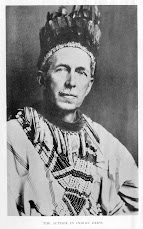
Since the image of Verrill in this newspaper article was so bad I have added a couple of images from our archives. A link to the Science Fiction story, 'World of the Giant Ants' follows./drf
Ants Have Beauty Doctors
Daily Boston Globe; Apr 11, 1937; researched by Alan Schenker, digitized by Doug Frizzle, Dec. 2011
Intelligent Insects Keep Pets and Capture Slaves in Raids—Hyatt Verrill Tells of Man-Eating Ants He Escaped in Costa Rica—One Ant's Daily Work Equal To a Man Walking to San Francisco
"Sit-down strikes?"
"A sit-down strike would never be countenanced in the ant world! 'No work, no life' is the ant motto, and a sit-downer would unquestionably be dealt with most summarily.
"I doubt if they even have festivals or recreations, for their lives consist wholly of toiling, eating and sleeping. In fact, I should judge that an ant's life is about as monotonous and as machine-like and ordered as ours would be if the N. R. A. had continued for a few decades."
With a twinkle in his eye, A. Hyatt Verrill of Springfield, author of "Strange Insects and Their Stories," paused to tell of his adventures with ants in a score of countries. And when he speaks on ants, mark his words! He has been around!
Much Like Humans
"I do know that ants have feasts or banquets, that their form of government is thoroughly communistic, and that for some reason, whether because of strikes, mutiny or pure disobedience, certain individuals are punished and executed," he said.
"It is quite probable that had the ants developed to man's size instead of remaining tiny insects, they would have developed a far greater degree of intelligence than human beings and would have far outstripped mankind in civilization and would have completely dominated the earth."
Human beings, then, should not pat themselves on the back and pride themselves on their civilization.
"Ants resemble man in many habits. There are ant masons, miners, carpenters, farmers, soldiers, police, doctors, servants, slaves, nurses, undertakers and sanitary officers; there are ant hospitals, cemeteries, playgrounds and nurseries, and no human babies are more carefully reared than the young of most ants," the naturalist pointed out.
"Although few persons are aware of it, nearly every important industry, as well as many human characteristics and habits, are common among the ants," Mr. Verrill recalled.
"Every ant carries a comb about with it, and never think of starting the day's work without first washing himself and making himself spic and span.
Take Entertainers Along
"Moreover, ants have beauty specialists and masseurs. When some weary ant stretches out and is smoothed, rubbed, parted and massaged by another ant it exhibits every symptom of enjoying the process as much as does a human athlete after a strenuous field day."
Mr. Verrill paused to light his pipe.
"You know, it is almost impossible to conceive the amount of strenuous labor which ants perform day after day. Very often their loads weigh twice or four times as much as their own bodies, and not infrequently the tree or bush whence the leaves are cut is a mile or more from the nest. Why the ants should travel such a vast distance, equivalent to over 120 miles to a man, in order to secure leaves when there are trees of the same species within easy reach of the nest remains a mystery.
"In the course of a day I have seen ants which made scores of trips back and forth between nest and tree and tree and nest. On their journey for leaves these ants are often accompanied by strange midgets who are incapable of cutting leaves and are apparently mere entertainers."
"Entertainers!"
"Yes, indeed! These are weak creatures and are often carried to the nests on the backs of workers.'
Blind Cockroach Pets
Speaking of entertainers, the ants have domestic pets, just as we human beings have dogs and cats. The leaf-cutting ants keep blind cockroaches as pets, and so fond of these creatures are the ants that when a queen departs to form a new colony she usually carries a baby cockroach with her. In return for the loving care bestowed upon them by the ants, the cockroaches act as masseurs and also lick the sap of the leaves from their masters' bodies.
Crickets and beetle larvae are also kept as pets, Mr Verrill pointed out. "So fond of these beetle pets are the ants that they feed and care for them, carry them to the outer air on fine days and take them inside if it rains, and spend a great deal of their time fondling and stroking their odd pets."
How many miles does an ant travel daily? Have you ever wondered? Then let the distinguished naturalist give you the low-down, as it were:
"Each ant travels in a day a distance which, in proportion to the insect's size, would be equal to nearly 3000 miles! Imagine a human being walking from New York to San Francisco one day and back to New York the next, for day after day, week after week, and carrying a load of two to three hundred pounds on each eastward hike, merely to secure material for a mushroom bed to supply food for his family and his friends. Yet that is his sole object of labor."
Some Can't Feed Themselves
Of course, some ants just won't work and that's where the unemployment problem comes in. Some ants take life easy and are so wholly dependent upon their slaves that they are unable to feed themselves, and if placed in a jar with sugar they will starve. But if a black slave is placed with them he will at once begin feeding his masters.
"Oddly enough," Mr. Verrill declares, "the ants' slaves are always black ants and the masters are red ants. Red ants often raid the nests of black ants and carry off the young. Some of the most interesting battles occur when the black ants mass themselves in army array for a battle with their attackers.
“No quarter is shown, the wounded are promptly put to death and often devoured, and the victorious black warriors are left unmolested for a time. But usually it is the other way around." Mr Verrill's fascinating book on insects and their stories, published recently by L. C. Page & Co. is replete with stories on ants and their work. He also is the author of "Strange Sea Shells and Their Stories" and "My Jungle Trails" published by the same company.
"I have stood within a dozen feet of a vast army of ants, an army so immense that the rustling of their moving bodies and the sound of their jaws could be heard a hundred yards away," he relates. "So numerous and so voracious are these big ants that horses and cattle are overpowered and devoured, and there are many cases of human beings having fallen victims to the army ants."
10,000 Red Hot Needles
In his newest book, "My Jungle Trails," to be out this month, Mr Verrill tells of stepping into an ant colony while collecting natural history specimens in Costa Rica.
"Never dreaming of any danger, I jumped from the log, and the next instant fairly howled. I felt as if I had sprung into a pot of boiling lead with 10,000 red-hot needles searing the flesh of my ankles and legs. Yelling with pain, I glanced down to find my legs almost hidden beneath a moving black mass, while between the branches and trash underfoot the ground appeared to heave, move and undulate. Instantly I realized what had happened. I had jumped into a column of army ants!"
Son of the late Prof Addison E. Verrill, noted zoologist, Mr Verrill is one of the nation's foremost authorities on nature subjects. A graduate of Yale, he has illustrated the natural history portions of Webster's International Dictionary, and has conducted scientific expeditions in Bermuda, the West Indies, Guiana, Central America and Panama.
He has studied insects and plant; life in Costa Rica, Mexico, Yucatan, Panama, Columbia, Ecuador, Peru, Bolivia, Chile, Tierra del Fuego, the Falkland Islands, Brazil, Uruguay, the Azores, Cape Verde Islands and all the islands of the Caribbean. Besides, he has made extensive studies in Europe and has crossed the Atlantic 12 times.
Tramping about these countries gave Mr Verrill plenty of hair-raising adventures. Often he was in grave danger.
"On one occasion, for example, while spending the night in a shack on the mountainside of Costa Rica, the hut was visited by an army of ants while my companions and I slept. And it was only by good fortune that we ever saw the light of day again!
Escaped Man-Eaters
"It was this way," he began. "We were sleeping in hammocks and ants will not travel over a rough hair rope. Except for ourselves, every other living thing within the house was utterly destroyed. Not a roach, fly, moth or termite remained, and a good-sized tapir, which we had killed in the afternoon and had hung up outside the hut, was completely devoured. Only the bones and the rugged hide remained to tell the ants' visit as silently as they had come they had vanished.
"I shudder to think of what out fate would have been had we been sleeping in cots instead."
Mr Verrill, whose works have enjoyed a wide popularity, is the author of more than 90 books. In 1920 he made ethnological and archaeological explorations in Panama. Four years later he discovered the remains of previously unknown prehistoric culture in Panama. Then he was engaged in making a series of oil paintings of South and Central American Indians from life.
Mr Verrill led archaeological and ethnological expeditions in Peru, Bolivia and Chile and in 1933 led an expedition to salvage a Spanish galleon sunk in the West Indies in the 17th century.
An honorary chief of the Carib Indians of Guiana and the Guaymi tribe of Panama, he speaks several Indian dialects.
He is at home in any city or town of Latin America, for he has spent some time in almost every South .and Central American republic. For several years he conducted the popular science department of the American Boy Magazine. His latest are being published by the Page Company in Boston.
How does he explain some of the amazing things that ants do? Are ants guided by instinct or reason?
"That," he laughed, "is a question on which scientists disagree. Personally, I think they reason, for I cannot explain many of their actions by pure instinct."

Friday, 30 December 2011

Some Ants and their Ways


Hyatt Verrill wrote about ants a number of times including the science fiction story, “World of theGiant Ants”. The illustrations for this story are his own and resemble the illustrations used in that story. (I notice the blog linked story does not contain those images, sorry.)/drf
Some Ants and their Ways
By A. Hyatt Verrill
Everyland magazine, Nov. 1916. Everyland Nature Club column. Digitized by Doug Frizzle Dec 2011.
YOU all know what busy little creatures the ants are, and no doubt many of you have watched them as they hurry about hither and thither as if intent on some very important business. So, too, you may have seen an ants' nest and wondered what was inside of it and how the ants lived.
But if you could watch the ants at their every-day life, you would be filled with wonder, for in many ways ants are most intelligent creatures and many of their actions and habits seem as if inspired by reason, while in some things the ants have really improved upon man's ways.
Even the commonest ants have very wonderful habits, and one of the most remarkable of these is the manner in which the ants keep cows. Of course they are not real cows like ours, but tiny insects known as aphids or plant lice; but to the ants these creatures serve the purpose of cows and they are just as carefully tended and cared for and pastured as are cattle kept by human beings. The aphids give forth a sweetish substance known as "honey dew," of which the ants are very fond, and it is to secure a supply of this substance that the ants keep their little six-legged cattle.
To protect the aphids from the rain, the ants build little sheds over them and if the plant, on which the aphids are feeding, wilts or dies the ants pick up their cattle and carry them carefully to a strong plant where they may be sure of plenty of good food. When cold weather approaches, the ants carry the eggs and pupæ of the aphids into their own snug nests. Here they are carefully guarded and watched throughout the winter and in the spring, when the aphids hatch out, the baby cattle are carried out of doors and placed on plants where they may find plenty of fresh sap on which to grow big and strong.
But the aphid cattle are not the only insects which live with the ants in their underground homes. Several kinds of beetles, as well as spiders and wasps, may often be found in the ants' nests and on the best of terms with the owners. Funnily enough some of these make their meals off the baby ants and nobody has ever been able to explain why the ants, which are so wise in most ways, should allow these unwelcome guests to remain in their homes. Not only do these strangers live with the ants, but their young depend upon the ants to act as nurses for them. When one of the baby beetles is hungry, he strokes and pats the face of an ant in a very funny way and the ant at once gives the hungry youngster a drop of honey-like liquid from its own mouth.
Another funny thing about the ants is that they have slaves; and the queerest thing about these slave-keeping ants is that they are red while their slaves are black!
When a nest of ants finds that it needs slaves a regular army is formed, skirmishers are thrown out, and scouts go here and there and search about until a nest of black ants is found. Then the red army of warrior ants rushes on the city of black ants and a very fierce and bloody battle is fought. But the red soldiers are always stronger and fiercer than the blacks and very soon all the black fighting ants are killed or wounded and the victorious army loots the nest and carries off all the eggs and pupæ and takes them to the red ants' city.
When they return, laden with their prizes, all the other red ants come out to meet them and act as happy and joyful at the safe return of their army as do human beings when they have won a battle.
All the eggs and pupae of the black ants are then taken into the red ants' nest and are guarded carefully until they hatch out and grow up. Oddly enough the black slaves raised in this way are very willing and obliging and do all the hard work of the red ants' city without trying to escape or shirk. The slaves even feed the baby red ants, as well as the full-grown ones, and some species of slave-holding ants have become so accustomed to being fed by their slaves that they cannot feed themselves and would die of starvation if it were not for their black servants.
Some ants do even more remarkable things than these, however. In Texas there is a kind of ant called the Horticultural Ant, which raises regular crops of certain kinds of grass on the seeds of which the ants live. Not only do they plant and weed the young grass but they also carry manure to their gardens, keep the soil loose, and free from other plants and, when the seeds are ripe, they gather them and store them away in regular granaries.
In tropical America there is a remarkable species of ant known as the Army Ant. These little creatures travel in such immense numbers and are so ravenous and fierce that nothing alive can withstand them. Wherever they go they devour every particle of food they find, and as their armies are often half a mile wide and extend for miles and miles, they create great havoc when on the march. No obstacle will turn them aside and they even cross streams and rivers and if they come to a house or a village the people are obliged to leave until the ants have passed. But the natives don't object to this very much for the ants eat every roach, bug, rat, mouse or other vermin in the houses and leave them clean. Sometimes they come upon a house in the night and before the people can escape from the ants they too are devoured. In many places where the army ants are numerous the people sleep in hammocks with rough ropes over which the ants will not crawl and in such cases the people sometimes wake up in the morning and find an army of ants has passed by during the night and has cleaned the houses of every edible thing, even the cat or dog being eaten and nothing but a few bones are left to tell the tale.
A relative of the army ant, and which is found in the same countries, is known as the Umbrella Ant. These little chaps march along in single file and each one carries a triangular bit of green leaf over his head like an umbrella. These pieces of leaves are used in building the ants' nests and also for cultivating a species of fungus on which the ants feed. As only one kind of leaf is used the ants are sometimes obliged to travel for several miles to obtain them and the endless procession of tiny green umbrellas, winding up hill and down dale, along the well-worn ants' roads is a very funny sight. Of all the funny habits of ants, however, the most curious is that of a little chap from Asia. This ant builds its home between leaves which it gums together with sticky silk, and where do you suppose it obtains the glue-like substance? Not from its own bodies and not from any plant, but from its own young, for the young ants spin out the silk for making their cocoons. When their parents wish to make a nest, two or three ants hold the edges of the leaves together and another grasps a young ant in its jaws and rubs the baby ant's mouth along the seam to be joined, just as if the little chap were a mucilage bottle. As soon as the sticky silk from one baby is used up another larva is brought and used in the same way until all the leaves are glued firmly together and the nest is complete.

Friday, 18 November 2011

Remarkable Habits of Ants

Remarkable Habits of Ants

By A. Hyatt Verrill

From Popular Science; Jul, 1900; researched by Alan Schenker digitized by Doug Frizzle, Nov 2011.

Of all the lower animals none are more interesting, more worthy of study or possessed of greater “intelligence” than the ants. Many of their actions seem as if inspired by reason, and surely in their social life they have improved upon mankind. Even our commonest species have remarkable habits when we come to observe and study them more closely.

One of their most common habits is that of keeping "aphids" or plant lice, in place of cows. The ants not only secure food in the shape of a sweet substance known as "honey-dew" from their tiny cattle, but feed and care for them as well, even building little sheds over their herds to protect them from rain. If the plant on which the aphids are feeding dies or becomes poor pasturage, the ants carry their cattle to better feeding grounds.

When cold weather approaches they carry the eggs and pupae of the plant-lice to their own nests, and care for them tenderly throughout the winter, and, when the eggs hatch in spring, place the young on healthy plants where they will be sure to have abundant food. The aphids are not the only insects cared for, however, some species of leaf-hoppers, those droll "Brownies of the insect world," are treated in much the same manner.

Several kinds of beetles, spiders and wasps live within the dwellings of the ants in perfect harmony with the rightful owners. Some of these guests undoubtedly render their hosts valuable services for their board, but others prey regularly upon the young ants, and it is a mystery yet unsolved why they should be permitted to remain unmolested. The larvae of some of these guests closely resemble the young ants, while others are very unlike them, and require quite a different sort of food. When one of these larva considers it meal time he strokes the face of an ant in a very comical manner, and the ant immediately obliges it with a drop of honey-like fluid, on its lower lip, which is eagerly devoured by the beetle.

Many of our large red ants are slaveholders and curiously enough the slaves are almost always black! When a colony of ants desire slaves a regular army is formed, skirmishers are thrown out and scouts sent ahead to discover a nest of black ants and look over the ground. The invading army is composed entirely of warrior ants, with powerful jaws, quite different from the common workers. When the nest of the intended victims is reached a fierce battle takes place and many are killed and wounded on both sides. The more powerful invaders are always victorious, however, and entering the nest of the vanquished they rob it of the eggs and pupae, which they carry to their own home. The returning victors are welcomed on their arrival with various manifestations of joy, and the young of their defeated foe taken within and carefully tended until they reach maturity. Strangely enough the slaves thus obtained are willing and obliging bondsmen, doing all the harder work of the community and even feeding their captors. Indeed, some species of slave-holding ants are incapable of feeding themselves, and, if it were not for their slaves, would die of starvation in the midst of plenty.

Although our northern ants are so interesting, it is in the warmer portions of the world that their most remarkable habits are shown. In Texas the "agricultural ant" raises regular crops of certain species of grass, the seeds of which they harvest and store in well constructed granaries. Their little farms are very carefully tended, all weeds and encroaching plants carefully destroyed and the soil kept loose and manured.

The "army ants" of tropical America are remarkable mainly for the immense numbers in which they travel from place to place, devouring every particle of animal food in their path. Sometimes in the course of their marches they enter houses, and, although the occupants are obliged to vacate for the time being, they welcome the visit of the ants, as upon their departure they are sure to leave the dwelling free from roaches, rats, mice and all other vermin. Apparently these army ants do not possess the sense of smell, for walking-leaves and walking-sticks frequently save their lives by remaining motionless when overtaken by the army, the ants even passing over them, evidently unaware of the food hidden by the semblance of leaf or twig.

A relative of the army ant and found in the same localities is known as the "Leaf-carrier." These little fellows march along in single file, each one carrying a triangular piece of green leaf above his head. The pieces of leaf are used in building their home and cultivating a sort of fungus used as food, and only one kind of leaf is used apparently. Frequently the ants are obliged to travel several miles in order to secure the leaves, and the endless procession of moving bits of green, winding up hill and down dale along a well-worn path, presents a curious appearance

Ants have many kinds of nests, some in the earth, some in wood, others in trees or bushes, and still others between leaves. The most curious ants' nest in the world, however, is found in Java, and is known as the "ant-plant," from the fact that its large woody root is almost invariably inhabited by a certain species of ant. The curious part of it, however, is that the chambers, galleries and tunnels are not made by the ants who live therein, but naturally formed, ready for the tenants.

The most wonderful habit recorded of any ant, however, is beyond doubt that of an Asiatic species which lives in nests constructed of leaves fastened together with silk. Whereas the adult ants have no means of spinning this silk themselves, their young possess a small quantity which they use in forming cocoons within which they change to pupae. Their parents avail themselves of this in a manner so remarkable as to be scarcely credible. While several individuals hold the edges of two leaves together, another member of the colony grasps a larva in his jaws and rubs its mouth along the seam, when the young immediately excretes its silk in a sticky fluid state. As soon as the supply of one larva is exhausted, another is brought, and the operation repealed until the seams are all safely and strongly glued together by the aid of this living mucilage.

Blog Archive

Countries we have visited