 |
| Felipe Lettersten |
We recently visited Puerto Rico. My personal highlight was at the 'Museo las Americas' in San Juan. They had an exhibit, a permanent one, titled 'El indio en America:'
It included a series of statues of native Americans, Indians, mostly from South and Central America. The statues were so lifelike! Then on exiting there was a television display of how they were made--and the philosophy of the artist.
 It ends up that the statues are made from life--the models, the natives, are coated with plaster of paris from head to toe. The moulds were then taken back to the studio where the statues were created. The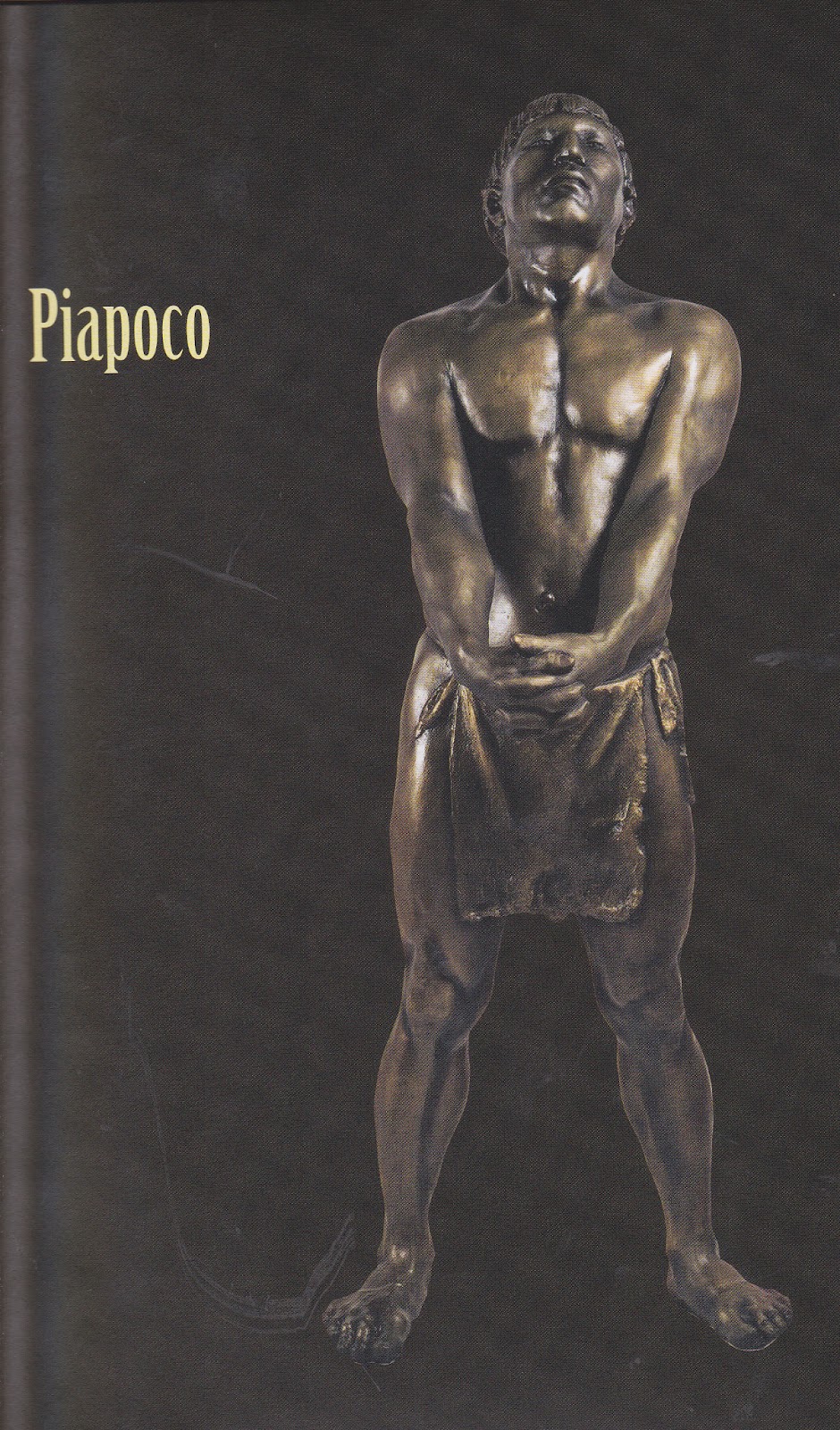
Wonderful... but so little is left of our knowledge of Felipe Lettersten. I thought I should spend a little time to tribute him. So sorry there is no more...


Felipe Lettersten
Birthdate: June 16, 1957
Death: Died November 11, 2003 in Lima, Peru
Cause of death: Liver Failiur
Occupation: Sculpturer
Felipe Letterston, a
Swedish-Peruvian artist who dedicated his life to the
knowledge and protection of the "Hijos
de Nuestra Tierra" or "Sons of our Land".
He was a total
artist, but mainly through sculpture he tried to capture in bronze the physical characteristics of the indigenous people of the
Americas.
Most of them in danger of extinction.
 Born in Lima, Peru
from Swedish parents... He studied
at Markham College
in Lima and later in Europe.
He was a multi talented artist, besides sculpture he painted and played the piano and the
saxophone. He also had a great affinity with plants and animals.
Born in Lima, Peru
from Swedish parents... He studied
at Markham College
in Lima and later in Europe.
He was a multi talented artist, besides sculpture he painted and played the piano and the
saxophone. He also had a great affinity with plants and animals.
His sculptured have
been exhibited in Spain, Hawaii, Japan,
Thailand, Sweden, USA,
Italy, Mexico, Canada,
Cuba,
and All of South America
The most
interesting thing about Lettersten’s sculptures are that they
are made from ‘life’. Technique:
He would have to
convince the person to trust him,
this was the most difficult part.
Then he would
make a frame or structure with steel rods and wire and then
completely cover the model with plaster of paris (fast dry). Once dry
he would split open the mould and
let the model free. After that, in
his workshop in Lima,
he would pour plaster in the mould
and get a plaster statue which he retouched and added the
details. Another mould was made and
this was casted in bronze or polyurethane fiber.
 He reproduced
many aboriginal Indian individuals with their
native clothes, ornaments and tools
and in typical everyday attitudes.
He reproduced
many aboriginal Indian individuals with their
native clothes, ornaments and tools
and in typical everyday attitudes.
Sioux, Navajo,
Apache, Algonquian, Cheyenne,
Hopi were some of the North American tribes he portrayed.
Quechua and
Aymara from the
Andes
Bora, Campa,
Machiguenga, Ezeja, Iquitos, Jibaro, Conibos,
Shipibos, Cashinaua...from Peru
Camayura, Tumbe,
Yanomami, Parakanas, Araras...from Brasil
Caribe, Llanero,...from Venezuela,
among many other tribes that were visited and their members posed for Felipe.
Felipe would
return to the tribes he visited with
a replica of the statue made in
fiber glass as he promised the natives so it could be displayed in the middle of their
village.
Other
links: http://tulliopeschiers.tripod.com/felipelettersten/