Sunday, 24 June 2012

Up The Mazaruni For Diamonds -Part 1


 Up The Mazaruni For Diamonds -Part 1
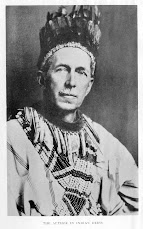
By W. Jean LaVarre
From The American Boy magazine, January, 1919. Digitized by Doug Frizzle, June 2012.

The Boy Scout Who Went Scouting in the Wilds
Editor’s Note—American boys are always doing interesting things. Occasionally one of them does something that is of extraordinary interest and value. Charlie Murphy did; his own story of his fourteen months in the Arctic appeared just a year ago in THE AMERICAN BOY. W. Jean LaVarre did; his own story of his remarkable adventures in the wilds of British Guiana starts on this page and will continue for several months, each installment taking him deeper into that strange land and revealing something of new interest. Jean LaVarre, a Virginian by birth, was 18 years old when he had the thrilling adventure which he describes so graphically. He was "prepared" for it. In 1911 he joined the Boy Scouts of America and helped to organize one of the first troops on Staten Island, New York. He became a First Class Scout, and earned sixteen merit badges and was appointed Patrol Leader of the first Honor Patrol in his city. Outdoor subjects have always been his hobby, especially mountain climbing and camping. He has been camping every year since he was ten years old, and says he intends to keep it up the rest of his life.
The voyage to South America and the trip into British Guiana wilds (several hundred miles farther inland than Colonel Roosevelt penetrated on his visit there) was the biggest of Jean LaVarre's many experiences in the open. He and his friend Edward P. Lewis, of Springfield, Mass., went hunting for diamonds, and for five months lived in the real "wilds” among uncivilized black men—an experience which few white men have had. Not only the adventures but the unfamiliar facts which LaVarre learned there, at first hand, make this a feature of unusual value.

 “HERE'S A QUEER looking letter," I said to myself, one day early in the spring of 1917. I could hardly make out the postmark. It was something of a surprise to receive a letter from British Guiana, as I finally deciphered it, but the contents were even more surprising.
The letter was from my friend Edward P. Lewis. "I need a partner in a diamond mining venture," he wrote. "Are you game to try it out with me? It will be a long trip full of adventures and dangers, but there are diamonds here to be had for the digging."
He wrote much more. I became enthusiastic on the moment and was determined to go if possible. I had little trouble in arranging this and wrote him that I would come.
On the tenth of May I sailed from New York on the steamship Saga to Barbados where Lewis met me. He was delighted and quite as enthusiastic as I. He had been in Georgetown, British Guiana, for a while on other business and had learned about the diamond fields away up the famous, and treacherous, Mazaruni River. From Barbados we sailed away In South America on the steamer Parima. I was surprised in find Georgetown such a large city, 60,000 inhabitants, and, as the buildings were all one and two stories, one can imagine how it spread out.
"Can we start to-morrow?" I asked, after we had reached our hotel. Lewis laughed.
"Hardly," he said. "This isn't like a trip back home where you can toss some clothes and clean collars in a bag, buy your ticket, catch your train and be off."
I had not given much thought to exactly how we were to travel. But I soon learned that to journey up a great river for hundreds of miles with a score of natives, taking all the food for a six months' stay, was a matter that could not be arranged in a moment.
The starting out place for the trip was twenty miles from Georgetown at a town upriver called Bartica. But as Bartica has only twenty inhabitants we bought everything at Georgetown. There we busied ourselves with the preparations. It seemed as though there were a million details to look after, and I got an idea of what an explorer is up against, as we had to outfit ourselves about the same as an exploring party would.
"We must get lead guns, beads, mirrors and other trinkets," said Lewis.
"What's the big idea?" I asked. "Are we to open a five and ten cent store for the native Indians up there?"
"Not exactly," laughed Lewis, "but we must have something to trade with. What use is a silver or gold coin to a native back hundreds of miles in the jungle? He'd rather have a twenty-five cent kitchen knife than a fifty dollar gold piece."
The "lead guns" are not lead, as I learned, but the very cheapest sort of cheap guns, manufactured in England solely for trading with semi-civilized and uncivilized people. No live American boy would take one as a gift, but I found that the natives treasured them above everything else they possessed.
We were fortunate in finding a Dutch captain, a man who has navigated the turbulent waters of the Mazaruni for twenty years. And he picked out a skilled "bowman," a native who stands at the bow of your boat, with an immense paddle, and fends it off rocks, gives steering directions and acts generally as a sort of life preserver for the boat.
Then there was "Jimmy." He was a negro, rather undersized and as black as the inside of a lump of coal. He appointed himself our special guardian, a sort of valet, overseer and servant. He looked after our personal belongings, cooked our food, made our tea and devoted himself exclusively to us.
Twenty paddlemen were also engaged. Sixteen of them were quite as black as our Jimmy, and four of them were in varying shades from tobacco brown to light molasses candy tint. These were of mixed Dutch and Negro blood.
"They are 'Bovianders,'" said the captain.
"Queer tribal name," I commented.
The captain laughed. "Not exactly a tribal name," he explained. "They live up the river quite a distance and so it is said that they come from 'above yonder.' They have twisted that into 'Boviander,' so that the word always means people who live up the river."
While we were engaging our staff the captain was getting boats for us. He selected a great fifty-foot boat seemingly as heavy as a locomotive. It looked like a crude craft, made of great thick planks. I soon learned the necessity of such a heavy boat. We also had a small boat for emergency and for little side trips here and there.
Next came the "cats." We had to take enough food for ourselves, our twenty-two helpers and partly enough for the native Indians that we were to employ later. When the big boat was finally loaded properly under the skillful direction of the captain, we had five tons of food aboard and this included no meat at all except salt fish. There was no need to take meat, for game and fresh fish were so plentiful that we were never without them.
There was a queer, tent-shaped rig amidships of our big craft. Beneath this was room enough for us to stay sheltered during the heat of the day. White men can seldom stand the midday heat in British Guiana.
Packed all about us was the food. Jimmy climbed to the top of the pile. The captain took his position aft. The sturdy Boviander bowman took his place at the bow with his immense paddle, the twenty paddle men took their places in four groups of five, one group on each side, forward and aft of the cargo.
Then they shoved off and began their peculiar, noisy paddling.
The little town of Bartica fell away behind us as we slid out into the broad expanse of the old Mazaruni.
We were off at last, on our great diamond mining adventure!

EAGERLY I scanned the waters and either shore, determined that nothing should escape me, that I should see everything and enjoy every possible thing there was to be enjoyed.
The captain sat, complacently smoking, at the stern of the boat, the great steering paddle, tied to the stern with thongs, in his hands. He looked as bored as if crossing the street to buy an evening paper. How could he, when there was such glorious adventure, I wondered. But afterwards I realized that twenty years of navigating the river had somewhat dulled the novelty of it for him. With him it was work, and nothing more.
To a boy used to paddling our own style of light canoes, the paddling methods of those black men seemed the most awkward in the world. Yet they "got there," and I doubt if any crew of white men, without years of practice, could have propelled the heavy craft as easily as they. Their method was to bend forward, holding the paddle horizontally and sliding it along the gunwale with a loud scraping noise, then suddenly lean over sidewise and dig the paddle viciously into the water, giving a sturdy backward tug with it, still scraping the paddle against the gunwales. At the end of this stroke they returned the paddle to the horizontal position with a loud thumping noise, sat up straight, then leaned forward and repeated the stroke.
They kept perfect time. No varsity crew boys ever worked in unison at the oars any better, and they were forever singing. It didn't matter whether they were paddling twenty feet across a narrow inlet or making an all day pull upstream, they always had music with their paddling.
They were crude songs, partly English that was scarcely understandable, partly native dialect and partly something else that may have been handed down to them from their ancestors who were captured in Africa so many generations ago and brought over by the early Dutch and English slave traders.
If the water was smooth and open, with no current, our twenty paddle men would sing as softly as the whispering of a summer breeze. But if there was a current they would sing louder. And the more difficult the paddling, the louder they would sing. In boiling rapids where it took every ounce of their strength and they had to take quick, short strokes to keep going, their voices arose to an almost howling crescendo.
Soon Bartica was lost to view around a point of land. For nearly six months we were to see no more civilization than Indian villages here and there, hidden far back from the river bank. As we swung up into the broad river where the current became strong enough to cause the paddlers to use a little extra "elbow grease" they broke into a queer song which I heard so many times after that, that it still rings in my ears. I cannot translate it. I do not know what it means, but imagine that it is some sort of love song to some dusky "Lena." This is the way it sounds:
"San, Lena, chile, I do love yo';
Me know so, hear so, yes!
Le, le, le, le, le, le,
Blow, ma booly boy, blow Califo 'ge 'ole,
Splenty o'gol's for A've been tol'
T' th' lan' o' Mazaruni!"

We came in sight of another boat. On the Mazaruni every boat one sees that is going in the same direction is an "adversary" and every paddler believes that it is his duty to pass it. Then you see some fancy paddle strokes, so weird and unusual and grotesque that they are difficult to describe. One would think that they were trying more to awe each other with their paddle gesticulations than with speed. How they race upstream, each determined to get and keep the lead! The captain told me that many lives were lost at rapids because the racing paddlers would give thought only to getting into the narrow passes first and were frequently crashed upon the rocks and overturned.
Not far from the little town is Kalcoon, the biological station where at various times Professor Beebe and the other scientists take up their intimate studies of tropical life. This station is on a high hill where the Mazaruni and Essequibo Rivers join. It was at this place that Colonel Roosevelt stopped when he visited the colony.
From this point the vegetation on both sides of the river became so dense that it seemed almost like greenish-black solid walls. No huts or signs of human life were visible at first. But finally, with sharp eyes, we got so we could detect a slight opening, a log landing at the water's edge or a faint suggestion of a thatched hut in back of the shore row of trees.
It would have been fearfully monotonous but for the fact that Lewis and I devised a new sort of game— to see which one could detect the greater number of signs of human habitation. Our natives, with sharper eyes, would verify our discoveries. All this was in the Boviander section, where the natives come down from " 'Bove yonder." Just before nightfall we reached the foot of the first falls and landed to make camp for the night.
Before the big boat touched land Lewis and I had leaped ashore to stretch our legs. The blacks jumped out into the shoal water and swung the boat into place and made it fast. Jimmy began taking ashore our shelters. Suddenly he began a frantic search and in despair cried:
"No cookum!"
"You bet you 'cookum,' " I shouted, "I'm starved."
"No cookum! No cookum!" repeated the distracted black boy, mournfully.
Lewis investigated and came back with a long face.
"We did a bright thing," he growled.
"What's wrong?" I asked.
"Left all of our cooking outfit down at the village!"
"There's two things to do, go without them or go back and get them," I suggested.
"Can't go without 'em," said Lewis.
"Then there's one thing to do," I laughed. I was not to be filled with gloom. The prospects of a great adventure were far too joyous. Our landing was at the last settlement of the Bovianders. These half Dutch, half Negro natives speak fairly understandable English. I scouted around amongst them, found a good canoe, took three black men and set out downriver. The two paddlers were sturdy boys and, going down with the current, they fairly made that old canoe whizz.

IT WAS MIDNIGHT when we got back to the village. Everyone was asleep except the dogs. They greeted us with howls, and many of the men turned out. Perhaps they thought they were to be attacked by some enemy tribe. But we soon explained, got our cooking outfit, lashed it carefully to the canoe and started back. There was no speeding up against the current, although the light canoe made better progress than our heavy boats. And then I heard a sound that made me think I was back home. It was the "put—put—put" of a gasoline motor. I was amazed.
"Fire boat," grunted one of the black men.
I hailed it. A Dutchman answered and came over to us. It was an ordinary native boat to which he had attached one of those portable motors which may be put on any boat. He was going upstream and gladly took us in tow, much to my delight. Otherwise I would not have reached camp until daylight, and the tropical nights (as I afterward learned) are not the sort of nights for anyone, especially a white man, to be out in, because of the terrible dampness and mists as well as insect pests.
As we chugged along upriver, my three blacks sitting back and grinning at their luck because they would be paid just the same for the trip although they escaped all of the hard work, there suddenly came across the black water the most weird sounds imaginable.
There were shrieks and falsetto laughter, squeaks and tinkles and shrill pipings and heavy stamping. I couldn't imagine what it all meant.
"Wedding celebration," said the Dutchman. "Let's put in and see the fun."
I stared at the black bank of the river whence came the weird sounds, but could see nothing. Finally, as my eyes became accustomed, I caught faint glimmers of light that seemed far inland, miles and miles, I thought. In reality the natives were no more than a quarter of a mile inland, or perhaps less. We found a landing place and, guided by the fearful din and the flickering lights, made our way through the jungle to the higher, dry ground beyond. I had all sorts of visions of great snakes dropping on me and wild jungle beasts grabbing at my heels, but nothing worse than giant mosquitoes came near me.
We came to the opening and a group of huts. In front of one hut was an improvised porch or platform. The boards were rough, uneven and loosely laid across supports. At one end sat a wrinkled and grizzled old man playing a squeaky fiddle. Beside him squatted two younger natives playing flutes. Another pounded upon the platform with a cocoanut shell, beating time. We were welcomed with nods and smiles, but the natives could not pause in their festival to do more. They were dancing on that platform. Overalls and frayed shirts and rough brogans made up the evening dress of most of the blacks, but the women were decked out in gaudy skirts and waists. Up and down and back and forth over the rough boards, pouncing and scraping and stomping their feet, they danced and laughed.
Tallow candles, oil lanterns and here and there kerosene lamps were affixed to hut poles or trees, and by this light the dancers cast amazing shadows over everything, shadows that moved and swayed and intertwined in a most awesome manner.
And everyone was talking and laughing at the same time. Every fourth word was understandable but there were many dialects and vernaculars. There were cocoanuts to eat and a peculiar sort of cake or bread. We watched the merrymaking for quite a while. The newly weds were cheered by means of peculiar calls when they danced together. I suppose those black children of the jungle danced all night. We finally grew weary of it all and set out for camp.
Such food as could be eaten without cooking had been served and everyone was asleep except Jimmy, who awaited my coming, and tumbled me into a hammock beneath a canvas shelter. I suppose I had slept many hours but it seemed no more than five minutes before I was wakened and crawled out for breakfast. The camp kitchen had been set up, the blacks had already eaten and were getting the boats ready. Our breakfast consisted of boiled rice, salt fish and biscuits.
The second day up the river was uneventful. There were broad sweeps of water, grand, wide curves and the seemingly endless mile after mile of thick jungle vegetation growing down to the water's edge. That night I had an opportunity to see how such an outfit was handled. We landed in a rather likely spot, not far back from the shore, at five o'clock. Some of the blacks brought the kitchen outfit ashore, others cut long poles and put up the canvas shelters. It seems that we took our "hotel" along with us, merely a great canvas cover, and spread it anew at each night's camp.
A great pole was placed in the crotch of two trees, about twelve feet above ground, the canvas stretched across this and propped up with shorter poles and ropes. Beneath this were stretched two hammocks, one for Lewis and one for myself. Meanwhile Captain Peter and the bowman swung their hammocks under the awning of the large boat.
Our twenty paddlers put up three smaller shelters beneath which they swung their own hammocks.
The tropic sun was turning the great Mazaruni to a sheet of molten gold, deep blue dusk was falling, this turning to gray, and then the camp fires began to glimmer here and there.
The captain and bowman needed no camp fire, sleeping on the boat, but we had our own, and the natives had their own at each shelter. Jimmy presided over our fire, made coffee for us and prepared our supper. Captain Pete and the bowman had charge of the food for the natives. The English laws outline clearly to the last ounce and gramme just how much food you must give the natives that work for you, to live on.
It was interesting to watch Captain Peter, assisted by the bowman, with their scales, measuring out the rations to our paddlers. The Government standard of weekly rations for each man are: flour, 7 pints; salt fish, 1 pound; sugar, 1 pound; rice, three and one-fourth pints; salt pork, 1 pound; dried peas, one and three-quarters pints; biscuits, 1 pound. Frequently the men prefer the extra portion of sugar in place of the peas, as the sugar is a delicacy with them, desired above all else.
Captain Peter, through long years of experience, knew just how to divide this weekly allowance into daily portions and the blacks trusted him. In line they would march down to the boat, each with a tin plate, and receive his portion, carefully weighed on the scales, then he would march back to his camp fire and prepare his food as best suited himself. At the same time each one was given extra tea, sugar and crackers for the light morning meal, to save time in breaking camp. With their pint of flour they baked a cake beside the fire, using the salt from their fish for the seasoning. Sometimes boiled plantains were eaten with their supper but these they brought with them as they are not furnished by the Government. These plantains are much like bananas, but smaller and really considerably different in taste. Then there was game and fish to supply additional meat so that, with the foodstuffs we brought along, everyone fared quite well.
As soon as they had eaten and cleaned their tin plates they crawled into their hammocks and filled their short black clay pipes with tobacco. I must say that it was not a very attractive brand of tobacco, to judge from the odor. That night we gave cigarettes to those who did not have them and after that we sold them cigarette tobacco and papers from our stock at cost. They are extremely fond of them.

IT WAS at these times, as I soon learned, that there was much amusement to be had with these blacks. I learned of their many superstitions, their ambitions, likes and dislikes and much of the customs of that wild country that could never be learned in any other manner. This I learned both by means of questions and by listening carefully as they talked to each other. Their English was about as easy to understand as that of the Southern Georgia darkey, when they cared to talk it.
A "Dodo" they told me—and they believed it, too—is a sort of hairy bird-beast twenty feet high which either eats men alive or carries them off to its jungle nest and makes slaves of them. Then they would name this or that acquaintance and say, "Ah spec' he shuah was et by a Dodo, yes suh."
Caven, one of our paddlers, solemnly assured me that he had seen a Dodo. Caven looked much like a Dodo, or some sort of a missing link, himself. He said he was out hunting monkeys and saw one.
"He gi' me scar' fo' true," said Caven, and he must have seen some weird thing, or dreamed that he did, for his teeth chattered even at the telling of it. These blacks could talk fairly understandable English when it was necessary for them to make themselves clear to us. Otherwise they could profess almost absolute ignorance of the language, and among themselves they frequently talked a jargon that would defy any linguist to interpret.
Our men soon formed themselves into cliques and they stuck to these groupings throughout the long trip. The Bovianders kept by themselves; the Berbicans (negroes from Berbice) by themselves; and the Demeranans (who believed themselves to be the salt of the earth) likewise flocked together. We had one Barbadian negro. Now to a British Guiana darkey, a darkey from Barbados—one of the Leeward Islands—is the essence of laziness and good-for-nothingness. I think the British Guiana darkey is right. But I found that Caven and his brother Berbicans were really the best of the lot. In every test of strength, bravery, skill and endurance, they led the other blacks.
I really did not get my initiation into the mysteries of hammock sleeping in the tropics until the second night because on the first night I tumbled in about three in the morning too tired to know whether I was in a hammock or a feather bed. But on this second night I found myself doubled up like a crescent moon. I twisted and squirmed and wriggled about in my fantastic debut into the brotherhood of hammock sleepers before I discovered that the trick was simple enough, once you got on to it, that of sleeping diagonally across it from head to foot.
Having made this discovery I arose and got out the victrola we bought in Georgetown. It was a small, cheap one, but the best investment 1 ever made. I don't know what induced me to do this, but with a large assortment of records that machine drove away gloom and dull care through many and many a dreary evening.
The blacks enjoyed it immensely, and it seemed strange to be mingling the voices of our opera singers with the screech of monkeys and the howls of red baboons and piping of strange night birds in the tropical jungle.
The camp fire died low, at last. Fresh lanterns were lighted and the men prepared for sleep. This was no simple matter to them. To me it was the most astonishing sight I had witnessed. They made ready for bed by putting on all of the clothing they possessed. Then they wrapped cloths around their hands, feet and necks. Some even pulled bags down over their heads and tied them. The "wealthy" blacks had bags for each foot. Our empty flour bags became grand prizes to be used for this purpose, which we awarded to the best workers.
By the faint camp fire light and flicker of lanterns those natives certainly did look queer, like fantastic goblins, all muffled up. There was little that seemed human about them as they clambered into their hammocks and rolled themselves up, pulling over the flaps until quite lost to view.
"Does it get so cold at night that we have to wrap up like that?" I asked Jimmy.
"No suh, dey's feered o' vampire bats. That there is a part protection."
I couldn't get the "part protection" meaning of it, and all Jimmy would explain was that they had some sort of superstitious "voodoo" rigamarole performances to keep away the vampires.
I was quite excited about it. From early boyhood I had read about the deadly vampire bats that come upon you when you are sleeping and suck your life blood away. Secretly I hoped that I would be bitten by one so that I could boast of it when I got back home.
The blacks were asleep. By virtue of being a sort of aide-de-camp Jimmy was allowed to swing his hammock in a corner of our shelter. He insisted that the lantern be kept burning all night.
"No need of it," I told him.
"Yes suh, they is, Mister Laver," (which was the best he could do in the way of pronouncing my name). "Ef yo' don' bu'n a lantum all night yo' will shuah be annoyed."
"Annoyed?" I laughed.
"Uh, huh, annoyed by vampires," he answered, very solemnly.
But I couldn't sleep with the lantern light in my eyes and so blew out the light. Several times in the night, poor scared Jimmy tried to light it, but I yelled at him.
Neither Lewis nor myself were ever bitten by a vampire. Sometimes one would alight on my hammock, but fly away without trying to bite me. Yet, despite their great care, our blacks were frequently bitten. They would become restless in the night, kick off some of their wrappings and then the vampires would get at them.
I have heard that vampires are deadly. I never knew personally of a fatal case. I do know that they always pick out a blood vessel for their biting spot and that they never awaken the sleeper. The more blood they draw, the sounder is the sleep of the victim and the bite does not become painful until the next day.
I should say that our crew of blacks must have lost, among them, a couple of quarts of blood during the trip. Some of them were quite lame and sore and a bit weakened as a result, but that was all. As near as I can figure it out the vampires prefer the blood from gentlemen of color rather than from pale-faced Americans.

"DAYLIGHT! Daylight!"
It was the stentorian shout of Captain Peter. He was a human alarm clock. He never failed to awaken at the first gleam of daylight. In the tropics it does not come on with a slow pink dawn as here, but seems to burst through the gray morning light in a flash.
There was a scramble everywhere and all tumbled out of the hammocks. Camp fires were lighted, tea was boiling and in a short time everyone was getting into the boat. The natives had our shelters down while we were drinking tea. They came down to the boat with their pots and pans jangling at their sides, and at the captain's cry, "In boats all!" we climbed in, the darkies took up their paddles and began their noisy paddling, singing at the same time. The sun was flaming over the top of the jungle from the distant shore of the river, three quarters of a mile away, and we set out on our journey.
Lewis and I took seats on top of the canvas where we could see everything. We passed through a wide part of the river full of islands and deep channels and treacherous currents and whirlpools. Only a skillful man like Captain Peter could have guided our boat through the right channels, as some of them contain whirlpools that look smooth enough on the surface but would have dragged even as heavy a craft as our own under without a struggle.
Some of the islands were a mile in area, some no bigger than a doormat. In and out amongst them we paddled and finally came to a smoother, more open part of the river.
"Eleven o'clock!" cried Captain Peter.
I looked at my watch. It was just eleven o'clock.
"Your watch is right, Captain," I called.
"I have no watch, sir," he replied. "I use God's time."
It was a fact, he told time by the sun, and seldom was a minute out of the way.
Eleven o'clock was always breakfast time. How those black men could paddle up against a strong current towing our smaller boat, from five o'clock to eleven with only a cup of tea was more than I could understand. Yet they did it, and worked well and never seemed hungry. At eleven we always went ashore and cooked breakfast, cakes, rice, boiled plantains, salt fish and tea. Then we would pile back into the boat again and keep on until just before sunset, trying to make a good landing in time to pitch camp before dark.
That long afternoon was tiresome to me. I scanned the deep foliage everywhere in hopes to see many wild beasts and reptiles. I recalled my geography, with its woodcuts of jungles showing great alligators on the shores, giant boa constrictors writhing in trees, monkeys hopping from branch to branch and queer, bright-colored birds flitting about. This was jungle, surely enough, with such thick vegetation that only crawling things could penetrate it, yet for hours I saw no signs of life there. There were wonderful orchids that would, if they could be brought to New York, sell for fabulous sums. There were queer looking trees, great fronded palms, hanging moss as thick as large hawsers and other growing things that I knew nothing about.
In Georgetown I had heard tales of giant forty-foot snakes. I never saw one. I did catch a glimpse of a small snake which they told me was deadly poison. He was hanging from a limb over the water. We were paddling close inshore to avoid a current. One of the blacks saw it and in a flash knocked it far away into the stream with a blow of his paddle and kept on paddling, because to him this was a common incident. His eyes were trained to see such things.
That night we camped at Topeka Falls, or just below them, and the roar lulled me to sleep.

I DISCOVERED that the first part of our trip up river was not as full of adventures as I had hoped. But adventure came in good time. The routine was the same, night after night, but there were many new things of interest to see, many narrow escapes and considerable trouble in one way and another. At this camping place I stripped and was about to take a swim.
"Hey, quit that," shouted Lewis.
"I won't hurt your old river," I laughed.
"You won't come out alive, sir," said the captain. "There isn't an alligator or crocodile or whatever you call 'em in sight," I insisted and started to dive. Jimmy restrained me.
"No go in. Fish eatum up," he said. I laughed at the idea of a fish eating me up. The captain tossed a salt fish into the water. There was a swish and a big fish came and grabbed it. I didn't get a very clear look at the fish but he looked bigger than a whale and his teeth seemed altogether too prominent for me to fool with.
I discovered that the river was full of "perai," a decidedly savage fish extremely fond of human beings.
One of them will devour a man in a short while.
I gave up my plan of having a swim and Lewis and I satisfied ourselves by sitting on the edge of the small boat and splashing water over each other.
Our fifth night was Saturday. We did not intend to travel or work on Sunday. We selected a splendid camp site. Heretofore the blacks had waited and given us the best camping place. But we had been treating them so well that they thought our kindness to them was not kindness at all, but fear of them. And so they started to make their shelter on the best spot.
"You can't have that place," I said.
"We got it," grinned one of the men. Most of the others stuck by him. One or two slunk off.
"Go down there," I commanded.
"We stay here," he declared and stood his ground. I was in an uncomfortable position. If I let them have their way this time there would be no living with them. If I got in a fight—they were, after all, twenty-two blacks to three whites—they could overpower us.
Suddenly I had a vision of how they would abuse us if I gave in. I could see them grinning at each other, believing that we were afraid of them. That situation would be unbearable. I turned on the black man and pointed with my left hand down the slope.
"Get down there and stay down!" I commanded.
"I won't —"
He didn't say any more. My fist shot out and took him under the ear and he went over like a stick of wood. Then I wheeled to face the others.

I REALLY EXPECTED a fight, but the blacks stared at their fallen companion who rolled down the slope, their eyes bulging, and before I had time to bark out a short command for them to get out they hastily snatched up their belongings and ran down the hill.
I stood there a moment, waiting to let my anger cool oft a little to make sure that I would not say things or do things unnecessarily severe or that I would regret. Then I strode down to where they were grouped and where the first black was dazedly rubbing his chin. When they saw me approach they again dropped their things and started to run away
"Don't run. You are all right there," I shouted. They paused and looked at me suspiciously.
“We are running this little outfit," I said to them, pointing to Lewis, and we are hiring you to work for us. You know your places. Keep them and you will get good treatment, otherwise you will be the sorriest niggers in British Guiana. For every wrong that you do, you shall be punished. For every good thing that you do you shall be rewarded. We are treating you kindly because it is the right thing to do, not because we are afraid of you. Your punishment for attempting to dispute our authority shall be to sleep to-night without your shelter cloth!"
Then I picked up their shelter cloth, turned my back on them and walked away. To be quite truthful, I was not a little frightened when I turned my back fearing treachery yet it was the only thing to do. I knew that I had to make them believe that I was without fear of them or of anything else, otherwise I would not win their respect or co-operation.
Meekly they arranged to hang their hammocks without the shelter cloth, seeming to take it for granted that they had this penalty coming to them for the way they had acted.
"You acted like a veteran explorer" said old Captain Peter to me. "You did just right, boy. If you had given in they would not have worked, they would have stolen everything and they would have abused you during all the trip."
Most of the white men that these native darkies knew had been of a rough sort, adventurous Dutchmen and others, who kicked them about and treated them without the least regard until the poor black boys—we call all blacks "boys"—thought that it was the white man's natural way. When we showed kindness to them and full regard for their comfort they mistook it for fear. And, thinking that we were afraid of them, they decided to run things themselves. It did not take them long to learn that American white men are not brutes and that when they worked hard and acted on the square they would be treated with kindness. And I am sure no group of native blacks, as a whole, ever worked more faithfully than this bunch after they had learned their lesson. There are always a few exceptions. One or two became lazy, one or two tried to steal diamonds, later, but we had our own methods of handling them.
For the first time in my life I learned by direct experience the value of superiority of intelligence. We white men, being mentally far superior to the blacks, could rule them. Had they known their own strength they could have overpowered us at any time. And I recalled that in all of my histories the same has held good. The mentally superior people have ruled the less intelligent.
This was our fifth night of camping on the banks of the Mazaruni. We were to be two nights here, as we did not intend to travel or work on Sunday.
By the time we had our shelters erected and this little mix-up with the blacks had been settled, Lewis suddenly looked up from his notebook in which he was keeping a sort of journal, and said, "Say!"
"Say it," I remarked, lazily, from my hammock where I was resting.
"Whoop-ee!" shouted Lewis, leaping to his feet.
"What's got you?" I demanded. "Is it a vampire down your neck or a crocodile up your trousers leg?"
"This, my beloved fellow American, happens to be the fourth day of July, in the year of our Lord nineteen hundred and seventeen, and the one hundred and forty-first year of our country's independence!" was his reply, whereupon I stared at him a moment and then I, too, leaped up and emitted a war whoop. Fourth of July in a far-away jungle! What to do? Well, we did it—did it up brown—but what we did, and how, I shall have to tell in the next chapter.

A weird Fourth of July celebration, baboon hunting, visits with the first native Indians encountered, and further hard progress up the Mazaruni—these are features of the second part of Jean LaVarre's story which will appear in the February number of The American Boy.

Sunday, 17 June 2012

An Obituary for A. Hyatt Verrill


An Obituary for A. Hyatt Verrill
From Astounding Science Fiction magazine, March 1955, column, The Reference Library, S. F. in 3-D by P. Schuyler Miller. Digitized by Doug Frizzle, June, 2012.

Cover of Astounding Science Fiction magazine
New Yorkers may have seen in the New York Times of November 16th the obituary of A. Hyatt Verrill, who died at his home in Chiefland, Florida, on November 14th, aged 83. The Fantasy Press edition of his "Bridge of Light" was about all that science fiction has had from Mr. Verrill in recent years, but in the days of the early Amazing Stories he was one of the giants in the field. The Day "Index to the Science-Fiction Magazines" lists twenty-eight stories published between 1926 and 1939.
A. Hyatt Verrill was one of the most prolific and successful writers of our time. The current "Who's Who"—the British edition, which appreciates such old-line scholarship—lists only a fraction of the one hundred and fifteen books he had written, and I would guess the number to be more like two hundred if new editions and foreign translations are counted. I credit his fascinating lost-race stories, his many books on the colorful aspects of the American Indian civilizations, and his articles in innumerable newspapers and magazines for arousing my own interest in archeology as a scientific hobby.
The son of one noted biologist, Addison Emery Verrill, and named for another, Alpheus Hyatt, A. Hyatt Verrill followed his graduation from Yale by work as a naturalist and illustrator, meanwhile exploring in the West Indies and in South and Central America. He is credited with having discovered many new species of marine shells and having rediscovered the supposedly extinct Solenodon in Santo Domingo, in 1907. In 1951, at the age of eighty, he found what he believed to be the lost "Wari Wilka" of the Aztecs or Warracabra Tiger of the present Indians, in southern Mexico.
If he emphasized the strangeness of the world in his books, it was because he wanted his readers to feel a little of that same wonder that the jungle and the sea bottom, the past and the unknown present gave him. As you know, he was exploring new mysteries when he died, seeking Old World origins for some of the stranger aspects of the American civilizations.
Today's science fiction may be more real and psychologically truer and more plausible than the brightly colored tales of the '20s, but they lack some of the magic that men like A. Hyatt Verrill and A. Merrill and Edgar Rice Burroughs put into their stories. We can use a few more romantics like them in our magazines and books.

Thursday, 14 June 2012

How the Fog Came


   How the Fog Came
By A. Hyatt Verrill
Author of "Harpers Aircraft Book," "Harpers Wireless Book," etc.
From Everyland magazine, Legends of the Northland, March 1915. Digitized by Doug Frizzle, June 2012.

It was dreary winter time in the Arctic, and the icy gales whistled around the little group of igloos (snow houses), drifting the fine snow about them until nothing but their low, rounded tops showed above the dazzling white surfaces which stretched away for countless miles to the frozen shores of the Arctic Ocean.
Just within the tunnel-like entrances to the huts the dogs huddled together, now and then howling dismally at the storm without or snapping at one another in a wolfish, savage manner. Within the little dwellings built of blocks of frozen snow, it was warm and comfortable, with no sound or sign of the blizzard raging outside. Near the center of each house stood a rude stone lamp filled with whale-oil, and with a row of moss about its edge. This moss served as the wick, and from this primitive stove the occupants of the house received their warmth and light.
 All around the inside of the igloo was a bench of ice, covered with the skins and furs of foxes, bears, seals, and wolves. On this bench sat the women; among them old Nepaluka, her wrinkled face bent close to the deerskin shirt which she was patiently stitching with a sharp bone needle and sinew threads. Near her was Newilic, her son, busily at work upon a walrus tusk, which under his deft fingers was being transformed into a long snow-knife. Between these two sat Kemiplu, Newilic's motherless daughter, a chubby brown-eyed lass of five years, playing with a horn dipper and a handful of bright pebbles.
Finally the grandmother finished the last seam, and, placing the completed shirt aside, sank back among the furs. The little granddaughter had tired of her simple toys, and cuddling up to the old woman, begged for a story. The grandmother smiled and gathering the little bundle of fur-wrapped humanity in her arms said:
"And of what shall I tell you, little daughter? Shall it be of Ukla the great bear who made the fog; of Nowgaluk the gull who ate the whales; or why the crow is black and the loon speckled?"
"O tell me of Ukla, Ananating!" (Grandmother), cried the child delightedly, and her busy father looked up from his work and listened attentively, for the simple Eskimos love their quaint old legends and never tire of hearing them repeated.
"Many, many winters ago," began the old woman, "there was a great white bear named Ukla. He and his wife lived many days' travel to the west in a great skin house upon a rocky plain, and all about the house were the skulls of men and women; for wicked old Ukla loved human flesh, and every night he traveled far across the land to the homes of our people. He would kill those whom he could find outside their huts, or would steal the bodies of the dead, and, fastening a rope of skin about their feet, would drag them across the rocks and hills to his home.
"Sometimes he was seen by the Eskimos, but oftener they saw only his giant footprints in the moss and snow, or found the graves deserted and empty. For many years this had gone on, and, although the people held medicine feasts and asked the Great Spirit to help them, yet he seemed displeased and answered not their prayers.
"Many times also the people lay in wait and tried to kill the robber bear with their spears and arrows, but Ukla was a great anti-coot (magician), and the bone-tipped weapons fell back bent or broken from his shaggy sides. At last the Eskimos were in despair, when one day a tall fair stranger came among them and said.
" 'Take heart, for I will rid you of this Ukla.'
"Then the Eskimos danced and beat their drums and rejoiced, and the stranger said to them:
" 'Tomorrow I will pretend to die and you must wrap me in skins and bury me among the stones, and when Ukla comes let him depart in peace with me.' Then the people grew very sad and sorrowful, but he answered them saying, 'Weep not, for soon I will return, and never after shall Ukla rob the graves of the Eskimos.'
"Then the people did as the stranger told them, and, wrapping the stranger in skins, placed him among the stones and departed to their homes crying aloud as if in sorrow. In the evening the great bear, having heard their cries, came across the hills to the village and, finding the body of the stranger, he fastened his rope about the man's heels and started homeward. But the man spread out his arms and grasped at stones, and although Ukla pulled and tugged he could travel but slowly, and every few miles he was compelled to stop and rest from his labors. Then as he looked at his burden he would shake his head in wonder.
" Ah,' he would say to himself, 'who would think such a small man would weigh so much; but he must be fat and fine indeed! What a grand supper he will make!' And thus encouraged by the thoughts of the fine feast he would have, he would again start onward. At last he reached his home and dragging the man within the door threw him into a corner, and tired out with his hard work crawled into his sleeping-bag, telling his wife they would feast in the morning.
"After a time the stranger opened his eyes to look about, but Ukla's wife, who was trimming the lamp, saw him and cried out to her husband:
" 'This man is not dead—he is looking about.'
"But Ukla was very tired and answered sleepily,
" 'Oh, man dead, man frozen stiff.'
"Then the man kept very quiet indeed, and when the bear's wife turned away he caught up Ukla's knife and leaping forward killed her. As she fell the bear awoke, and the man, throwing down the knife, dashed through the door and across the rocky plain while the bear followed close at his heels, panting and growling terribly as he ran.
"At last, run as fast as he might, the man found the bear was constantly gaining and would soon overtake him. Now this stranger was a mighty magician, and as he ran he caused a great hill to rise between himself and Ukla, and as the bear climbed slowly up one side the man ran swiftly and easily down the other; but when Ukla reached the top he curled up and rolled swiftly down the side of the hill and nearly caught the man again.
"Then the stranger caused a mighty river to flow between himself and his pursuer and sat down upon a stone to rest. When Ukla reached the farther side he roared and growled with rage, and in a great voice called out,
" 'How, O man, did you cross the river?'
"And the man laughed and answered, 'I drank my way across.'
"When Ukla heard this he plunged into the stream and drank and drank until at last he made a dry path across the torrent and crawled slowly up the other bank. But his long hair was wet and heavy, and his body was greatly swollen with all the water he had swallowed, so that the man feared him not, and taunted him. Then the bear grew very angry, and with growls like icebergs clashing in a storm he cried out, 'Ugh, even though I am so sodden that I cannot overtake you, yet you shall not escape me,' and giving himself a mighty shake he burst, and the water which he had swallowed flew in all directions and caused a thick fog over all the land.
"Now the man was greatly troubled, for all the hills and plains were hidden from his eyes and he knew not which way to turn. But having skinned the bear he grasped the shaggy hide in his hands and waved it many times about his head, thus making a great wind which drove away the mist. When he reached the village of the Eskimos great was the rejoicing and the men did not work and the women did not comb their hair for three days and three nights, but danced and beat drums and feasted. For many years the stranger dwelt among the Eskimos and taught them many things, and performed many great and brave deeds, but of these I will tell you some other day, for now it is time to sleep, little daughter."
As the old woman ended her tale the little brown eyes were closing, and the grandmother laid the child tenderly among the soft rich furs to dream of the good brave stranger and mighty Ukla the "Fog Father."

How to Operate a Motor Car


How to Operate a Motor Car
By A. Hyatt Verrill
A PDF file of the book is located here. The book was published in 1918, making it one of the first books on the automobile.
Once again Alan Schenker located this old treasure, June 2012.

Sunday, 10 June 2012

The Bamboo Messenger


It's raining again, a great time to create indexes for these 100 year old magazines. Stumbling upon a story with an oriental theme, it is written by a Canadian!
The Bamboo Messenger
Yashimune was Looking at the Gift Curiously
A Story of Old Japan
From The American Boy magazine, July, 1911. Digitized by Doug Frizzle, June 2012.

"NO, my son," the old gardener shook his head in despair. "I do not see how I can send you to school at Enoshima. Here in Owashi the trade is dull; were my gardens but north in Yedo, it would be different. But I hear that Yashimune, the mighty Tycoon, will visit our humble city next week; perhaps my flowers will then command better prices."
Kogoro, bending over a dwarfed pine, sighed at his father's words. Ever since lie had been a little fellow his greatest ambition had been to go to the great college of gardeners, where he might learn the secrets of the art, which were revealed only to the most skillful pupils. But his father was poor, and needed his services at home; so he gave up the hope for a time.
Three days hence the great Tycoon, Yashimune, the real Lord of all Great Nippon, would be in Owashi, the little city on the sea coast. Two hundred years ago Japan was a land of plot and intrigue; Tycoon and Shogun and Mikado were great but unstable titles, and Yashimune had for a time brought peace, for he was feared by the unruly nobles. But Kogoro thought nothing of this, as he worked that day in the garden; he was busy with his own great ambition, to go to college and become one of the great gardeners of Japan.
However, that evening orders began coming in, and both Kogoro and his father were kept so busy, day and night, that they did not even see the great entry of the Tycoon. On the fifth evening business slacked enough for Kogoro to go down to the city, for his father's garden lay just outside, on the mountain slopes.
As the boy passed through the suburbs, walking noiselessly along in his bare feet, he passed an old and deserted house belonging to the lord Mitsukima, one of the high court nobles. Kogoro glanced casually at the grounds as he went by, and stopped short; there was a light in the ancient house!
This startled him, because robberies were very few in Japan, still Owashi was situated near the mountains, and was sometimes visited by depredators. Then Kogoro knew that Mitsukima had come to town with the Tycoon, and had occupied his large palace farther in the city; could this be some thief who was taking advantage of the festivities?
Kogoro's suspicion was heightened by the fact that the light was only visible at one point, from beneath a huge displaced stone which had partly fallen over the lintel. Without an instant's hesitation, the boy vaulted over the low hedge and entered the garden.
He approached the house noiselessly. It was an old stone building, long since abandoned for the better paper houses, and Kogoro stole up to the displaced stone and looked into the crevice. What he saw made him gasp with amazement and draw back.
For there, surrounded with a number of other nobles, stood the lord Mitsukima himself! A lamp burned on the table, and in the brief glance Kogoro saw that the other men also wore crests, among them some of the greatest in the land. With that one glance he turned, intending to leave as he had entered; but a voice from within halted him.
"We will seize Yashimune; that is agreed on. But how—"
The boy stood still, a dreadful suspicion flashing on him. Were these nobles plotting against their lord? Was that why they had gathered in this old deserted house? Perhaps—
Kogoro returned to the crevice, trembling with fear, for he knew that guards must be stationed in the gardens, somewhere. The next words confirmed his suspicions. Mitsukima was speaking.
"Yes, and this will be the plan. I have stationed soldiers on the mountain roads and along the plain, on the great highway. No matter which way Yashimune returns to Yedo, we will have him, for as you know he has none of the regular soldiers on this trip. Everything is in peace, and he expects no danger; it is the greatest chance we will ever have to seine him and the power at one blow!"
"But" asked one of the others, “suppose he is warned? Suppose someone brings news of the ambush? We ought to guard against everything."
"So we will," replied Mitsukima. "Here is a list of our names; we are twelve, and there are only two faithful nobles with the court. This list is divided into three of four men each, and my plan is that one of these three sections will be with Yashimune day and night. We will guard the audience chamber from any suspicious arrivals; we will police the palace with our own men; and should any come with this warning, we should thus be able to prevent him reaching the ear of the Tycoon."
Kogoro heard a twig snap, and whirling around, saw a dark shape in the distance, looming against a white plum-tree. The boy had heard enough; so he turned and stole carefully to the hedge, reaching the street unobserved. But he did not enter the city that night.
He was sick at heart as he wandered home. Here the greatest nobles of Dai Nippon were plotting against their own ruler and lord, their oaths and duty forgotten! But suddenly he stopped in the shadow of a temple-porch. How was he to warn the Tycoon?
Kogoro went over the details of Mitsukima's plan, but he could find no way to avoid detection by the traitors. The unsuspecting Tycoon would be guarded always; even could he find out their names, the two faithful nobles could do nothing. It was the gardener's son and the Tycoon against all; the odds were great.
As Kogoro threw himself down on his mat on his little room, he set his teeth and determined that there was a way, there must be a way! But how? The city was surrounded by the troops of the traitors—no! They had forgotten the sea! Yashimune could take a ship and sail up the coast to Yedo, the capital!
Then Kogoro's heart fell again. There was no way to warn the Tycoon of his danger, absolutely none. A letter would be intercepted, of course; if he dared speak in audience, he would be silenced by the swords of the watchers before he could say two words, even if he could gain admission. How—how?
As he knitted his brows, Kogoro's gaze fell upon a three-section vase of bamboo, which he had placed beside his pillow that morning. Suddenly the boy leaped to his feet, quivering with eagerness. He had found it!
For the secrets of gardening would of course be unknown to the soldier-nobles, while the Tycoon, by virtue of his rank, would have been initiated long ago. To these nobles, a flower would mean nothing; to their master it would mean much, especially if arranged in some curious way. Without pausing a moment, Kogoro seized his lamp and went to the workshop.
Here he found a three-section vase, with three holes for flowers, one above the other. Now, in Japan every flower means some one thing, and a common form of arrangement is to take such a bamboo vase and make a landscape picture, by placing in the top a mountain shrub, in the bottom hole a sea-plant, or river flower, and in the center a fruit blossom, to represent mountain, river and plain when correctly arranged.
Kogoro knew the garden by heart, so taking a knife he went out and presently returned with an armful of flowers and plants. Carefully tying them in place with invisible threads, he put in the top compartment a long slender streamer of the princely mountain pine, and around it he wreathed a spray of smilax to signify death.
In the central compartment he placed a sprig of sakura, the king of flowers or cherry; on each side of it two bright red poppies, another emblem of death. Thus he conveyed the warning, that by mountain and plain the two ways of access to Owashi, death and danger would surround the royal ruler. But how to convey the way of escape?
By means of a single curved sea-weed or twining plant, the Japanese gardeners give the impression of a ship sinking, heavily-laden, inward or outward bound, and in other situations; so Kogoro trusting that Yashimune would recognize this, took a single yellow kiku, or chrysanthemum, the symbol of the royal power, and at its side twined a bit of sea-weed, which he got from the pond to represent an outward-bound ship. Here was the message complete; now to get it to the Tycoon!
There was to be a public audience the next morning, and at the proper time the gardener's son boldly sought admission, stating that he bore a gift for the Tycoon. He was examined closely by the guards, and, his identity proven, they admitted him; why should not Yashimune have gifts of flowers, if he cared for such things?
So Kogoro passed the first, second and third line of heavily-armed men, and finally entered the audience chamber. Bowing to the ground, with all the prostrations demanded by the ceremony, he laid at the foot of the ruler his vase; and then lifted his eyes for the first time. But the surrounding nobles only regarded him indifferently.
Yashimune was looking at the gift curiously. Every rule of flower-blending was fractured in the arrangement, and Kogoro had done this purposely to attract the attention of the ruler. Would he recognize it? The boy lowered his head to the floor again and waited.
The Tycoon suddenly looked closer, and said in a careless tone:
"My unworthy thanks are due you, son of Oshita, for your all too magnificent gift. It shall be placed on the toko no ma the place of honor, in my own apartments, lest still more unworthy eyes should spoil its beauty. I see that you know the arts, and have followed the rules of blending flowers as only a master could."
Kogoro's heart almost stifled him with its beating. He had succeeded! But the Tycoon continued, "Lord Sukushi, present this boy with a purse of humble gold, that he may be rewarded for his trouble and time." And the audience was over.
Kogoro thrust the purse into his belt as he left the palace, and ran home at top speed. Finding his father alone, he told him the whole story, and in confirmation pulled out the purse.
"My son, you have done well and ill. Well in acting as a son of Japan, ill in neglecting to confide in me. But this gold, although it will send you to college, perhaps is not your greatest reward; be proud, my son, that you have served your country and its honor, as I am proud of you!
Then they waited anxiously for news, and it came the next day. The Tycoon had disappeared! Owashi was in an uproar; the city was searched thoroughly; soldiers poured in from the hills and raked every hiding place for miles around. But it was all useless, and the mystified nobles marched away with their men two days later, taking refuge on their own estates, for they knew that they had been outwitted.
Three weeks later Yashimune returned to Owashi, but this time with the imperial fleet and a great army. The traitors had been overcome; and before the Tycoon went back to the capital his messengers brought to the humble cottage of the gardener a large wooden box, directed to Kogoro.
Opening it together, the boy and his father found a letter of thanks, and another box, lacquered and gilded. Within this lay two magnificent swords, and beneath them, bearing the sixteen-petaled chrysanthemum of the Emperor himself, the documents which created Kogoro, the gardener's son, a samurai,—a noble of the Empire!

Diseases of Watches


Diseases of Watches
Unattributed, from The American Boy magazine, July 1911. Digitized by Doug Frizzle, June 2012.

To most people the whims and caprices of a watch are a deep mystery.
When a watch leaves the hands of a reputable house it is always in first-class condition, and if it does not behave itself afterward it is generally the fault of the man or woman who owns it.
One very common cause of a watch gaining or losing is the disposition made of it at night. If you wear a watch next to your body during the day and place it on a cold surface, as a marble mantle-piece, at night, or anywhere in a cold room, the watch is sure either to gain or lose. Cold causes contraction of the metals used in the construction of a watch, and the watch consequently gains. When the heat of the body causes the parts to expand, the pivots and bearings will tighten up and the watch will lose time. Thus your watch is slow when you retire and fast when you get up. It will vary according to the temperature in which it is running. An expensive watch which has a compensating balance is, of course, not affected by changes of temperature. Some metals expand in cold and others contract, and the compensating balance is made of both kinds of metals, so that the contraction of one may balance the expansion of the other.
Everybody knows that the proximity of a dynamo will magnetize the steel parts of a watch and disarrange it for the time being. A watch may be affected by electricity without the owner's having been near a dynamo. The amount of electricity in some people is so great that it affects the steel parts of a watch. Watches slightly magnetized are often sent to the jeweler to be demagnetized. When delivered to the owners they are cautioned to keep away from dynamos. But when a man has the same trouble continually it is a proof that the electricity in his body has affected his watch. An observant watchmaker said that dark people are more likely to affect their watches in this way than light people, and women more so than men. The amount of electricity in the human body is, of course, very slight, but a very small amount is required to magnetize the delicate steel parts of a watch. Persons of high electric organizations may wear a watch with a steel case if they wish to use extra precaution in retaining an accurate timepiece. A watch will give better service if kept in a perpendicular position at night. It may be hung on a nail or left in the vest pocket.
It is well known that a watch will stop for some unexplained reason and go on again all right if it is given a slight jolt. The same trouble may not occur again for years. This is an accident to which all watches are liable when worn on the person. It is due to the delicate hair-spring catching in the hairspring stud or in the regulating pins. The cause is generally a sudden jump or quick movement, such as boarding a car, etc. A jolt is given to the balance wheel and hairspring and this renders the catching possible. The jolt must come at a particular fraction of a second during the revolution of the balance wheel, otherwise the spring would not catch.
A watch should be cleaned and oiled every eighteen months, because no oil can be made which will not dry up in that time. A watch will sometimes run a number of years without oiling, but the wear and tear on a watch in which the oil is dried up is much greater than when it is regularly and properly oiled.
In proportion to the number of watches repaired, there are more for women than for men. Women frequently drop their watches, and rarely wind them regularly. A watch should always be wound every morning, so that the spring shall be at its strongest tension during the day, when the watch is jolted more or less. At night the weak spring has nothing to disturb it.

Friday, 8 June 2012

How to Make and Use Bows and Arrows

  How to Make and Use Bows and Arrows
By A. Hyatt Verrill
Useful Hints for The Outdoors Boy —Part IV
From The American Boy magazine, April 1911. Digitized by Doug Frizzle, June 2012.
MOST boys who are fond of the woods and outdoor life have an instinctive desire to get back to primitive conditions, and scarcely a boy can be found who at some time or other has not "played Indian." While many of the Redman's traits and habits are scarcely to be recommended as an example, yet the self-reliance, healthy life and knowledge of woodlore and nature brought about by imitating the savage are most beneficial.
Even if the outdoors boy does not act the part of the Indian he will find added pleasure and interest in his woodland life if he learns to make his own weapons and implements, his own fishing tackle and camps and can fashion his own moccasins and clothing from skins tanned by himself and obtained through his personal prowess as a hunter or trapper.
Almost any boy can become a good shot with rifle or shotgun, and with modern arms very little skill is required to hunt and kill ordinary game, and the habit of always carrying a gun or rifle in the woods and blazing away at every living creature cannot be too strongly condemned. Unnecessary slaughter is cruel, wasteful and unsportsmanlike, and with modern weapons the advantage is all on the side of the hunter. Although a sort of savage instinct causes us to enjoy hunting, yet the real pleasure is in the chase itself and not in the actual killing. Hunting is the best of training for body, mind and eye, but far more real pleasure may be obtained by using bow and arrows for weapons than by the use of your up-to-date gun. The boy who hunts with bow and arrows and depends upon matching his own skill and cunning against that of his quarry gets far more enjoyment and benefit from his hunt than his friend with the gun, and gives his prey a fair show besides. Moreover, wild creatures hunted with bow and arrows seldom become shy or wild, even if shot at repeatedly, whereas the report of a gun soon frightens all the game within hearing.
Even if you do not hunt, a good bow and arrows will lend added pleasure to your out-of-door life, for target shooting at imitation animals can be made quite interesting and exciting.
Many of my readers may scoff at the idea of using a bow and arrow, for nowadays these implements have come to be regarded as mere toys or playthings by most people. You should not forget that the bow was the most important weapon of our ancestors for many centuries, and that the prowess of the English archers won many a hard-fought battlefield and laid the foundation for the great British Empire. Even our pioneer forefathers found the Indian bows and arrows dangerous weapons, while at the present time many tribes depend entirely upon the bow for hunting. Archery reached its highest development in the days of Robin Hood and the English bowmen, and while the stories of their deeds are doubtless greatly exaggerated, there is no question of the remarkable skill acquired by many of the British archers.
It is an easy matter to become proficient in the use of the bow, and within the last few years many lovers of out-of-door life have adopted the bow and arrow as hunting weapons. It seems almost incredible that geese and ducks may be killed in flight by an archer, and yet such men as Maurice Thompson and his followers have repeatedly accomplished this feat.
Armed with a really good bow and properly made arrows any boy may easily become an expert archer, for practice is the only requirement, and you will be mightily surprised to find what a lot of fun you can derive from the use of these simple weapons. No one who has not experienced the sensation can possibly imagine the thrill felt by the archer at the twang of a taut bowstring and the soft whistle of a well driven arrow, or the breathless interest with which he watches the flight of his feathered shaft as in a graceful curve it speeds straight and true to its mark.
The first and most important requirements for the archer are perfect bows and arrows, and of the two the arrows are far more difficult to make and are of greater importance. As there is little chance for outdoor life during the late winter and early spring, much of your time may be happily employed in preparing your equipment for the coming season, and no portion of your outfit is worthy of more care and trouble than your bow and arrows. It takes time and patience to make these weapons properly, and it is an excellent plan to have several bows and a large number of arrows and strings on hand.
The first step in making a bow is to secure the proper wood. Yew, Cedar, Orange Wood, Lancewood, Ash, Elm, Hornbeam, Apple and Hickory all make good bows, but of all the native woods I prefer good, straight-grained white Hickory. The wood should be thoroughly seasoned winter-cut sticks, and if there is a carriage or wagon shop in your town you will find that the best place to obtain the right material. Bows vary greatly in length, width, thickness and shape with different tribes and people, but as a rule the long, slender bows are best adapted for target work and long range, while the shorter and broader forms are more suitable for hunting.
The North American Indians use short, broad bows, while the Central and South Americans use very long, slender bows, and both seem to succeed equally well. The arrows vary as much as the bows and many of the South and Central American tribes use arrows four to six feet in length and entirely destitute of feathers. With such weapons I have seen them kill birds from the tops of tall forest trees and shoot fish several feet beneath the surface of rapid mountain streams. These peculiar arrows are, however, the exception, and you will do best to follow the more usual and conventional styles.
For ordinary hunting use, your stick of wood should be about five feet long and two inches square and should be cut so that the line between heart and sap wood runs exactly through the center.
However, you should not be discouraged if you cannot obtain a piece with both heart and sap wood, for excellent bows may be fashioned from clear hickory or other wood provided the grain is straight, fine and free from knots or curls.
The stave should then be worked down with draw shave and plane until about an inch thick and an inch and a half wide for fifteen to eighteen inches in the center, and from this should taper off to about three-fourths of an inch wide and half an inch thick at the ends. Great care should be used in scraping and working down the bow in order that the heart and sap wood may remain of equal thickness the entire length. As you work you should test the bow frequently to see that both ends bend evenly, and all the surface should be scraped with glass, rubbed smooth with fine sandpaper and kept as smooth and even as possible. The bow should be flat on one side and slightly convex or rounded on the other, and the flat side should be the outward side when bow is bent. (Fig. 1.) The exact size of the bow depends upon your own strength and judgment, but as a rule a bow drawing at from fifteen to thirty pounds is about right for boys' use. A short distance from each end you should file or cut a smooth diagonal notch on each side and connect these by another groove across the flat side. (Fig. 2.) The bow should now be rubbed with linseed oil (being very careful not to put on too much or the spring will be lost), and then rubbed until polished with paraffine, bayberry wax or similar polish.
At the center of the bow a space about six inches long should be covered with soft leather or cloth glued in place and with the edges neatly sewed together on the back side of bow. This serves as a grip for your hand and prevents slipping of the arrow. (Fig. 3.) An excellent grip may be made by winding the bow with fine and strong waxed linen thread or by winding with adhesive bicycle tape. The string is now the next thing to make, and as bow strings are often broken or frayed, the boy archer should provide himself with a number of extra strings. Catgut, sinew and rawhide are all used as bowstrings, but I have found clear, unbleached flax or hemp the best material. To make a hemp or flax bowstring secure the best shoemakers' flax and some shoemakers' wax. Wax the thread thoroughly and wind it around two nails or pegs seven feet apart until you have fifteen or twenty strands. (Fig. 4.) Wax these and cut through the bunch of strands where they cross one of the pegs. Divide the strands into three equal parts and braid them loosely together. Now wind one end of the braided string with fine silk or linen thread thoroughly waxed. At the opposite end make a neat, smooth, loop by winding the string where it goes around the peg and then removing it from the latter, wind the loop formed by the unbraided threads. (Fig. 5.) Now slip this loop over one end of your bow, draw the other end of string around notch in opposite end and bend the bow carefully until the string stands out about six inches from the bow at its center. (Fig. 3.) Secure the string by a timber hitch (Fig. 6) around the other notch and wind a space of six or eight inches in the middle of the string with fine silk thread. (Fig. 3.) Loosen the string by slipping off the loop (so it slides down on the bow) (Fig. 2) and give all the windings a coat of quick-drying varnish or shellac.
For arrows you may use either white pine, Oregon spruce, Norway pine, Ash or Hickory. For target use, pine arrows will do, but for hard use and hunting, Ash is the best material. Indians often use straight shoots of Arrow Wood (Viburnum) and similar shrubs, but it is very difficult to obtain these perfectly straight. If you wish to try this sort of material you can make the shoots much straighter and better by hanging them up while green by one end with a heavy weight attached to the other and allowing them to dry thoroughly in this position.
In making arrows from wood secure a block of perfectly straight grained, well-seasoned pine or ash about 24 to 28 inches long and split this in half; split each of these pieces in half again and continue halving the pieces until the pieces are all split into straight sticks about half an inch to three-quarters of an inch square. Place these sticks on a smooth level board or bench and plane them straight, working around and around until the sticks are smooth, fairly round and absolutely straight and true. When all your sticks are in this state go over them with coarse and then fine sandpaper and work at them until they are as round and smooth as possible. If you work the sandpaper with your hand or fingers your arrows will be very likely to have hollows in them, and to avoid this cut a half-round groove lengthwise of a block of soft wood and place your strip of sandpaper in this and use it like a plane. (Fig. 7.)
The next step is to cut notches in the arrows. Examine each stick and determine which way the grain runs, and in the end towards which the grain runs cut a smooth notch quarter of an inch deep and wide enough to readily admit the wound, central, part of the bowstring. A fine saw-notch, smoothed and widened with a fine file, is the best and easiest to make, but very good notches may be made with a small-bladed penknife. (Fig. 8.)
To feather your arrows secure a number of stiff wing feathers of some large bird such as turkey, eagle, swan, goose, blue heron, gull, cormorant, pelican or crane. Keep the feathers from each side of the bird by themselves, for if feathers from opposite sides are placed on one arrow you will obtain very poor results, owing to the different curves of the feathers. Strip the feathers or plumes, with a thin piece of the midrib attached, from the quill and cut these into pieces of even length and trim so that a short piece of the midrib projects at either end. (Fig. 9.) Now mark three lines on your arrows, spaced equal distances apart and so arranged that one comes opposite and at right angles to the notch, while the others are nearly parallel with it. (Fig. 10.) These lines should be drawn on with a ruler, or straight edge, and if they all turn slightly at an angle or "twist" they will result in better feathering, for these marks are to guide you in fastening on the feathers, and the feathers act like the grooves in a rifle barrel, causing the arrow to revolve in flight and thus travel straighter and more evenly, as well as to prevent its tendency to turn end over end or "keyhole." Your arrows being marked, glue the strips of feathers along the lines, keeping them straight and true, and finish by winding or lashing the projecting ends of midrib with fine waxed silk or linen thread. (Fig. 11.) Indians use sinew to wind on the feathers and there is no reason why you should not use similar material if you wish. Remember, however, that the materials used by savages are due to necessity and not choice, and that the uncivilized man is only too anxious to adopt civilized materials whenever he can obtain them. Place your arrows in a cool, dry spot, and while the glue is thoroughly hardening you may prepare the tips, or heads, of your arrows. These may be made of hardened wood, brass, horn, stone, bone, or iron. For hunting purposes wooden heads, hardened by fire, will answer, but these soon become dull and their light weight has a tendency to cause erratic flight. Brass or steel ferrule heads may be purchased of sporting goods dealers at nominal cost or may be made by any blacksmith or machine shop by drilling a hole in pieces of rod. (Fig. 12, 1.) Bone makes very good heads but is too brittle for everyday use. Horn makes good hunting points and is excellent for birds and small animals, although for birds blunt wooden, or bone, heads answer very well. (Fig. 12, 2-3-4.) In certain districts,—such as Ohio and Indiana,—where stone arrow heads are found in large numbers, the boy archer may readily obtain excellent stone arrow heads for hunting use. (Fig. 12, 6.) The best heads of all for hunting and general utility are made from thick hoop iron, or thin steel, and these can be cut up into any shape desired. (Fig. 12, 5.) Steel wire nails may also be used as arrow heads with good results. (Fig. 12, 7.) Use your own taste and judgment as to material and shape of heads, and when you obtain good results, stick to your own style. The heads,—if of ferrule pattern,—are merely glued in place, but if made of horn, bone, stone, or sheet metal, should be inserted in a notch, glued in place and the shaft wound tightly with very fine copper wire or strong thread. This lashing holds the head in place and prevents the arrow from splitting, and should be wound as evenly and tightly as possible and thoroughly waxed and varnished. The last step in finishing your arrows is to varnish or paint them, and as bright colors render arrows more readily seen among brush or grass and serve to distinguish one boy's arrows from those of another, there is nothing better to use than quick drying enamel paint.
When the arrows are thoroughly dry you may go forth and try your new weapons, although before doing so I advise you to prepare a quiver and an arm guard.
These may well be made while your arrows are drying, and while not absolutely necessary, they are very useful. A bow case and quiver combined is easily made from leather or canvas and may be ornamented and fringed to suit your own fancy. (Fig. 13.) The bow case should be long enough to completely cover the bow and loose enough so that the bow may be readily and quickly drawn when needed. The quiver should be a little shorter than the arrows and fairly stiff, and a study of the illustration will show you how to make it without any description. (Fig. 14.) The arm guard consists of a piece of flexible leather,—an old boot leg does very well,— laced or buckled on the arm which holds the bow to protect the wrist from the bow string. (Fig. 15.) You will also find gloves, with tips of fingers cut off, a great help for the feathers of the arrow, and the snap of the bowstring will soon chafe and cut your hand and fingers if you shoot very much.
To use the bow with success you should stand with your heels in line with the target, your left hand with bow extended towards the target and at almost right angles to your feet. Place the arrow on the string and rest it across the bow and on and across your thumb and finger of the bow hand. Now hook your first three fingers of the right hand over the string with the notched end of arrow between the first and second fingers. (Fig. 16.) Raise your bow hand to the level of your chin and draw back on the string and arrow with your right elbow raised almost to your shoulder line and in line with the arrow. (Fig. 17.) Draw until the head of the arrow is almost to the bow and, glancing along the arrow until in line with the target, release the string by opening the crook of right fingers. Keep your left hand and bow fixed till the arrow strikes and watch the result. Doubtless your first few arrows will fly wide of the mark, but note whether they travel to right or left, above or below, and you will rapidly improve. Learn to draw your bow in exactly the same manner every time and remember to draw your right thumb to the same spot on your cheek at each shot. This will result in uniform shooting and failures may be more readily corrected. You will find that there is a most remarkable variation in the way your arrows act. Some will fly almost straight, others will swing and wabble, others will travel through a wide arc or curve and still others will prove so erratic that they cannot be depended upon to shoot true. Discard the latter, if after trying trimming the feathers or fitting new heads they are still unsatisfactory. Every arrow (even though made exactly alike) has distinct individuality and the successful bowman studies the peculiarities of each shaft until he knows instinctively just which arrow to select from his quiver for each and every purpose and condition.
Some arrows travel best on windy days, others on calm days; some will shoot straightest against and others with the wind, and some are better for long than short shots, and vice versa. An expert arrow maker can fashion an arrow for a certain purpose and knows just how to trim and set the feathers and balance the head to develop the best possible results; but this knack can only be acquired by long and constant practice and experiment and cannot be described or taught. As a rule the long, small-feathered arrow is best in the wind, while a large-feathered shaft is superior in calm weather, but much depends upon the size and weight of the head and the general balance of the arrow.
In shooting at a mark use an old sack or similar object stuffed with hay, leaves or straw; or place your mark on a hay stack. Unless you have arrows to waste, never shoot at a hard object, such as a tree, fence, barn or post, for the impact will be almost sure to spring or split your arrows.
Excellent practice may be obtained by setting up cardboard or cloth birds or animals backed with a sack of straw, for in this way you learn far more than by shooting at a conventional target of rings and bull's eye. You should commence shooting at a mark not over twenty or thirty yards distant and gradually increase the range as you become more skillful. When you can drive three out of five arrows into a paper deer at sixty yards you may consider yourself quite proficient and need not fear to try your hand at real game. You will find, however, that shooting among trees or brush is far harder than in the open, and for that reason I strongly advise you to practice in the woods a great deal, setting up your imitation game at various distances and under various conditions of light and shade.
A very interesting and instructive game may be played by a number of boys traveling through the woods and dropping bits of paper, or beans, for a "trail" and setting up cardboard or cloth targets representing game in spots that the real game might select as resting places. The archers are to follow the "trail" exactly as if they were stalking real game, and as soon as they see the quarry are to shoot. This method may be varied by having the trail makers attach a string, or rope, to their targets and as the archer draws to shoot they should endeavor to jerk the target out of sight before the arrow reaches it, thus more closely imitating the action of a wild animal. This will teach the bowmen to act more rapidly and surely and will develop far more skill in stalking and shooting than a fixed target.
Running or jumping targets are easily designed and will prove most useful in perfecting your marksmanship, while the ambitious bowman will not be content until he has become an expert wing shot and can pierce a cloth ball or pasteboard box when thrown into the air at ten or a dozen yards.

Blog Archive

Countries we have visited