Thursday, 4 February 2010

From the City of Kings


FROM THE CITY OF THE KINGS TO THE TEMPLE OF THE SUN

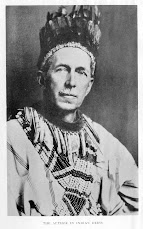
By A. Hyatt Verrill

Travel magazine January, 1925. Digitized by Doug Frizzle February 2012.

Relics of the Incas in the Streets of Lima—Southward Along the Coast to Barranco and Chor-rillos—Pachacamac, the Ruined City of the Desert—The Bones and Belongings of the Incas

TRAVELING by bus, trolley car or auto between Lima and Miraflores, one sees numerous dull, grayish-brown piles of earth rising conspicuously above the level plain with its endless adobe walls, its well-kept gardens and its handsome residences. Near the ancient Olive Grove and the Golf Club there are several of these hills and in one spot a stone crusher and derrick shows where a hill is being torn down and transformed to broken stone for use in concrete. If one looks closely one may notice an odd, squarish, unnatural form to these little eminences and may discover that they are artificial—the remains of adobe structures that have mainly crumbled and disintegrated until they have again returned to their original and fundamental status as brown earth. Probably not one in a thousand of those who travel daily along the Avenida Leguia ever give these unobtrusive hillocks a passing glance or a second thought; and certainly very few of the innumerable passers-by realize that in the crumbling bits of adobe they see the last vestiges of that wondrous civilization—the great cities that were so ruthlessly destroyed by Pizarro and his gold-mad men. Through the long centuries that have passed since the Incas held sway, these remnants of their homes have remained, mute testimonials of the wantonness of the Dons, pathetic reminders that, long before the coming of Europeans, the Indians dwelt and raised their crops and lived and loved and died where now the noisy, busy City of the Kings rises above the plain, with the twin towers of its vast cathedral marking the last resting place of him who destroyed a civilization and massacred a nation. But the march of progress and modernity is rapidly destroying even these small fragments of the Incas' domain near Lima. The stones, cut by infinite labor, transported at tremendous cost to build the Incas' palaces and temples, are being broken into bits for paving motor highways; the crumbled debris of homes and citadels is being again formed into adobe for erecting dwellings to house Lima's suburbanites, and soon the last of the Inca ruins about Lima and its environs will have utterly vanished.

But within an hour's ride by automobile, a marvelous sight to all interested in the fascinating story of Peru's past, is the dead city of Pachacamac with its imposing Temple of the Sun.

By way of Miraflores the road, roughly cobbled with round stones from the river bed, leads through Barranco, a delightful Old World town, typically Spanish-American in life and architecture. Despite its trolley line, its numerous motor cars, its lofty windmills—unmistakably modern and of Yankee make—Barranco is a truly attractive spot, combining the secluded aloofness and grandeur of the old Spanish mansions with their patios, grill work and statuary, and the spick and span, obtrusively showy, though often architecturally beautiful, residences of the well-to-do, up-to-date Peruvians and foreign residents. Beyond blank walls of buff or pink, one glimpses great rambling, massive, one-storied houses in the midst of palm-filled gardens that are almost miniature jungles. From jutting Moorish balconies, women in mantillas and immense tortoise-shell combs lean out and watch the passers-by. Poncho-draped men, huge silver spurs on heels, their feet resting in immense carved wooden stirrups of a century ago, canter noisily over the rough cobbles astride lean wiry ponies and swing to one side to avoid a honking motor truck or a clattering squad of gayly uniformed cavalry from the near-by military institute. Surrounded by glorious flower beds and half hidden by masses of climbing, pink-bloomed geraniums, are the pristinely clean and fresh houses of those who have discovered in Barranco a charming residential suburb. On every hand the old rubs elbows with the new. The ancient streets whose cobbles through long centuries have been worn smooth by the bare-soled feet of Indians and the booted feet of proud hidalgos, now echo to the roar of tramways and the protesting rattle of Fords. Behind the adobe walls of a one time bullring the native youths play soccer football in flamboyant blazers. But the clanging bells of the squat old church are as discordant and insistent as though all had remained unaltered, and the changeless sea rolls in and thunders against the bluff at the foot of the Malecon as it must have done ages before Balboa first looked upon the Pacific. To many, no doubt, Barranco and its neighbor, Chorrillos, would appear merely Peruvian towns, not too clean, a bit dowdyish dusty, and with outrageously bad streets—necessary evils to be passed through as rapidly as consistent with a due regard for tires and springs and one's bodily safety. But to me there is ever something most fascinatingly romantic about these outlying towns of Spanish America, an indescribable and foolishly sentimental feeling, no doubt. But in them to me there is much more of what one imagines a Latin-American town and Latin-American life should be like— despite the modern innovations and progress—than in the great cities, and always I can revisualize the past in such spots and in my mind's eye see them as they were in the long ago. Of the two, Chorrillos is perhaps the more attractive, for the streets in many places are narrow and bordered by poplars and laurels that meet in an arch overhead; the buildings of old Spanish types are more numerous—there is less of the modern; and the town stands prominently and picturesquely forth against its background of frowning, austere, bare brown mountain with the crosses of a cemetery on one hip and the massive obelisk marking the grave of Peru's Unknown Soldier on the other. It is a fitting spot for his lonely grave, for not far distant, just outside Barranco, was fought a decisive battle in the war between Peru and Chile in which the Chileans were signally victorious.

Leaving Chorrillos, the road wanders across vacant fields between adobe walls and follows beside the tracks of the quaint mule tramway, bordered by broad fields of the long-staple Peruvian cotton, with towering, dun-brown mountains on the west and green-carpeted peaks to the east. Then, leaving the cultivated lands behind, the way leads onto the lagunas—broad, marshy, coastal plains covered with sparse blue-green grass and swept by the sea breeze from the Pacific that breaks in thundering surf along the distant shore. Here the sand hills begin and, as the marshes are left behind, the traveler finds himself in a veritable desert. Immense rounded hills of yellow sand—gigantic dunes or miniature mountains—sweep in endless ridges from the roadside. Here and there, black ledges or ridges of rock jut from the sand; but aside from these and the narrow road of pulverized stone, outlined by upright bits of rock bordering the two sides, the barren surface of the land is unbroken from the edge of the sea to the distant mountains. Like the Sahara, the desert has been carved by the wind into wavelike ridges, and like the caravan trails on the Sahara are the irregular, crisscrossing trails of goats. What these creatures find to eat upon this barren, arid land is a mystery, unless they subsist upon the sand. Almost equally puzzling is why vultures should endlessly wheel above the waste, unless they are hoping that the goats may starve to death. Aside from these signs of life, it seems not only a desert but a deserted land, until in the distance an approaching motor car appears, seemingly floating in air because of the mirage.

As the roadway is barely wide enough for a single vehicle, little turnouts have been constructed at intervals, and, drawing aside into one of these, one car awaits the other's passing. The desert seems endless, but at last a few patches of green break the surface of the sand far ahead. Near the sea, a high, conical hill looms above the lesser dunes. Oddly terraced and with strangely irregular summits, these appear very different from the softly rounded desert hills. Then, as the car speeds down a slope and swings about a sharp curve between adobe walls, one is amid the ruins. On every side, bordering the road, jutting up from the waste of sand, crowning the hillocks, terracing the slopes, are crumbling walls, disintegrating buildings and roofless houses extending for miles. The distant hill that towers far above its fellows is a mighty mass of vast, ruined and partly ruined structures; the Temple of the Sun—the sacred place of worship of those who once dwelt in this immense ancient city of Pachacamac. Topping a lesser hill, still imposing in its decay, its walls nearly six feet in thickness, is the King's House wherein once dwelt the Inca who reigned over this silent city in the desert. Close to the roadway are the square, binlike storehouses and the shops wherein the denizens of Pachacamac once bartered and traded, and no doubt haggled over the prices of rawhide sandals, cotton cloth and earthen jars, and bemoaned the high cost of living. And if one clambers up the debris-strewn hillside across the road and picks one's way through the ruins of the King's House, a vast panorama of the ancient city lies spread like a map at one's feet. There to the north is a huge, rectangular open space inclosed with high walls still intact. A public plaza or market place perhaps, or possibly a field wherein sports and athletic contests were held. Just beyond, to the west, is the main street, a narrow, steeply sloping thoroughfare hemmed in by the walls of large houses—the mansions of the well-to-do Incas no doubt—and the remains of once imposing buildings that perchance were the offices of officials, or Inca department stores. Fascinatingly interesting it is to stand in the midst of this deserted desert city of adobe and try to revisualize the past, to reconstruct Pachacamac, and in the mind's eye see it as it was before the advent of the Spaniards. But it must be confessed that it cannot be recommended as a spot to be visited by those timid, nervous or superstitious persons who are disturbed by sight of human bones, for Pachacamac is a bit gruesome. It was a large and populous city. It was inhabited for centuries, and countless people died and were laid at rest in cemeteries and burial mounds so extensive that, as one visitor expressed it, "the principal occupations of the Incas must have been dying and burying the dead." And for years excavations having been going on in these burying grounds, partly by scientists searching for archeological treasures, partly by natives seeking pottery and other objects which could be disposed of at a good profit; partly by curio seekers, and largely by visitors who had nothing better to do and devoted their time to disinterring the bodies on the chance of finding pieces of pottery or guacos. As a result the areas between the buildings resemble the battle grounds of France, with the pits marking excavated graves like countless shell holes. But it would have been a bloody battle indeed that would have left such an array of whitened bones and grinning skulls as lie scattered about the desecrated graves of Pachacamac. They are everywhere: singly, in groups, or in veritable piles and windrows— thousands of them—in one spot so numerous that the depression' wherein they lie is literally a valley of skulls; some crumbling to bits through long exposure; some bleached white as snow; some with the parchmentlike skin and the long hair still adhering to them. And among them, cast aside like the human remains by the diggers, are the strips of cloth with colors and patterns still plain and the coarsely netted bags of rope that formed the shrouds and coffins of the dead. Ethically, no doubt this desecration of graves is quite wrong, even though the graves be only those of pagan Indians; but it must be admitted that it is extremely interesting and quite exciting to dig and delve in these ancient burial places, and few indeed can resist the temptation to try their hands at it. There are, however, few spots left where graves remain undisturbed, and hours of laborious shoveling are in store for anyone who expects to secure specimens of pottery or other worth-while objects by one's own efforts. But there are plenty of souvenirs and very interesting things to be secured with little effort and without disturbing the remaining graves. A very little digging in the piles of debris cast aside by former searchers will usually result in finding cotton spindles with the thread still wound about them, decorated hairpins of wood with the paint still bright, shriveled but perfectly preserved sandals, woolen and cotton rope strips of beautifully woven cloth and similar things. And so perfectly preserved are these, so untouched by time and the elements, that it is hard to believe that four centuries and more have passed since they were laid away with their dead owners for use by the spirits of the deceased in the hereafter. One marvels, too, that a city should have been built in this desolate, arid desert until, climbing the higher ruins, a wonderfully beautiful panorama of green fields and gardens dotted with houses, divided like a vast checkerboard by adobe walls, and with a little town topped by the twin towers of a yellow church, is revealed scarcely a mile distant to the south. This is the rich and fertile valley of Lurin, the spot wherein the denizens of Pachacamac tilled the soil beside the sparkling river and irrigated their fields of cotton and corn and raised their crops. No doubt there was much method in their seeming madness of building a great city on the desert so far from their gardens and their water supply. The wild tribesmen of the mountains often swept down upon the peaceful agricultural settlements and raided fields and granaries. At such times the inhabitants of Pachacamac could retire to their desert homes and, behind the thick adobe walls, seek safety and defy their enemies, who could not approach unseen or unexposed across the bare sand wastes. The city was, in fact, very similar in many ways to the Pueblos of our own Southwest, where the Indians dwell in security upon the bare mesas and have their gardens and fields in the fertile valleys at a distance for the very reasons that caused the people of Pachacamac to dwell in a town upon the desert though their cultivated lands were in the valley of Lurin.

Today this valley is as rich and as well tilled as in the far-off days when the Incas held sway and the desert city was a busy, teeming, populated place. Also most of those who dwell within the valley have a goodly strain of the Indian blood in their veins. Beyond doubt, the ancestors of many of the present inhabitants of the valley, and of quaint, old-world Lurin itself, were denizens of the ruined city, men and women whose bones lie scattered about upon the sands. But the living have no respect for either the bones or the spirits of the near-by dead and no doubt would be grossly insulted were one to hint that they were of Cholo blood. One might think that the people of Lurin, and more especially those who dwell near the borders of Pachacamac, might be afraid of ghosts, for as a rule the Latin Americans, and more especially the humbler people, are exceedingly superstitious, and surely if spirits walk, then Pachacamac should be most thoroughly haunted. But apparently the people of Lurin have not the slightest fear of either ghosts or spirits. Perhaps, to their way of thinking, only Christians have ghosts, or it may be that they feel that the Pachacamac ghosts have plenty to attend to within the confines of the ruined city and will not wander far afield. Whatever the reason, the proximity of the city, which is a most spectral and uncanny place at night, does not appear to trouble them in the least. Indeed, those who live on the very borders of the ruins have done a bit of excavating on their own account and human bones and grinning skulls lie scattered about their dooryards, while those who have business abroad do not hesitate to ride at dead of night through the ruins, passing the cemeteries with their countless skeletons as casually as though the whitened bones were so many stones, and trampling many a skull under their horses' feet.

The traveler who visits this dusty city of bones must bear in mind that it is only one of many Inca cities which the European conquest of Peru reduced to nothing. Perhaps the most celebrated of these cities, although the least accessible, is Machu Picchu, explored some years ago by Professor Hiram Bingham and described in his book "Inca Land."

The present article is one of a series by Mr. Verrill which will appear from time to time in the pages of TRAVEL. Mr. Verrill is now traveling down the west coast of South America gathering material for these articles.

Tuesday, 2 February 2010

Those Who Worshipped the Sun


THOSE WHO WORSHIPPED THE SUN

By A. Hyatt Verrill


Travel VOLUME XI, V. JULY, 1925 NUMBER 3

Forerunners of the Incas—Under Incan Rule—Socialism and the Guild System—The Fighting

Mapuches—The Peril of the Continent

(The following article, one of a series on the more unusual phases of life in South America, will be included in Mr. Verrill's book, "Down the West Coast of South America," which will be published in the fall.)

BEFORE the advent of Manco Capac and the establishment of the Incan Empire, the Indians who inhabited the area that is now Peru, Bolivia and Chile, were divided into innumerable tribes and races having little or nothing in common. Under the Incas, many of these were welded into a more or less homogeneous commonwealth, the everyday language of which was the Quichua. But the Incas were far too wise to attempt to mould the widely diverse tribes and races into a composite whole for, being Indians themselves, they understood the Indian's psychology, the Indian's conservatism, his stubbornness, especially when driven, his fear and distrust of all innovations and changes, and his almost fanatical love for and adherence to ancient tribal rites, life and customs. So, like all who have been successful colonizers, the Incas adopted measures to meet conditions, cutting their clothes to fit the cloth, and were content to let each tribe or race follow its own ideas as to life, customs and other affairs, as it had done from time immemorial, just so long as the Incan rule and law were recognized, and the allotted taxes or tribute paid for the upkeep of the empire and its king. Particularly was this the case in the outlying districts. Although it nominally extended into the land of the Chilean Mapuches, or as they are now more commonly called the Araucanians; into the district inhabited by the warlike Panos and Chanos of the Beni valley of Bolivia, and through the tropical interior "montaña" of Peru, where dwelt the Chunchus and the Campos, as well as far beyond Lake Titicaca and into the Yungas, inhabited by the tribes of Carib stock, the Inca civilization, left these tribes practically untouched, even though they paid annual tribute to the Incan empire. And the Incas, even with their well-organized armies, their tremendous resources and their superior civilization, could never conquer these hordes of implacable savages. Undoubtedly they realized that it would cost more than it was worth, both in lives and riches, to subdue or even to attempt to subdue them, and they unquestionably realized that even if these tribes were brought wholly under Incan rule they could not be retained there. In fact the Incas took much the same attitude as England has taken towards many of her colonies. Just as England permits the native princes of India to rule their own people, who follow their own religions, rites and customs as though Great Britain had no foothold in the land, so the Incas left the unconquerable Mapucks, the ever hostile Panos, the stocky man-eating Yungas, and the Campos with their deadly poisoned arrows, pretty much to themselves. Only the Andean, the coastal and the nearer trans-Andean tribes came wholly under the Incas' rule, and practically all of these were of two racial stocks, the Aymaras and the Quichuas, though these were split up into numerous tribes and sub tribes, such as the Chinchas and Nazcas in the mountains, the Huanucuyus, Cajamarcas and Porcas in the north and central regions, the Chutas in what is now Bolivia, and the Huancas about the shores of Lake Titicaca.

It was in fact as diverse a population with as widely differing ideals, traditions, physical characteristics and other attributes as one can well imagine, and how the Incas ever succeeded in keeping it in hand is little less than miraculous.

With the butchery of Atahualpa, the last Inca, by the Dons, and the disruption of the empire, the component human parts that had formed it quickly reverted to their original condition. From their great and populous cities, both on the coast and in the mountains, they drifted away to the original homes of their forefathers in remote, inaccessible spots. Only the ruins of adobe buildings and masonry, the vast cemeteries, the splendid irrigation systems, the enormous burial mounds that are scattered everywhere along the coast, in the valleys and among the Andean heights remind us that once the land was inhabited by a teeming population with well laid out, solidly built towns, excellent roads, aqueducts and irrigation plants, cultivated fields and holy cities; with impressive temples, veritable Indian "Meccas," such as Pachacamac, to which the Incan people made pilgrimages for hundreds of miles before the bloody days of Pizzaro.

Although the empire, as such, vanished; though the Indians reverted to barbarism if not semi-savagery; though they forgot many of the arts and cast aside the civilization and the wise laws of the Incas, still, even today, the Inca influence is strongly in evidence among practically all the tribes whose ancestors were subjects of the strange empire.

Practically all of the living Peruvian Indians speak the Quichua tongue, as do thousands in Bolivia. Even in the far off Beni, in the Yungas district, in the Chanchomayo far in the south of Chile, the Indians speak either the Quichua dialect of the Incan empire or embody many Quichua words in their native tongues. Everywhere, too, one finds striking resemblances between the arts and products of these living Indians and those we find buried with the Incan dead. Many, as I have already mentioned, still call themselves "Incas," and innumerable thousands have not the remotest idea to what tribe or race they belong, but call themselves by the comprehensive names of Quichuas or Aymarás. To a large extent also, these present day Indians follow the socialistic-customs of the Incas, although the socialism is confined to the limits of each settlement or village and does not extend to neighbors. And it has become such an involved, complicated sort of socialism with so many intricacies and so many variations and exceptions that it seems hopelessly puzzling, at least to a white man, requiring volumes fully to describe and explain. So, too, the guilds that were established, maintained and fostered under the Incas still survive. One village or community, for example, may be wholly composed of wool growers; the next may be a village of dyers; the next colony may devote all its time to spinning thread; the inhabitants of the neighboring village may weave beautiful ponchos; another's people may be rug makers; others makers of caps or gloves; others tanners, and so on indefinitely. Often, one will find two little villages, almost within speaking distance of each other, and yet in one the customs, the industries, even the costumes and appearance of the people, will be wholly distinct from those in the other. While this peculiar conservatism appears most remarkable and serves to obstruct progress, fellowship and solidarity among the Indians, yet it has its advantages. It results in a high perfection of skill in each particular art or industry; it forces the various individuals and communities to barter and trade with others, for seldom does one community produce all the necessities of life, and it places the settlements on a commercial basis. If each man or woman, or each village, raised, carded and dyed wool; spun the thread; wove the blankets, rugs, mantas and ponchos; knitted the socks and caps; tanned the hides and prepared all the other articles used or required by the Indians, they would be even more poverty-stricken, even less progressive, even less provident than they are. But if an Indian, in need of a poncho or a hat, or a woman requiring a petticoat or a manta, must perforce trade or purchase the desired article from the members of other tribes or villages who produce them, he or she must produce in turn some article which can be exchanged, or sold for money with which to purchase the goods required. The direct result of this state of affairs is the Indian market which is universal in the interior towns and is the most striking, interesting, colorful and picturesque sight of Peru's hinterland. As the Indian is a born trader, rivalling the original Yankee in this respect, the market is to him a delight and a recreation, as well as a source of revenue. Were it not for the market, where nine-tenths of the goods are exchanged and comparatively little currency changes hands, the monotonous life of these aborigines would be absolutely unbearable. Even as it is, one marvels that the Indians can exist under their ever-present burdens of dreary climate, mountain hardship, endless toil, miserable homes, unsanitary conditions, depressing surroundings and total lack of amusements, diversions or companionship.

It is little wonder that the Peruvian Indian of the mountains and the high trans-Andean regions is morose, timid, aloof, dirty and ignorant; that his face is seamed, wrinkled and leathery; that always upon his features he wears a hunted, hopeless, pathetically sad expression. Naturally docile, servile and peaceful, the Indians of the Quichua race had all their individuality destroyed under the socialistic Incan rule which reduced communities to the status of human ant-hills with the individual wholly subservient to the good of the whole. Under the Dons they were ground down, enslaved, forced to labor like beasts or worse; robbed of all they possessed; treated like dogs, until they became a cowed, terrorized, spiritless lot. Today they are scarcely better off. Though nominally free and with the same rights as other inhabitants of the republic yet they are in many ways little better than slaves. They are paid a miserable pittance for the hardest labor.

They cannot call even their arid, frost-bitten lands their own. They are tempted with vile rum and worthless gee-gaws by unprincipled traders and exploiters, and they are kept hopelessly in debt. They are wheedled and frightened into donating far more than they can afford to the upkeep of churches whose religion they neither believe nor understand, and for the maintenance of ease-loving priests who will not give them Christian burial without pay. Their women and girls are looked upon as fair prey by every sensual official, policeman or private individual who can safeguard himself by bribery or influence. They are robbed of their sheep and other livestock by any Tom, Dick or Harry who happens to want fresh meat and doesn't want to pay for it. Their homes are invaded and the occupants turned out of doors by any white man who happens to be overtaken by darkness and desires free lodging. And they are looked down upon, despised, cursed, kicked, beaten by Peruvians, Americans, British, any and all alike, yes, even by the Cholos of mixed blood or the mestizos.

Yet the Indian is the predominant race, the mainstay of Peru, the people upon whom the country depends for its labor, its supplies, its food, its mining industries, its prosperity and its army.

As if the Indian had not suffered enough at the hands of his fellow men, nature has added to the score. He dwells in the sternest, hardest, most hopeless and depressing of environments. His home is a hovel of stones or mud bricks. His bed is a hide laid upon the cold bare earth. His fuel is llama dung or the yaretta, and his food is frozen potatoes. He is exposed to the bitter cold winds of the Andes and he lives in the rarified air of high altitudes. Only by incessant, heartbreaking toil can he glean his meager crop of stunted wheat, marble-like potatoes or flinty beans from the stone-riddled, thin, unproductive soil, and to move anywhere he must scale precipitous heights or descend equally precipitous cliffs. Is there any wonder that he is discouraged, and improvident; that he seeks to allay the pangs of hunger that never cease gnawing at his vitals by chewing the coca leaf? Can anyone blame him if, in the rare intervals when he can secure it, he seeks to forget his lot and warm his blood with fiery rum, and, drinking overmuch, becomes hilarious, noisy, besotted, but never quarrelsome or dangerous?

What other race, may I ask, would do better under similar conditions? How long would any other man survive under such crushing burdens without going stark, raving mad?

But the Indian of the Andean highlands not only survives and keeps his reason, but retains health, strength, a measure of plumpness, and an optimistic contentment, or at least no resentment for his lot. The very hardships he is forced to face from birth until death have developed in him a sturdiness, a resistance, a power to endure fatigue, to be immune to cold, and an ability to be comfortable without comforts, that is absolutely marvelous. Despite all statements to the contrary, the Quichua is not lacking in sentiment, in affection, in appreciation of the finer things of life. He is ridiculously, almost fanatically patriotic and fond of his own particular locality. He loves his llamas or his donkeys with the intense affection of a Highland shepherd for his collie. He is attached to his family and while he is by no means demonstrative he loves his wife and his children, and seldom does he return from a journey to the nearest outpost of civilization without a toy or trinket, a bright ribbon or a gaudy handkerchief, perhaps some cheap jewelry or even a horrible chromo, as presents for his little ones or their mother. Also, he will stand for hours, silent, expressionless, showing no slightest sign of appreciation, admiration or pleasure, before a picture, a statue or a display of photographs. He will remain indefinitely, as if in a trance or under an hypnotic spell, listening to the raucous sounds of a battered gramophone or the discordant notes of a wheezy, tin-panny piano. If he has any preferences in the matter of art it is for subjects which we would deem morbid, depressing or gruesome. He loves a crucifix, the image of a martyred saint, the picture of a soul in purgatory or hell, not for its religious significance, but for the same reason that he loves scenes of battle or of death. This is not because he is cruel or callous or loves bloodshed. He would never stand for the bullfights with their disembowelled horses which are attended and applauded by the ladies and girls of Lima, and he is far less cruel than the white Peruvians at their best. But there is something in his make up or his psychology that demands the sad and the pathetic rather than the cheerful and gay. Even his music, played on Pan's pipes or on a flute, is plaintive, wailing, often heart rending, as though the notes were lamenting the tragedy of his race, the down-fall and decadence of the Incas, the eternal hardships that are his heritage, and the hopeless future that seems his.

It must not, however, be assumed that all the Indians of Peru are identical in characteristics, customs, or temperament. They vary greatly according to their environment, their race and their past. In the high Andean valleys of Central Peru the Quichuas are fairly prosperous, are happy and contented, and reflect their improved position and their outlook on life in their faces. They are better dressed, are more cleanly, or perhaps merely less filthy, they are not so much addicted to the use of coca, and are less often beastly drunk than those of their race elsewhere. They are splendidly built and vary in color from dark olive to coppery brown, and are a docile, quiet, hard-working and industrious lot. In the district about Cuzco and Lake Titicaca, on the other hand, the Quichuas are ragged, filthy, improvident, and are inveterate coca addicts and heavy drinkers. In place of smiles and grins they wear gloomy scowling brows, their eyes are shifty and distrustful, and one feels that there is a lurking hatred in their hearts for all white men, even though they dare not show it. But compared to the Aymarás, the Quichuas, regardless of the district whence they come, are the best natured, the most trustful and the most peaceful of men.

The Aymarás are naturally quick tempered, cruel, cantankerous and unruly, and while they are semi or wholly civilized outwardly, and are peaceable enough as a whole, they will never submit to the same treatment at the hands of the whites as the Quichuas. And, back in the montaña or tropical belt of Peru's hinterland, are still other and wholly distinct tribesmen. These are usually classed under the rather ambiguous term of "Chunchos" by the Peruvians, but as "Chuncho," means literally merely a wild or uncivilized Indian, its application to these tribes is no indication of their racial status or relationships. As a matter of fact there are a number of distinct tribes among the Chunchos, though all are of the same racial stock, having similar characteristics, customs and dialects. The Chunchos are by no means nomadic barbarians, however. Even the more remote, cultivate little farms and are far from ignorant of various arts. They weave excellent cotton cloth, make beautiful bead and basket work, and wear curious costumes consisting of a cassock-like gown of woven and dyed cotton with a simply made, hood-like head covering, the whole so strikingly like the garb of a Franciscan Friar that there is little doubt that the Indians have copied their garments from those of the padres. Upon their breasts, like bandoliers strung over their shoulders, are draped broad belts of white and black seeds arranged in contrasting patterns; necklets of teeth and beads, claws and gee-gaws are about their throats; dried skins of bright colored birds and parrot feathers fringe the edge of the monk-like head covering and the belts, and to complete the costume, a crown of plaited bamboo or cane is worn, at the back of which are several long, bright colored feathers or plumes. In color these tribes are distinctly brown, usually of a reddish-yellow tinge, and as a rule their features are far from attractive or reassuring, more especially as they are usually hideously painted. Their arms are powerful bows and long arrows, and while it has been claimed that they use blow-guns with poisoned darts I have been unable to find any traces of such weapons among them. Farther north, however, in the jungle country of the Amazon valley, dwell savage tribes who employ poisoned arrows and who are notorious head hunters, while in the montaña of the south are the Indians of Carib stock or "Yungas," as they are called. These, although as uncivilized as the Chunchos and still using bows and arrows, show many signs of Inca influence. Their magnificent ponchos of cotton are distinctly Incan; they wear the typical ear-flapped, nightcap-like head covering which is so universal among the Quichuas and Aymaras, and which was probably patterned after the casques of the Spaniards; and much of their language is Quichua intermingled with Carib words. Going even farther in the opposite direction, to the northwest, we find remnants of still other tribes about Chimbote, Salaverry and Paita. These people are short and stocky physically, far inferior to the mountain, highland or even the montaña tribes, and are very dark, often almost black.

Few, if any, of them speak their aboriginal tongue, although they retain many of the arts of their ancestors. And the basketry designs and the forms of their pottery are as distinctively Incan as those of the Quichuas. Indeed, many of their earthenware objects are identical in form, shape and style of decoration with those found in the prehistoric graves.

About Callao and Lima one also sees many Indians, and the Indian vendors of Peru's capital are among its most colorful and picturesque features. These aborigines, who are mostly light colored, with rather pleasing regular features are all Quichuas and the majority are from the mountain districts. But there are many who are apparently direct descendants of the agricultural tribes who cultivated the fertile Lima Valley and dwelt in the great adobe cities and villages whose ruins are to be seen everywhere between Lima and Callao, and between the capital and Miraflores. According to the old Spanish accounts there were over twenty of these populous villages in the Lima valley when the Dons arrived on the scene. But all were relentlessly destroyed and today there is not an Indian village in the entire valley. Even the few remaining Indians, who eke out an existence by peddling fruit, vegetables and milk in Lima, or who cultivate their little farms in the valley, have lost all knowledge of aboriginal arts, have forgotten their mother tongue and, aside from their unmistakable features, color, hair and costumes, are merely everyday Peruvians.

It is impossible to foretell the ultimate fate of these Indians of Peru, Bolivia and Chile. As they outnumber the whites and apparently are not noticeably decreasing in numbers, they can never be absorbed or amalgamated. They are the only source of labor, of industry or of production in the interior, for without them, mines, farms, and ranches would be impossible.

Efforts to educate them meet with little success, for of what use is it to educate a man, woman or a child who can make no use of that education, whose environment, social position and life are scarcely better than those of a dog? The problem of the Indians in these countries is a tremendously important one, and one which the authorities, with a most short-sighted policy, have sidestepped, overlooked or ignored. Hitherto, for nearly four centuries, the Cholo has been of no importance, save as a beast of burden or a human machine for performing tasks too menial or too exhaustive for others to undertake. For four centuries the aborigines have been regarded as a harmless, docile, cringing people who dared not call their souls their own and who, because they wielded no monetary or political influence, had no place or consideration in the scheme of things in the very countries they once owned and ruled. There are some twenty millions of his race in western South America; twenty millions of human beings who have little or nothing in common with the descendants of their ancient conquerors and oppressors; millions whose condition could hardly be worse, no matter what steps they took to right their wrongs; millions of semi-savage brains and hearts filled with dormant hatred, with the bitterness of endless wrongs, with suppressed desires for revenge, with longings for the freedom, and power and rights of their ancestors; millions of untiring, steel muscled bodies accustomed to every hardship and inured to cold and privations, with hands ready, when the time is ripe, to grasp weapon or torch, if need be, and to bathe the land in fire and blood, if by no other means can their freedom, equality and rights be won. Long ago would these millions of aborigines have struck a blow for that which is due them, and which has been promised but never fulfilled, had they been organized as they were organized under the Incas.

Saturday, 30 January 2010

Glimpses of the Guiana Wilderness - 1918


GLIMPSES OF THE GUIANA WILDERNESS.

A. Hyatt Verrill.

Your Excellency, Mr. President, Ladies and Gentlemen:

It is a great deal easier to show interesting pictures than to say interesting things, and I have no doubt you would rather see my pictures than to hear me talk, so I shall try to show as many slides as I can and say just as little as possible.

The only trouble has been to select the pictures, for there are so many interesting and remarkable places and things to be seen in this colony that it's a mighty difficult matter to pick out the most interesting. Moreover, I have had but four days in which to select my views, have the slides made and colour them, and hence I am limited in the number I can use.

Every part of the interior is so different from every other part that in order to obtain an intelligent idea of the country, one must travel here, there, and everywhere. So I shall give you glimpses of various places and shall jump from spot to spot, regardless of time or distance.

It may be just as well to begin near home and I will start with the most important river, from a commercial viewpoint,—the Demerara. My first view is a typical scene on the Demerara River, a timber raft floating past Christianburg with its saw-mill in the distance. The only motive power of this craft is the tide, the long sweeps being used merely to guide the raft, and by this slow and tedious method the lumber is floated down to the coast from the distant forests of the hinterland.

The next slide shows a man felling a greenheart tree. Note the staging built about the tree so the chopper may work above the out-jutting, buttress-like roots. As yet the timber resources of British Guiana are scarcely touched, and there are vast forests full of valuable trees which are now worthless, owing to the difficulties of transportation, and which would prove a source of great wealth if railways were in operation.

Another picture shows one of my camps in such a section. From my hammock in this camp I counted 55 greenheart trees, every one of which would have squared to 18 inches or larger.

This next picture is not a parody of "Washington crossing the Delaware,'' but shows the people of Mallali going to church. For some unknown reason the church is on the opposite shore of the river from the settlement and the devout Mallalians risk a ducking every time they attend services. It looks as if these people had solved the problem of getting a quart into a pint, even if their pint is a punt.

Another glimpse of the Demerara River, shows a scene near the source of the river above Canister Falls and where the broad river, which flows past Georgetown, dwindles to a mere brook which one may step across.

But the Demerara is one of the least interesting of British Guiana streams, so we'll step across to the Essequebo and take a flying trip up the Mazaruni. Everyone who goes up the Mazaruni starts from Bartica and in this picture we have a couple of gold-diggers' boats preparing to leave Bartica for the placers far back in the interior.

The next picture shows one of the gold-diggers or “pork-knockers" at work washing out gold from the gravel of a placer. This particular pan rewarded the pork-knocker with over a pennyweight of gold, but often they work for days without getting a cent's worth. Pork-knocking is no “get rich quick" scheme and an average of one dollar a day is doing very well.

After leaving Bartica the first interesting spot we see is the Penal Settlement. Every inhabitant of Georgetown should envy the prisoners their situation. It's a great pity that the capital was not built on this high, fine spot or on some similar spot instead of on the mudflats.

Here is a view of the settlement while in the next we see the popular superintendent, Mr. Frere, being “filmed" for the motion pictures with the prison quarry in the background.

The Mazaruni is a very beautiful river; to my mind the finest in the colony, but navigation is slow and difficult owing to the numerous falls and rapids. Going up stream the boats must be hauled through the falls by means of ropes, except at Caburi, which is shown in this slide. Here a portage has been provided around the cataracts and the boats are hauled overland, as illustrated in the next picture.

Coming down the river, however, is far more exciting, and progress is swift, for unless the rapids are very bad the boats are run through them as illustrated in this slide. Marvellous skill is required on the part of captain and bowman when the boat dashes with express train speed through the rock-filled, tumbling waters. In a few hours going down one often covers the same distance which required days of toil in going up.

This is a famous landmark on the Mazaruni, known as "Crapo Rock" or "Frog Rock." Many of the rocks in the rivers are worn into grotesque shapes by the water and many strikingly resemble the forms of animals. Note the high-water mark far up on this rock and which indicates the rise of the river during the rainy season.

Between the rapids are many long stretches of still water such as in this scene. The marvellous reflection of the foliage in the dark brown water is the greatest beauty of such spots, for every detail is mirrored to perfection and it is almost impossible to say where water ends and land begins.

The Mazaruni is one of the best rivers of the colony for fish and game, and in the forests along its banks one sees many striking and beautiful birds and strange animals. One of the most remarkable of these is the giant ant-eater or ant-bear. This chap has an enormously long tongue with which it laps up the ants, as shown in this photograph. The queer creature is impervious to ant bites, and many a time, when I accidentally have stepped in an ants' nest, I have envied the ant-bear. He's a pretty formidable beast, too, and when angry or wounded can inflict terrible wounds with his powerful hooked front claws. Even the jaguar gives the ant-bear a wide berth.

But to me, the human denizens of the bush are far more interesting than even the birds and beasts, and it was for the purpose of studying the Aboriginal Indians that I have made my numerous trips into the interior. On the lower Mazaruni there are few Indians but above the falls, and back in the bush on the small creeks, are numbers of Indians living as primitively as did their forefathers before Europeans stepped ashore on the New World. My picture shows an Indian shooting fish, with bow and arrow, the common method of obtaining fish, and very expert the Indians become in this art. The most remarkable part of the feat is their ability to sec the fish in the foaming water of the rapids. Sometimes, when no fish are visible, the Indians call the fish by beckoning with their hands and whistling. I don't pretend to say why this attracts the fish, but it usually does so, nevertheless.

Another method of hunting employed by the Indians, is by means of the blowpipe and deadly poisoned arrow. With this silent weapon the Indians kill both birds and animals. They are incredibly accurate marksmen, and I have seen an Akawoia put five darts into a visiting card at 50 paces. The basket on the man's side contains the poisoned darts which are very carefully guarded, as cold or damp injures the poison. The Wurali, as it is called, is prepared with a great deal of secrecy and ceremony, and the exact method of its preparation is known only to a few individuals. It kills almost instantly, a bird struck by the dart usually fluttering but feet before it falls, but it is not poisonous to eat. It is said that, by administering doses of cane juice and salt its effects may be overcome, but I have yet to find an Indian who would demonstrate this antidote on himself.

Most of the Indians now use guns. Here is a husky Indian hunter of the Waika tribe bringing in a bush hog or peccary, but ammunition is expensive and far back in the interior the Bucks still use the blowpipe and bows and arrows to great extent. The hunter shown in this picture was a wonder and he performed one feat which still puzzles me. He started out with seven cartridges and returned with four bush hogs, two akuries, a parrot and three cartridges!

This picture shows an Akawoia in full dancing costume, feather crown, feather mantle, necklace and dance trumpet. The object on the end of the trumpet is a bit of wood carved to represent armadillo. Each dancer bears a different animal and in the dance is supposed to go through the antics and make the noises typical of the creature he represents. One can imagine the difficulty this man would have; think of trying to make a noise like an armadillo, or a lizard, or imitating a sloth!

Here is another Acawoia in a very different costume, that of the parasara dance, and which is made of palm leaves. This is probably the only photograph ever taken of an Akawoia wearing this costume. During the dance the head covering is turned down and conceals the wearer's face. The object in the left hand is the dance drum and that in the right is the rattlestick. After the dance the suits are hung upon fallen trees in the rivers or on stumps in the fields to keep off evil spirits.

But dancing is only a very small part of an Indian's life. He must hunt and fish, fell trees for fields to plant, build his houses, make baskets and weapons and perform many other duties, for despite popular belief, the Buck is not an idler until he is Christianized and civilized, and the women do no more than their share of labour. It is their duty to till the fields, prepare food, spin cotton, weave hammocks and rear the children. The principal food is cassava and the preparation of this staple is very interesting. In the picture is seen the first step in the process, a girl grating the roots on a grater made of a board into which bits of stone are fastened with cement-like wax.

The next step is to remove the poisonous juice from the pulp, which is done by means of the metapee, as illustrated in this photograph. The pulp is placed in the metapee which is then suspended and is stretched out by means of a lever and a woman's weight. The juice extracted is preserved and used in making cassareep and starch.

Next the compressed material is broken up and made into a coarse meal by rubbing it through a basket work sifter, as shown here, after which it is spread in round, thin cakes on a stone or iron and baked over a slow fire, as is illustrated in this picture.

How the Indians first discovered that a deadly poisonous root could be transformed into a nutritious food is one of the unsolved puzzles of Indian history. Certainly it could not have been by experiment, for the experimenters would have succumbed to their experiments long before they discovered the process.

This slide shows another Indian woman at another of her daily tasks, squeezing sugar cane in a primitive mill consisting of post and lever.

The women also do a great deal of the droghing and they carry as large or even larger loads, than the men. Here is a girl with a 140 lb. load ready for a 20-mile jaunt over a mountain. I was anxious to see how she descended the steep mountainside, bowed under her load, but she soon outdistanced me; the load apparently not inconveniencing her in the least.

To many people all Bucks look alike; but in reality, every tribe has distinct characteristics by which its members may be recognized. The pictures I have shown are all of Akawoias, a tribe peculiar to British Guiana. Very different are the Caribs shown in this picture. In many ways the Caribs are superior to all other tribes of Guiana. Their women are the only ones who do not wear the bead aprons or queyus, but instead use cloth laps. The men's laps are also distinctive, being ornamented and fringed, but the most characteristic mark of the true Carib is the tuft of white King Vulture down worn on the forehead, as may be seen in this photograph.

Returning to Bartica, we'll start off on another trip up the Essequibo. Nowadays few people travel up this river from Bartica on account of the dangerous falls between Bartica and Rockstone. It was to avoid these that the railway was built from Wismar across to Rockstone. But I have made the trip several times without mishap and think it one of the most interesting and exciting trips in the colony. When Mr. Runcie was here I carried him by this route to Kaietuerk Falls, for one of the principal objects of his visit was to film the boat trip through the Essequibo rapids, which I described in Harper's Magazine for January. This slide shows how our boat was hauled through an enormous whirlpool, while the next view shows the men building a rude palm-leaf shelter or "bush-tent” over the boat.

On the islands in the rapids of the Essequibo are many beautiful orchids. Here is a photograph of a fine specimen with over 180 flowers on one plant, while the next view shows a spider monkey on a dead tree being "filmed." A nearer view of the unwilling subject shows it trying to "look pleasant."

Among the most striking and typical features of the tropical forests are the "bush ropes" or lianas. The picture shows how large those vegetable cables grow and also how they are attached by roots to the trees and grow downwards. How these gigantic vines grow is often a puzzle to those unfamiliar with them. One gentleman told me he couldn't understand how slender vines could sprout straight up through the air and catch hold of a tree a hundred feet above the earth.

Having passed safely through the falls the traveller arrives at Rockstone, of which I show a view, and here I obtained some very remarkable pictures on my last visit, for I had the good fortune to see Indians eating "Cooshie ants." These ants swarm but once a year and the Indians consider the big, winged females, or queens, a great delicacy. It was a wonderful sight to watch the Indians hopping about among the ants, their legs streaming with blood from the bites, while they caught the queens and pulled off wings and jaws. When a good supply was gathered they retired to a safe distance and munched the ants in comfort. It was a sight few men have witnessed for queen Cooshie ants are so rare that only a few specimens are preserved in the great museums. To find a nest of swarming Cooshie ants and Indians on hand to eat them, was a coincidence little short of marvellous. The ants taste like condensed milk I discovered.

At Rockstone we were joined by Father Cary-Elwes and his Makushie Indians who accompanied us as far as Kaietuerk where he left us and continued on to his distant mission.

Never have I travelled with a more enjoyable companion, for Father Cary-Elwes is a most lovable, a most human and a most remarkable man. Throughout his wanderings in the wilderness he has not missed Mass in seven years and every morning a rude altar was erected, and Father said Mass for his three Makushies. Very impressive was this simple service in the dim forest with the pink sky of dawn overhead and the silvery chimes of the Bell birds ringing from the tree tops.

My next picture shows a bit of the Potaro River from the Tumatumari rest-house. Tumatumari is a beautiful spot with the four cataracts, separated by wooded islands, just beneath the rest-house windows. It could be made into the most attractive winter resort in the tropics, and if provided with adequate accommodations and easy and rapid transportation, it would draw countless visitors from the north, especially if a road was constructed from here to Kaietuerk.

People, who have never been far from the coast, are prone to think of British Guiana as a flat country, but a trip up such a river as the Potaro will dispel all such illusions. Here great mountains rise on every hand, often with their summits hidden in the clouds.

Kukuieng (Hawk's Nest) is perhaps the most striking, owing to it« castle-like form, but there are scores of others just as lofty and just as massive, and all converging to form a fitting gateway to the world's greatest cataract.

At Pakutuerk we accomplished the impossible and pulled our boat up through the falls and at Amuktuerk we found a big camudi coiled upon the rocks at the landing place as if waiting to welcome us. After being duly "filmed" he was killed and proved a good load for five husky Indians, as shown in the picture. He measured 18ft. 9in. in length, 29 inches in circumference and weighed 280 odd pounds.

Still another bit of luck was in securing this picture of a crocodile basking beside a pool, while a still more striking picture was obtained when, in hauling through a particularly bad stretch, we had as neat a washout as anyone could wish. It wasn't nearly as much fun at the time as it seems now, however.

But despite such little inconveniences we reached Tukuit safely in due time. Tukuit is in the midst of magnificent scenery and directly across the river from the rest-house. A cataract springs from the verdured mountain crest and plunges down for hundreds of feet to the forest above the clouds. This in itself would be considered worth the entire trip in most parts of the world; but in the presence of mighty Kaietuerk it pales into insignificance.

It's a fearful climb up the mountain-side to the plateau, and it's a shame that the way has not been improved and a road built from Tumatumari to the falls. Even a decent path from Tukuit would be a great improvement. As it is, one has to scramble and even crawl for several miles up a stony, slippery, log-choked, fissure-filled gully at an angle of about 60 degrees. In Kaietuerk you have an asset worth millions, a sight which should attract visitors from every corner of the earth, and yet, nothing to speak of has been done to exploit it or to bring it within reasonable reach of Georgetown. To be sure, Sprostons have advertised it and have attempted to attract visitors to it, but the service is so poor and the cost of the trip so unreasonable that it is practically prohibitive and only a man who has unlimited time and money at his disposal, and doesn't mind discomforts can afford to undertake the journey under present conditions. With a decent road Kaietuerk is scarcely two hours by motor from Tumatumari, and yet one must travel afoot and by boat for two or three days to cover the distance. Moreover, if modernly fast steamers or launches were operated on the rivers and a motor road was built, these stupendous falls, which have no equal in the entire world, could be brought within a day's travel of Georgetown. And it wouldn't cost a fortune to do this; fifty thousand dollars would be amply sufficient, and a mighty good investment it would prove. Imagine leaving town at 7 a.m., travelling through marvellous tropic scenery and dining on the plateau beside the falls at 7 p.m. the same day!

As a money maker I would rather have Kaietuerk than all the gold and diamond claims or all the timber lands, in the colony.

On the way up from Tukuit we stopped some time to admire and study those wonderful birds, the Cock-of-the-Rock. Several specimens were obtained for the purpose of preparing a group for the museum, which is now on exhibition, but we saw over 20 of the birds within a distance of half a mile. Their presence here was particularly interesting, as they were supposedly extinct, save in the most unfrequented and distant parts of the Colony. Since then I have found them nesting within one hundred miles of Georgetown.

When at last one reaches the plateau at the end of the climb one looks upon a totally different land from that below; a barren expanse of naked rain-worn rock with great lily-like giant bromeliads, strange orchids, nodding blue hair-bells and bracken; a flora peculiar to the plateau and unlike anything else.

But all interest centres on Kaietuerk and we hurried across the plateau to the brink of the gorge to gaze for the first time upon this titanic waterfall. All my life I have prided myself upon being able to look down from dizzy heights without any sensation of giddiness or fear. I have climbed to the trucks of ships' masts at sea; I have gazed from the skeleton frames of skyscrapers at the ant-like humans in the busy streets five hundred feet below, and I have stood on the brink of many a terrific precipice; but when I walked boldly to the edge of Kaietuerk gorge I gave one glance and beating a hasty retreat sat down at a safe distance.

I expected to look down for a vast distance; but I also expected to see a slope or a precipice, or some tangible connection between the top and bottom of the gorge. Instead I gazed straight down through space for a thousand feet and I could not overcome the sensation of the entire overhanging ledge tumbling into the awful abyss beneath. The feeling soon wore off to large extent, however; but still I preferred to get down on all fours, or hold on to a bush when near the verge.

In all the pictures of Kaietuerk the falls appear dwarfed and disappointingly small, but this is due to the fact that there is nothing for comparison and one has the same feeling, the same lack of power to grasp the size of things, when actually looking at the falls. The valley far below seems clothed with soft, green moss dotted with pebbles and not until you realize that the seeming moss is a forest of giant trees and the apparent pebbles are great masses of rock weighing hundreds of tons each, do you realize the stupendous size of the falls and the depth of the gorge.

So high are the falls that not an atom of real water ever reaches the pool beneath, the falling mass being transformed to vapour long before it reaches the end of its descent and looking far more like volumes of smoke than liquid.

But to obtain a true idea of the size of Kaietuerk note the man in the picture. Once we realize that this speck is a human being the stupendously overwhelming proportions of the cataract are impressed upon us.

I mentioned my sensations when looking over the brink of the gorge but Father Cary-Elwes was absolutely unconscious of any such feelings. He was anxious to secure a picture from a certain viewpoint and approached nearer and nearer the edge, finally planting his camera with one tripod leg resting on a jutting pebble beyond the verge of the plateau. Then all forgetful of his surroundings, he stooped down to adjust his lens with his back to the gorge and actually balancing on one foot on the very brink of eternity.

I have been asked by many to give my impressions of Kaietuerk, to describe the falls; but there are things which defy description and one of these is Kaietuerk, for words utterly fail to convey any adequate idea of the overwhelming grandeur of the falls and gorge. It is one of the things which must be seen to be realized and the finest pictures seem woefully poor and insignificant after viewing Kaituerk itself. It cannot be truly described as beautiful, rather it is awe-inspiring, sublime, almost terrifying in its grandeur. It is the very epitome of inconceivable power and titanic strength, immeasurable, irresistible, incomparable. In its presence one feels puny, helpless; a mere atom, and gazing upon it, one is filled with quaking, unreasonable dread and yet is fascinated, as by some gigantic savage beast of magnificent form and perfect grace.

Perhaps the greatest attraction of Kaietuerk is that it is never twice the same. Every moment it changes; with every breath of wind, with each variation of light, with every passing cloud it assumes a different aspect and to reproduce these in photographs is impossible. And then there is the colouring, for Kaietuerk is no foam-white cataract, but plunges over the verge of conglomerate in a mass of golden brown and amber which changes to cream and pink and saffron as it falls while the rising vapours veil it in clouds of prismatic hues, or bar it with a glorious rainbow.

In some respects the gorge itself is even more beautiful and impressive than the cataract. Here is a view looking down the gorge from the brink, while the next picture shows an Indian poised on the verge of the falls and wrapped in contemplation of the wondrous scene stretched out beneath him. And truly the scene before-him is one of surpassing beauty. From beneath his feet at the base of the mighty falls, stretches the great gorge to where its sides are lost in the blue haze of distance. In the very centre winds the silver thread of river, flecked with the white of rapids, while on every side rise frowning precipices cut with black ravines and topped by vast plateaus and everywhere covered with the endless forest of a thousand shades of green; purple in the shadows, golden in the sunlight; a panorama such as few spots in the world can boast.

On our return journey from Kaietuerk we ran everything, even Pakutuerk, and only screaked through the very worst spots.

Some idea of our speed may be gained from the fact that it took but four hours to run through rapids where we had spent four days hauling up. So accustomed did we become to running dangerous falls that when we reached Tumatumari we ran them also, a feat never before attempted as far as I can ascertain.

But despite all the beauties, all the wonders of the interior, one is always glad to reach civilization after weeks in the wilderness, and yet there is a strange fascination about the bush, a charm about the great, silent rivers, a something that grips one and makes one long for the wilderness, for the hammock swung under the tarpaulin in the forest, for the glow of camp fires, the smell of pungent smoke and the glorious sunsets reflected in the mighty rivers. Whenever I'm in the bush I long for civilization and just as soon as I reach town I'm just as anxious to get back in the bush.

It is a marvellous, a wonderful land that you have here in British Guiana, a land of untold wealth and resources, of magnificent scenery and of vast possibilities. Development is all that is needed to make it one of the richest countries on the globe. Sooner or later that development will come and then British Guiana will take the place it deserves. Let us hope that my last picture represents the beginning of a new era of prosperity for the magnificent province.

Blog Archive

Countries we have visited