
The Mutiny of the Athol
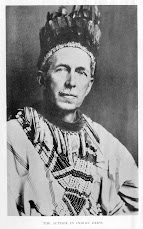
By A. Hyatt Verrill
From ‘Sea Stories Magazine’ 1924 January. Digital conversion by Philip Bolton Jr., Betty Paulos and Doug Frizzle, 2009 December.
The life on a whaler is a series of feverish activities, working day and night after the whale has been caught, followed by spells of leisure cruising around awaiting the word “There she blows.” During the period of stripping the carcass, bailing the precious spermacetti from the case, mincing, boiling down, and filling the casks, the hands and brains of all aboard are too fully occupied to give even a thought to anything but their labors.
But when there is nothing to occupy one's mind and little more for the hands, the mischief makers, who are usually found on every ship, then get to work and stir up trouble.
The author has woven an interesting yarn about conditions similar to the above aboard the whaling bark Athol.
THE whaling bark Athol, sixteen months out of New Bedford, rolled lazily to the long swells of the South Pacific, her dingy brown sails slatting against the smoke-grimed spars at each leeward lurch. High upon her to'gallant crosstrees, the lookouts perched, scanning the vast rim of the ocean for telltale sprays from spouting whales and swung in wide arcs against the cloudless sky at every roll.
In the shadow of the spare boats on their cradle over the after deck, the captain and two mates sat, playing cards on the cabin skylight; the Portuguese helmsman dozed at the wheel, and the crew, seated about the decks, barelegged and with hairy chests exposed by open shirts, whiled away the time by carving odd curios from bits of bone and whales' teeth. In the doorway of the galley the negro cook crooned a plantation melody as he pared potatoes. Peace and calm brooded over the ship. There was no hint of trouble in the air. The men had been willing, content and obedient, the food was no worse than usual. In the hold were tiers of filled casks. The officers were neither brutal nor overbearing, and Christmas was but five days off. Already, in anticipation of the day, the "makings” of plum duff, puddings, pies and other delicacies had been broken out from the cabin stores, and a keg of rum and a barrel of Madeira were stowed in the cabin ready to be broached.
But among the riff-raff crew, drawn as whalemen always are, from slums and gutters, were all the elements of crime, all the fuel for tragedy which might flame up at the least provocation. And, as usual, there were malcontents, natural born trouble makers, men ever ready to break out against authority if they dared. In a secluded spot in the shade of the foresail sat two men earnestly talking in lowered tones. One was a large, burly ruffian with beetling brows, low forehead, piglike eyes and brutal, protruding jaw; the other a small, shifty-eyed, furtive fellow with lank, pale hair, sharp features and a ratlike face.
“It’s a bloomin’ shame, I says,” muttered Carmody, the big man; “here we be, workin’ like dogs, chasin’ whales an’ b’ilin’ ‘em down, sleepin’ in a pigsty of a fo’c’s’le an’ eatin’ wormy biscuit an’ rotten horse, an’ for what? Fer a measly lay o’ one bar’l o’ ‘ile outer every hund’ed an’ fifty! What we got comin’ to us now, I asks ye, Slim? Three bar’ls o’ ‘ile – sev’nty-five dollar – fer sixteen months o’ slavin’ an’ sweatin’. How’d they git the ‘ile if ‘twan’t fer us, I’d like to know? They orders us ‘round an’ makes us call ‘em ‘Mister’ an’ gits ten times our lays o’ ‘ile.”
“Sure,” agreed Slim; “but jes’ the same, it weren’t for the officers where’d we be? Think ye could handle a boat an’ strike a whale or nav’gate, do you? Course we couldn’t. Not that I ain’t sayin’ it’s not fair play fer us to get a rotten little lay like we does, but we knowed that when we signed on, ‘Sides, what yer goin’ to do about it?”
“Aw, what ye givin’ us?” growled Carmody. “Course we knowed it, but did we know we was goin’ to be robbed ev’ry time we drawed a chaw o’ baccy or a rotten dungaree out o’ the slop chest? Did we know we was goin’ to be stripped clean of advance money and what’s comin’ to us from the v’yage afore we come aboard? Ye bet we didn’t. What’s I goin’ fer to do ‘bout it? Aw, ye’re too cowardly fer me to tell ye. But there’s another thing I ain’t told ye yet. Did ye know the Old Man had ten thousan’ dollars in gold in his locker? Course ye didn’t. Nice crib to crack, eh? I thought that’d make yer eyes pop open. Say, look here. Do ye think ye could just kinder size up the boys, Slim? Just hint ‘bout that there gold an’ see how they talk.”
“How’d you know about the coin?” asked Slim suspiciously.
“How’d I know?” replied Carmody. “Steward told me. He heard the Old Man tellin’ the chief mate ‘bout it.”
“Aint aimin’ to start a mutiny, are ye?” demanded the other. “I’m agin’ that. Murder ain’t in my line.”
“Who said anythin’ ‘bout murder?” asked Carmody angrily. “A feller kin git hold o’ a bit o’ cash without murderin’, can’t he? Listen, ol’ man, here’s my idee.”
Bending close, the big fellow whispered earnestly into his companion’s ear. Suddenly, however, the cry “She blo-ows!” floated down from the lookout, and instantly all the men were on their feet, and there was bustle and rush everywhere as the crew peered anxiously ahead and waited for the orders to lower away.
To the skipper’s shout of “Where away?” came the answering call, “Two points on the lee bow, ‘bout two mile off.”
Then, as the whale spouted once more, the order was given to man and lower the boats, and a moment later the two tiny craft went tearing through the sea in the direction of the whale. For a time the two conspirators were separated. Carmody being bow oar in the chief mate’s boat while Slim was after oar in the boat steered by the second mate.
Each crew striving their utmost to outdistance its rival, the men bent to their long ash oars, fairly lifting the speedy whaleboats through the water, while in the sterns stood the mates, straining at the huge steering oars and urging their men to still greater efforts to win the honor of getting first irons into the whale.
Gradually the second mate’s crew drew ahead, until, when within a few hundred yards of the whale, his boat was half a length in advance. Then, as the men decreased their efforts and the boats crept cautiously near the great creature lazily rolling on the surface, the harpooners silently drew in their oars, lifted their irons, braced their legs in the knee chocks, and grasping the heavy weapons in both hands, stood ready to hurl them into the whale as soon as he was within striking distance.
Nearer and nearer they crept. At last the second mate’s boat was within a score of feet of the bit of black skin showing above the sea, and with set jaws and knotted muscles the harpooner raised his iron and with all his strength darted it at the giant monster. Scarcely had the point buried itself in the whale’s side when the chief mate’s boat was also fast. At the double swing of pain the whale raised high it flukes—throwing a deluge of water into the boats, and sounded, while the officers dropped their steering oars and leaped forward, the harpooners hurrying aft to seize the big oars and become boatsteerers.
Like streams of light the lines whirred from the boats, smoking through chocks, and leaping like living, writhing serpents from the tubs, as fathom after fathom was drawn into the depths by the diving whale.
Down, down he went, striving to rid himself of those stinging barbs, seeking safety at the bottom of the sea. One hundred fathoms of the stout hemp ran out. With lifted hatchets the mates crouched, ready to sever the lines and save the boats should the monster sound beyond the limits of the ropes. Then came the cry, “Haul slack!” and frantically the men labored, drawing in the lines which had slackened as the whale ceased his mad plunge. But long before the slack had been hauled and coiled the frenzied creature broke from the surface beside the boats. Throwing his stupendous head high in air and bringing it down in terrific trip-hammer blows with a noise like thunder, snapping and thrusting with his huge many-toothed lower jaw, thrashing to right and left with his twenty-foot flukes, the monster sperm whale churned the sea into foam in his madness.
Tossed on the heaving waves created by the creature’s struggles, half swamped by the water thrown into the boats from his lashing tail, the men alternately backed water, swung to left or right, drew closer, paid out line or hauled in slack, alert and ready for any move the quarry might make. Narrowly escaping death from the descending head, avoiding the shearing jaws by inches, saving themselves from the flailing flukes as by a miracle, they hung grimly on, until, anxious to get another iron into the whale, the second mate’s boat approached too near and the next instant was tossed a dozen feet in the air by a mighty blow of the whale’s flukes.
With their craft smashed to matchwood and one of their number instantly killed, the men of the stove boat struggled in the churning water, clinging to bits of wreckage and oars, until, at the risk of boat and lives, their comrades worked their craft near and rescued their half-drowned shipmates.
Hardly had this been done when, abandoning his tactics, the whale leaped into the air and with a mad, blind rush tore straight ahead, striving to escape from this tormentors. With line straight and taut as a bar of steel, the boat followed in his wake, a small mountain of foam about its bows, the boat steerer straining every muscle to keep the craft on its course, the men crouching low and frantically bailing out the water that poured in torrents over the gunwhales. Then, turning as on a pivot, the whale milled—swimming with express-train speed in circles—careening the boat perilously, dragging it in dizzy zigzags, spinning it like a top, but all in vain. Filled with the excitement of the chase, glorifying the deadly menace that beset them; thinking only of victory, the men waited, confident of the outcome of the battle, knowing that if the iron did not draw, if the line stood the strain, that in the end they would conquer.
Gradually the whale’s struggles grew less, his dashes became shorter, he swam more slowly and at last, exhausted, he rested motionless upon the surface of the sea. Instantly oars were slipped into rowlocks, and silently as ghosts the men worked their craft toward the tired whale. Now came the most dangerous part of the chase, the actual killing, the time of the death stroke with the lance. Carefully slipping the sheath from the keen-bladed weapon, the mate braced himself from the bow, both hands firmly gripping the lance haft, jaws set, teeth gritted, muscles tensed. Twenty, ten, six feet separated the mountain of flesh, bone and blubber from the frail craft. And then, just as the boat seemed about to bump into the whale’s side, the mate gathering all his strength for the effort, lurched forward and drove the lance deep into the creature’s vitals.
The next moment the stricken monster was transformed into a writhing, leaping, plunging demon of titanic fury. Heaving and tossing in the maelstrom, facing sure and swift death every instant, fighting for their lives, the whalemen, by marvels of skill and superhuman efforts, held their place, knowing no fear, oblivious to danger. Their slogan was, “A dead whale or a stove boat,” and presently a crimsoned spray rose from the creature’s blow-hole, the immense body rolled on one side, a flipper waved aimlessly in air and from the triumphant men rose the glad shout: “Fin up!” The battle was over, the whale dead.
But the whalemen’s labors and most dangerous work were not yet over, and as they toiled getting the fluke chain about the creature’s small end and towing him to the bark, Carmody and Slim had no chance to talk or even think of their plot, and for many hours thereafter, as the blanket piece was stripped from the carcass, as the creaking tackles were menaced and the dripping strips of blubber were hoisted in, as the precious spermacetti was bailed from the case and the crew toiled ceaselessly at mincing, boiling and filling the casks, hands and brains were too fully occupied to give even a thought to anything but their labors. But at last the final piece of blubber had been stripped from the whale, minced and boiled; the try-works fires had died down; the carcass, with its attendant swarms of sea birds and scavenger sharks was cast adrift; the decks were swabbed and cleaned; the men threw themselves down to a well-earned rest, and with eighty odd barrels of oil added to her cargo the Athol’s yards were squared and she wallowed on her course.
Well pleased with his luck, satisfied with the way his men had worked, and with visions of being homeward bound with a full ship, the captain decided to make a real holiday of Christmas, and accordingly headed for a nearby island that afforded a safe anchorage.
By mid-afternoon on the day before Christmas the cry of “Land ho!” rang out from the lookout, and rapidly the faint smudge of haze upon the horizon developed into a green-clad island, its crescent beach rimmed with waving palms and with turquoise water breaking in snowy foam upon the coral sand. Half a mile off the beach the Athol’s anchor splashed into the crystal-clear water, and with brailed and clewed sails the bark swung to her moorings off the tropic isle.
Upon the shore a crowd of naked savages watched curiously as the vessel came to anchor, and presently a fleet of swift canoes came speeding and bobbing toward the bark, their jabbering occupants holding up bunches of bananas, green coconuts, squealing pigs and other island produce. The natives had always been friendly, and the captain had no fears of them. As they swarmed over the ship’s side and gathered about, the skipper welcomed them, accepted their gifts and in return presented them with trinkets, cloth, tobacco and biscuits. Soon they were mingling freely with the crew, and preparations were made for a jollification, to include tests of strength and skill, games and general skylarking.
With the natives as an audience, the men boxed, ran, jumped, danced and wrestled in the best of spirits. Watching the fun, good-naturedly chaffing the losers and applauding the winners the officers stood near, until the burly Carmody, having worsted all competitors banteringly challenged any one to throw him in a wrestling match.
“Come on, any o’ ye,” he shouted. “There ain’t no line drawn to-day. All’s equals now. Where’s that there husky mate?”
“All right, Carmody,” cried the mate. “I’ll take you on. Think you’re champion of the ship, do you?”
Kicking off his shoes and stripping to the waist, the mate leaped to the deck and grappled with the man. With huge knotted muscles, straining, panting and chests heaving, the two men struggled and strained. Both giants in strength, hard as nails, accustomed for years to hard knocks, heavy toil and rough life, the pair were equally matched; but while the mate took it good naturedly and as a mere test of strength and skill, Carmody—surly, resentful and ugly—looked upon the struggle as a means of venting his hatred and injuring his opponent. His overpowering desire to play foul, however, defeated his own ends and made him careless, and presently skillfully shifting his grip, the mate threw his opponent heavily to the deck.
For an instant the sailor lay motionless and partly stunned, while roars of laughter and applause rose from men and savages alike. Thinking the fellow might be injured, the mate stepped forward to aid his enemy, only to be met with an oath as Carmody leaped to his feet.
“Damn ye!” he cried. “I’ll get ye fer this! Think ye can do me an’ git away with it, do ye? Jes’ wait an’ see!”
The mate flushed and his fists clenched angrily. “Lucky for you it’s a holiday,” he flashed back. “But let it go. I’m not holding any hard feelings. Forget it, Carmody. I threw you fair enough and you know it.”
Donning his shoes and clothes, the mate resumed his place beside the captain, while the fuming Carmody pushed his way among the crew and stood talking vehemently with his cronies.
The incident was presently forgotten as, tired by their skylarking, the men lowered the boats and pulled ashore, where, until evening, they frolicked on the sand, bathed in the tepid water, and made merry, as the natives pranced about in a weird dance to the music of tom-toms.
The captain, knowing the dire results that might follow, had given strict orders that no liquor should be served to men or natives, but surreptitiously a keg of gin had been smuggled ashore, and though there was not enough to produce intoxication among crew or natives, the taste of the liquor whetted their appetite for more and soon trouble began to brew.
The crew, excited by drink, took unwonted liberties with the natives and their belongings. The savages naturally resented this, and several were severely pummeled by the whalemen. This, however, was not at all to Carmody’s liking. He had no mind to incur the enmity of the islanders; it interfered with his plans, and being a recognized leader and feared by his fellows, he soon had matters smoothed out and peace once more established.
“Cut it out!” he commanded. “The first thing ye know the bloomin’ niggers will be stickin’ ye or shootin’ p’izened arrers into ye. They’re ten to one. What are ye aimin’ at? Want to be sarved up for their Christmas dinner, do ye?”
Thus, with common sense and a few blows, he restored order, and finally, approaching the chief, who spoke a queer “pidgin” English, he drew him to one side and talked earnestly to him.
His words evidently met with the chief’s approval, for the savage grinned and nodded, showing his gleaming, sharp-pointed teeth, and soon after the men tumbled into their boats and rowed back to the bark.
Knowing nothing of the trouble which had taken place ashore, the officers sat smoking on the after deck, chatting about people at home and of Christmas cheer. But they were not long to remain in ignorance. From the dark shadows a figure stole toward them and, touching his cap, spoke to the captain in hushed tones.
“The devil you say, Slim!” exclaimed the skipper. “So the swabs took gin ashore, did they? And you men know about gold, eh? I reckon ‘tis a pretty big temptation, but I guess they’re not such a bad lot. I’m sorry about that liquor and the natives, though. Thank ye, Slim.”
As the informer slunk away the captain turned to the mates. “I guess we’d better stow that gold somewhere else,” he remarked. “You never can tell what may happen. And you fellows had better shove pistols in your pockets. I don’t think there’s any danger, but it’s just as well to be ready. If ‘twasn’t Christmas to-morrow, I’d get out of here an’ not take any chances. I don’t trust the natives—they’re all right as long as sober, but once get ‘em started on drink and they’re fiends.”
But all was quiet ashore; there were no signs or sounds to indicate that the natives were not peaceably inclined, and so, having hidden the gold coin where they were sure none of the crew could find it, the other officers turned in, leaving the second mate on watch.
Listening for any suspicious sound, glancing frequently ashore and watching the deserted decks to detect any skulking figures or unusual movements, the second mate paced the deck, his thoughts on far-away New Bedford, but his senses alert and watchful, for he was fully alive to the dangers implied by Slim’s warning. Throughout the long hours of his lonely watch, however, nothing unusual happened, and waking the chief mate he threw himself upon his bunk and was soon sleeping soundly.
He was aroused by a piercing scream, the sound of rushing feet, the sharp reports of a pistol and the thud of a falling body on the deck above the cabin. As he leaped from his bunk and seized his revolver he noticed that it was broad daylight; then, springing to his door, he dashed out of the cabin and up the stairs.
Upon the deck lay the bodies of two of the men. Gathered in a knot and armed with lances, belaying pins, blubber spades and axes were the crew, obviously in mutiny, while facing them, with pistols in hands, stood the captain and chief mate.
Cowed for the moment by the deaths of their comrades the mutineers stood irresolute, for none wanted to be the next to fall. Then, his big bulk looming above his comrades, Carmody waved a boat spade threateningly. “Throw them guns overboard!” he shouted with an oath. “’Taint no use. We’re five to one an’ we’ll git ye. We ain’t aimin’ to kill ye, but we’re goin’ to have that gold if we have to murder ye to do it.”
A shot from the mate’s pistol was the only answer. At the report Carmody’s weapon fell clattering to the deck, and with a curse of pain and rage he staggered against the mast, half blinded by the blood streaming from a deep furrow cut by the bullet across his forehead. Maddened at the sight and forgetting all fear, the men leaped forward, but at the ragged volley from the officers’ pistols they again fell back, leaving three of their number sprawled upon the deck.
Seizing a whale spade from one of the fallen men, Carmody hurled it at the captain. Still dazed by his wound, his aim was far from true and the keen-edged weapon buried itself harmlessly in the woodwork. Even before it struck, the big mutineer fell lifeless, shot by the second mate, and, demoralized by the fall of their leader, the crew drew slowly back.
At this instant, and without the least warning, wild yells arose on every side, and naked savages poured over the bulwarks. Rushing to the rack of whale spades, the natives seized the terrible weapons and, like fiends incarnate, dashed at the three officers, who, amazed at the sudden and unexpected onslaught, were totally unprepared. Not until they saw the mutineers joining the savages did the three men realize that their own crew was being aided by the natives, and that, thus greatly outnumbered, their own case was hopeless.
Their only chance was to retreat and barricade themselves in the cabin. But it was already too late. Even as they turned, a hideously painted savage leaped forward with blood-curdling yell, and with a single blow of a spade almost beheaded the unfortunate captain. Wresting the weapon away, the second mate lunged with it at the native burying the spade in his breast. Then, as the yelling murderous mob stumbled over the bodies of the captain and their dead fellow, the two surviving officers dashed down the companionway.
There was no time to shut and bolt doors, for close on their heels came the savages and the mutineers. Rushing through the cabin, the mates found the lower decks almost deserted, the crowd being now on the after deck and in the cabin. Bounding across the deck, while lances and hurtling spades whizzed by them, the two men gained the open blubber hatch, and without hesitation plunged into it. Scarcely had they disappeared in the black hole when their enemies swarmed about the opening and the mates, feeling their end was near, cocked pistol, determined to sell their lives dearly.
The mutineers and their savage allies, however, had no mind to descend into the darkness where an invisible foe lay waiting with firearms, and after a short conference, the hatch cover was drawn shut and the imprisoned men heard the sounds of hammering as the hatch was battened down.
Shut in the foul, black hold, surrounded by cargo and stores, without food or water, and with a mob of blood-excited savages and murderous mutineers on deck, the officers’ case seemed hopeless indeed. But they were Yankee whaleman, brave, resourceful and indomitable, and instantly they set to work on hastily formed plans. Feeling their way among the stowed casks and supplies, they slowly worked their way aft toward the door which they knew communicated with the captain’s storeroom under the cabin. Here was food and drink, and from it they might be able to gain the decks unseen and escape under cover of night. The men, they felt sure, would soon drink themselves into a stupor, as would the natives, and there was a possibility that all would leave the bark and go ashore, when, if luck favored the prisoners, it might be possible to swim to the boats and get safely away.
To be sure, there was but one chance in a million of success; but they had spent their lives taking chances and one more or less was of no moment when life itself was at stake.
Suddenly the chief mate uttered an exclamation and drew sharply back. His outstretched hand had touched a human face! Instantly he reached for his revolver, but before he could draw it a few hurried words reassured him.
“It’s me, sir—Slim!” said a whining voice. “Don’t be skeered. We ain’t no mutineers. There’s just me an’ Pete an’ Portugese Joe an’ Chips. We ain’t takin’ part in no mut’ny. We just sneaked in here soon’s trouble started an’ are hidin’ till it’s over.”
Relieved and encouraged at finding four men yet faithful, the two mates rapidly outlined their scheme for escape. All agreed that it held a chance of success, and once more the men crept aft.
Suddenly from overhead came the sounds of loud voices, the rush of feet, savage yells and the uproar of battle. Beneath the decks the noises were muffled, but all knew what it meant. The mutineers and savages were fighting among themselves! A quarrel had arisen over something or other and the imprisoned men had no doubt of the result. Greatly outnumbered and out-classed in fighting ability, the mutineers would be vanquished and cut down without mercy, while such of them as were wounded or taken alive would, in all probability, be butchered to provide a cannibal feast.
But such thoughts held little consolation for the men in the dismal ‘tween decks. Although their original enemies might be destroyed, there were still more dangerous foes to reckon with. Beyond a doubt the natives would fire the ship, when the fugitives would either be smoked out and killed or would perish in the flames, unless, by nothing less than miracle, they managed to steal out as the cannibals feasted and drank and succeeded in reaching the boats and getting away unseen.
Gradually the sounds of fighting decreased, and by the time the men had reached the bulkhead at the end of the ‘tween decks only an occasional scream or a savage yell told of some poor fellow being put to death.
Entering the storeroom, the mate cautiously struck a match, and at the sight which met his eyes a sudden wild idea flashed through his brain.
Before him was a black keg boldly marked, “Gunpowder.”
There followed a hasty consultation, and a few moments later, the hatch to the room was cautiously lifted and the men set about carrying out their hazardous plan. Climbing to the cabin table, Slim and his three companions, armed with muskets and pistols from the stores, commenced firing at the savages who were gathered in the ship’s waist about a broached cask of rum. Utterly surprised at this unexpected attack—for they had completely forgotten the mates—the natives yelled in fright and scattered, seeking hiding places behind masts and hatches. Meanwhile, as the four men kept the savages at bay, the mates hurriedly dragged out two kegs of powder, placed them halfway up the companionway, and laying a thick train of powder, called to the others. All then hurried to the mates’ room and awaited results. As they had foreseen, the cannibals, at the cessation of the firing, decided that the men’s ammunition was exhausted, and with savage screams dashed for the companionway.
As the first pair of naked brown legs appeared in the opening, the mate touched the match to the powder train. There was a spiteful hiss, a flare and then a tremendous, deafening explosion. Stunned and shaken, the six men were hurled flat upon the cabin floor, the door was wrenched from its hinges and the ship rocked at her moorings. Regaining their feet and plunging through the reeking, choking fumes, the six men—yelling wildly and firing as they ran—rushed at the terror-stricken cannibals.
Thunderstruck at the sudden apparition of the shouting men, and with their superstitious minds filled with deadly fear at the inexplicable explosion, the savages threw down their weapons, and leaping over the rails, plunged into the sea and swam frantically for shore.
Upon the decks were strewn nearly a score of mangled bodies, mute testimonials to the fatal toll of exploding powder and leaden bullets. But the six victorious men gave no heed to these or to the corpses of the mutineers lying everywhere upon the bloody deck. At any moment the savages might rally, and overcoming their terror, return in force. There was no time to be lost. With two men to help him, the second mate rushed forward and slipped the cable, while Slim and the others busied themselves unfurling the great sails. Tailing onto the braces, the men, with Herculean efforts, swung the yards and slowly the bark headed for the open sea.
By sundown the ill-omened island was a mere cloud upon the horizon, the decks had been swabbed and cleaned, and under easy canvas the Athol swept steadily on before the trade wind. Then, with nothing but the calm surface of the vast Pacific in sight, and the sun sinking in glory in the west the ship was hove to and the six men, forgetting all differences of rank and station, seated themselves at their long-deferred Christmas meal.
The End
But when there is nothing to occupy one's mind and little more for the hands, the mischief makers, who are usually found on every ship, then get to work and stir up trouble.
The author has woven an interesting yarn about conditions similar to the above aboard the whaling bark Athol.
THE whaling bark Athol, sixteen months out of New Bedford, rolled lazily to the long swells of the South Pacific, her dingy brown sails slatting against the smoke-grimed spars at each leeward lurch. High upon her to'gallant crosstrees, the lookouts perched, scanning the vast rim of the ocean for telltale sprays from spouting whales and swung in wide arcs against the cloudless sky at every roll.
In the shadow of the spare boats on their cradle over the after deck, the captain and two mates sat, playing cards on the cabin skylight; the Portuguese helmsman dozed at the wheel, and the crew, seated about the decks, barelegged and with hairy chests exposed by open shirts, whiled away the time by carving odd curios from bits of bone and whales' teeth. In the doorway of the galley the negro cook crooned a plantation melody as he pared potatoes. Peace and calm brooded over the ship. There was no hint of trouble in the air. The men had been willing, content and obedient, the food was no worse than usual. In the hold were tiers of filled casks. The officers were neither brutal nor overbearing, and Christmas was but five days off. Already, in anticipation of the day, the "makings” of plum duff, puddings, pies and other delicacies had been broken out from the cabin stores, and a keg of rum and a barrel of Madeira were stowed in the cabin ready to be broached.
But among the riff-raff crew, drawn as whalemen always are, from slums and gutters, were all the elements of crime, all the fuel for tragedy which might flame up at the least provocation. And, as usual, there were malcontents, natural born trouble makers, men ever ready to break out against authority if they dared. In a secluded spot in the shade of the foresail sat two men earnestly talking in lowered tones. One was a large, burly ruffian with beetling brows, low forehead, piglike eyes and brutal, protruding jaw; the other a small, shifty-eyed, furtive fellow with lank, pale hair, sharp features and a ratlike face.
“It’s a bloomin’ shame, I says,” muttered Carmody, the big man; “here we be, workin’ like dogs, chasin’ whales an’ b’ilin’ ‘em down, sleepin’ in a pigsty of a fo’c’s’le an’ eatin’ wormy biscuit an’ rotten horse, an’ for what? Fer a measly lay o’ one bar’l o’ ‘ile outer every hund’ed an’ fifty! What we got comin’ to us now, I asks ye, Slim? Three bar’ls o’ ‘ile – sev’nty-five dollar – fer sixteen months o’ slavin’ an’ sweatin’. How’d they git the ‘ile if ‘twan’t fer us, I’d like to know? They orders us ‘round an’ makes us call ‘em ‘Mister’ an’ gits ten times our lays o’ ‘ile.”
“Sure,” agreed Slim; “but jes’ the same, it weren’t for the officers where’d we be? Think ye could handle a boat an’ strike a whale or nav’gate, do you? Course we couldn’t. Not that I ain’t sayin’ it’s not fair play fer us to get a rotten little lay like we does, but we knowed that when we signed on, ‘Sides, what yer goin’ to do about it?”
“Aw, what ye givin’ us?” growled Carmody. “Course we knowed it, but did we know we was goin’ to be robbed ev’ry time we drawed a chaw o’ baccy or a rotten dungaree out o’ the slop chest? Did we know we was goin’ to be stripped clean of advance money and what’s comin’ to us from the v’yage afore we come aboard? Ye bet we didn’t. What’s I goin’ fer to do ‘bout it? Aw, ye’re too cowardly fer me to tell ye. But there’s another thing I ain’t told ye yet. Did ye know the Old Man had ten thousan’ dollars in gold in his locker? Course ye didn’t. Nice crib to crack, eh? I thought that’d make yer eyes pop open. Say, look here. Do ye think ye could just kinder size up the boys, Slim? Just hint ‘bout that there gold an’ see how they talk.”
“How’d you know about the coin?” asked Slim suspiciously.
“How’d I know?” replied Carmody. “Steward told me. He heard the Old Man tellin’ the chief mate ‘bout it.”
“Aint aimin’ to start a mutiny, are ye?” demanded the other. “I’m agin’ that. Murder ain’t in my line.”
“Who said anythin’ ‘bout murder?” asked Carmody angrily. “A feller kin git hold o’ a bit o’ cash without murderin’, can’t he? Listen, ol’ man, here’s my idee.”
Bending close, the big fellow whispered earnestly into his companion’s ear. Suddenly, however, the cry “She blo-ows!” floated down from the lookout, and instantly all the men were on their feet, and there was bustle and rush everywhere as the crew peered anxiously ahead and waited for the orders to lower away.
To the skipper’s shout of “Where away?” came the answering call, “Two points on the lee bow, ‘bout two mile off.”
Then, as the whale spouted once more, the order was given to man and lower the boats, and a moment later the two tiny craft went tearing through the sea in the direction of the whale. For a time the two conspirators were separated. Carmody being bow oar in the chief mate’s boat while Slim was after oar in the boat steered by the second mate.
Each crew striving their utmost to outdistance its rival, the men bent to their long ash oars, fairly lifting the speedy whaleboats through the water, while in the sterns stood the mates, straining at the huge steering oars and urging their men to still greater efforts to win the honor of getting first irons into the whale.
Gradually the second mate’s crew drew ahead, until, when within a few hundred yards of the whale, his boat was half a length in advance. Then, as the men decreased their efforts and the boats crept cautiously near the great creature lazily rolling on the surface, the harpooners silently drew in their oars, lifted their irons, braced their legs in the knee chocks, and grasping the heavy weapons in both hands, stood ready to hurl them into the whale as soon as he was within striking distance.
Nearer and nearer they crept. At last the second mate’s boat was within a score of feet of the bit of black skin showing above the sea, and with set jaws and knotted muscles the harpooner raised his iron and with all his strength darted it at the giant monster. Scarcely had the point buried itself in the whale’s side when the chief mate’s boat was also fast. At the double swing of pain the whale raised high it flukes—throwing a deluge of water into the boats, and sounded, while the officers dropped their steering oars and leaped forward, the harpooners hurrying aft to seize the big oars and become boatsteerers.
Like streams of light the lines whirred from the boats, smoking through chocks, and leaping like living, writhing serpents from the tubs, as fathom after fathom was drawn into the depths by the diving whale.
Down, down he went, striving to rid himself of those stinging barbs, seeking safety at the bottom of the sea. One hundred fathoms of the stout hemp ran out. With lifted hatchets the mates crouched, ready to sever the lines and save the boats should the monster sound beyond the limits of the ropes. Then came the cry, “Haul slack!” and frantically the men labored, drawing in the lines which had slackened as the whale ceased his mad plunge. But long before the slack had been hauled and coiled the frenzied creature broke from the surface beside the boats. Throwing his stupendous head high in air and bringing it down in terrific trip-hammer blows with a noise like thunder, snapping and thrusting with his huge many-toothed lower jaw, thrashing to right and left with his twenty-foot flukes, the monster sperm whale churned the sea into foam in his madness.
Tossed on the heaving waves created by the creature’s struggles, half swamped by the water thrown into the boats from his lashing tail, the men alternately backed water, swung to left or right, drew closer, paid out line or hauled in slack, alert and ready for any move the quarry might make. Narrowly escaping death from the descending head, avoiding the shearing jaws by inches, saving themselves from the flailing flukes as by a miracle, they hung grimly on, until, anxious to get another iron into the whale, the second mate’s boat approached too near and the next instant was tossed a dozen feet in the air by a mighty blow of the whale’s flukes.
With their craft smashed to matchwood and one of their number instantly killed, the men of the stove boat struggled in the churning water, clinging to bits of wreckage and oars, until, at the risk of boat and lives, their comrades worked their craft near and rescued their half-drowned shipmates.
Hardly had this been done when, abandoning his tactics, the whale leaped into the air and with a mad, blind rush tore straight ahead, striving to escape from this tormentors. With line straight and taut as a bar of steel, the boat followed in his wake, a small mountain of foam about its bows, the boat steerer straining every muscle to keep the craft on its course, the men crouching low and frantically bailing out the water that poured in torrents over the gunwhales. Then, turning as on a pivot, the whale milled—swimming with express-train speed in circles—careening the boat perilously, dragging it in dizzy zigzags, spinning it like a top, but all in vain. Filled with the excitement of the chase, glorifying the deadly menace that beset them; thinking only of victory, the men waited, confident of the outcome of the battle, knowing that if the iron did not draw, if the line stood the strain, that in the end they would conquer.
Gradually the whale’s struggles grew less, his dashes became shorter, he swam more slowly and at last, exhausted, he rested motionless upon the surface of the sea. Instantly oars were slipped into rowlocks, and silently as ghosts the men worked their craft toward the tired whale. Now came the most dangerous part of the chase, the actual killing, the time of the death stroke with the lance. Carefully slipping the sheath from the keen-bladed weapon, the mate braced himself from the bow, both hands firmly gripping the lance haft, jaws set, teeth gritted, muscles tensed. Twenty, ten, six feet separated the mountain of flesh, bone and blubber from the frail craft. And then, just as the boat seemed about to bump into the whale’s side, the mate gathering all his strength for the effort, lurched forward and drove the lance deep into the creature’s vitals.
The next moment the stricken monster was transformed into a writhing, leaping, plunging demon of titanic fury. Heaving and tossing in the maelstrom, facing sure and swift death every instant, fighting for their lives, the whalemen, by marvels of skill and superhuman efforts, held their place, knowing no fear, oblivious to danger. Their slogan was, “A dead whale or a stove boat,” and presently a crimsoned spray rose from the creature’s blow-hole, the immense body rolled on one side, a flipper waved aimlessly in air and from the triumphant men rose the glad shout: “Fin up!” The battle was over, the whale dead.
But the whalemen’s labors and most dangerous work were not yet over, and as they toiled getting the fluke chain about the creature’s small end and towing him to the bark, Carmody and Slim had no chance to talk or even think of their plot, and for many hours thereafter, as the blanket piece was stripped from the carcass, as the creaking tackles were menaced and the dripping strips of blubber were hoisted in, as the precious spermacetti was bailed from the case and the crew toiled ceaselessly at mincing, boiling and filling the casks, hands and brains were too fully occupied to give even a thought to anything but their labors. But at last the final piece of blubber had been stripped from the whale, minced and boiled; the try-works fires had died down; the carcass, with its attendant swarms of sea birds and scavenger sharks was cast adrift; the decks were swabbed and cleaned; the men threw themselves down to a well-earned rest, and with eighty odd barrels of oil added to her cargo the Athol’s yards were squared and she wallowed on her course.
Well pleased with his luck, satisfied with the way his men had worked, and with visions of being homeward bound with a full ship, the captain decided to make a real holiday of Christmas, and accordingly headed for a nearby island that afforded a safe anchorage.
By mid-afternoon on the day before Christmas the cry of “Land ho!” rang out from the lookout, and rapidly the faint smudge of haze upon the horizon developed into a green-clad island, its crescent beach rimmed with waving palms and with turquoise water breaking in snowy foam upon the coral sand. Half a mile off the beach the Athol’s anchor splashed into the crystal-clear water, and with brailed and clewed sails the bark swung to her moorings off the tropic isle.
Upon the shore a crowd of naked savages watched curiously as the vessel came to anchor, and presently a fleet of swift canoes came speeding and bobbing toward the bark, their jabbering occupants holding up bunches of bananas, green coconuts, squealing pigs and other island produce. The natives had always been friendly, and the captain had no fears of them. As they swarmed over the ship’s side and gathered about, the skipper welcomed them, accepted their gifts and in return presented them with trinkets, cloth, tobacco and biscuits. Soon they were mingling freely with the crew, and preparations were made for a jollification, to include tests of strength and skill, games and general skylarking.
With the natives as an audience, the men boxed, ran, jumped, danced and wrestled in the best of spirits. Watching the fun, good-naturedly chaffing the losers and applauding the winners the officers stood near, until the burly Carmody, having worsted all competitors banteringly challenged any one to throw him in a wrestling match.
“Come on, any o’ ye,” he shouted. “There ain’t no line drawn to-day. All’s equals now. Where’s that there husky mate?”
“All right, Carmody,” cried the mate. “I’ll take you on. Think you’re champion of the ship, do you?”
Kicking off his shoes and stripping to the waist, the mate leaped to the deck and grappled with the man. With huge knotted muscles, straining, panting and chests heaving, the two men struggled and strained. Both giants in strength, hard as nails, accustomed for years to hard knocks, heavy toil and rough life, the pair were equally matched; but while the mate took it good naturedly and as a mere test of strength and skill, Carmody—surly, resentful and ugly—looked upon the struggle as a means of venting his hatred and injuring his opponent. His overpowering desire to play foul, however, defeated his own ends and made him careless, and presently skillfully shifting his grip, the mate threw his opponent heavily to the deck.
For an instant the sailor lay motionless and partly stunned, while roars of laughter and applause rose from men and savages alike. Thinking the fellow might be injured, the mate stepped forward to aid his enemy, only to be met with an oath as Carmody leaped to his feet.
“Damn ye!” he cried. “I’ll get ye fer this! Think ye can do me an’ git away with it, do ye? Jes’ wait an’ see!”
The mate flushed and his fists clenched angrily. “Lucky for you it’s a holiday,” he flashed back. “But let it go. I’m not holding any hard feelings. Forget it, Carmody. I threw you fair enough and you know it.”
Donning his shoes and clothes, the mate resumed his place beside the captain, while the fuming Carmody pushed his way among the crew and stood talking vehemently with his cronies.
The incident was presently forgotten as, tired by their skylarking, the men lowered the boats and pulled ashore, where, until evening, they frolicked on the sand, bathed in the tepid water, and made merry, as the natives pranced about in a weird dance to the music of tom-toms.
The captain, knowing the dire results that might follow, had given strict orders that no liquor should be served to men or natives, but surreptitiously a keg of gin had been smuggled ashore, and though there was not enough to produce intoxication among crew or natives, the taste of the liquor whetted their appetite for more and soon trouble began to brew.
The crew, excited by drink, took unwonted liberties with the natives and their belongings. The savages naturally resented this, and several were severely pummeled by the whalemen. This, however, was not at all to Carmody’s liking. He had no mind to incur the enmity of the islanders; it interfered with his plans, and being a recognized leader and feared by his fellows, he soon had matters smoothed out and peace once more established.
“Cut it out!” he commanded. “The first thing ye know the bloomin’ niggers will be stickin’ ye or shootin’ p’izened arrers into ye. They’re ten to one. What are ye aimin’ at? Want to be sarved up for their Christmas dinner, do ye?”
Thus, with common sense and a few blows, he restored order, and finally, approaching the chief, who spoke a queer “pidgin” English, he drew him to one side and talked earnestly to him.
His words evidently met with the chief’s approval, for the savage grinned and nodded, showing his gleaming, sharp-pointed teeth, and soon after the men tumbled into their boats and rowed back to the bark.
Knowing nothing of the trouble which had taken place ashore, the officers sat smoking on the after deck, chatting about people at home and of Christmas cheer. But they were not long to remain in ignorance. From the dark shadows a figure stole toward them and, touching his cap, spoke to the captain in hushed tones.
“The devil you say, Slim!” exclaimed the skipper. “So the swabs took gin ashore, did they? And you men know about gold, eh? I reckon ‘tis a pretty big temptation, but I guess they’re not such a bad lot. I’m sorry about that liquor and the natives, though. Thank ye, Slim.”
As the informer slunk away the captain turned to the mates. “I guess we’d better stow that gold somewhere else,” he remarked. “You never can tell what may happen. And you fellows had better shove pistols in your pockets. I don’t think there’s any danger, but it’s just as well to be ready. If ‘twasn’t Christmas to-morrow, I’d get out of here an’ not take any chances. I don’t trust the natives—they’re all right as long as sober, but once get ‘em started on drink and they’re fiends.”
But all was quiet ashore; there were no signs or sounds to indicate that the natives were not peaceably inclined, and so, having hidden the gold coin where they were sure none of the crew could find it, the other officers turned in, leaving the second mate on watch.
Listening for any suspicious sound, glancing frequently ashore and watching the deserted decks to detect any skulking figures or unusual movements, the second mate paced the deck, his thoughts on far-away New Bedford, but his senses alert and watchful, for he was fully alive to the dangers implied by Slim’s warning. Throughout the long hours of his lonely watch, however, nothing unusual happened, and waking the chief mate he threw himself upon his bunk and was soon sleeping soundly.
He was aroused by a piercing scream, the sound of rushing feet, the sharp reports of a pistol and the thud of a falling body on the deck above the cabin. As he leaped from his bunk and seized his revolver he noticed that it was broad daylight; then, springing to his door, he dashed out of the cabin and up the stairs.
Upon the deck lay the bodies of two of the men. Gathered in a knot and armed with lances, belaying pins, blubber spades and axes were the crew, obviously in mutiny, while facing them, with pistols in hands, stood the captain and chief mate.
Cowed for the moment by the deaths of their comrades the mutineers stood irresolute, for none wanted to be the next to fall. Then, his big bulk looming above his comrades, Carmody waved a boat spade threateningly. “Throw them guns overboard!” he shouted with an oath. “’Taint no use. We’re five to one an’ we’ll git ye. We ain’t aimin’ to kill ye, but we’re goin’ to have that gold if we have to murder ye to do it.”
A shot from the mate’s pistol was the only answer. At the report Carmody’s weapon fell clattering to the deck, and with a curse of pain and rage he staggered against the mast, half blinded by the blood streaming from a deep furrow cut by the bullet across his forehead. Maddened at the sight and forgetting all fear, the men leaped forward, but at the ragged volley from the officers’ pistols they again fell back, leaving three of their number sprawled upon the deck.
Seizing a whale spade from one of the fallen men, Carmody hurled it at the captain. Still dazed by his wound, his aim was far from true and the keen-edged weapon buried itself harmlessly in the woodwork. Even before it struck, the big mutineer fell lifeless, shot by the second mate, and, demoralized by the fall of their leader, the crew drew slowly back.
At this instant, and without the least warning, wild yells arose on every side, and naked savages poured over the bulwarks. Rushing to the rack of whale spades, the natives seized the terrible weapons and, like fiends incarnate, dashed at the three officers, who, amazed at the sudden and unexpected onslaught, were totally unprepared. Not until they saw the mutineers joining the savages did the three men realize that their own crew was being aided by the natives, and that, thus greatly outnumbered, their own case was hopeless.
Their only chance was to retreat and barricade themselves in the cabin. But it was already too late. Even as they turned, a hideously painted savage leaped forward with blood-curdling yell, and with a single blow of a spade almost beheaded the unfortunate captain. Wresting the weapon away, the second mate lunged with it at the native burying the spade in his breast. Then, as the yelling murderous mob stumbled over the bodies of the captain and their dead fellow, the two surviving officers dashed down the companionway.
There was no time to shut and bolt doors, for close on their heels came the savages and the mutineers. Rushing through the cabin, the mates found the lower decks almost deserted, the crowd being now on the after deck and in the cabin. Bounding across the deck, while lances and hurtling spades whizzed by them, the two men gained the open blubber hatch, and without hesitation plunged into it. Scarcely had they disappeared in the black hole when their enemies swarmed about the opening and the mates, feeling their end was near, cocked pistol, determined to sell their lives dearly.
The mutineers and their savage allies, however, had no mind to descend into the darkness where an invisible foe lay waiting with firearms, and after a short conference, the hatch cover was drawn shut and the imprisoned men heard the sounds of hammering as the hatch was battened down.
Shut in the foul, black hold, surrounded by cargo and stores, without food or water, and with a mob of blood-excited savages and murderous mutineers on deck, the officers’ case seemed hopeless indeed. But they were Yankee whaleman, brave, resourceful and indomitable, and instantly they set to work on hastily formed plans. Feeling their way among the stowed casks and supplies, they slowly worked their way aft toward the door which they knew communicated with the captain’s storeroom under the cabin. Here was food and drink, and from it they might be able to gain the decks unseen and escape under cover of night. The men, they felt sure, would soon drink themselves into a stupor, as would the natives, and there was a possibility that all would leave the bark and go ashore, when, if luck favored the prisoners, it might be possible to swim to the boats and get safely away.
To be sure, there was but one chance in a million of success; but they had spent their lives taking chances and one more or less was of no moment when life itself was at stake.
Suddenly the chief mate uttered an exclamation and drew sharply back. His outstretched hand had touched a human face! Instantly he reached for his revolver, but before he could draw it a few hurried words reassured him.
“It’s me, sir—Slim!” said a whining voice. “Don’t be skeered. We ain’t no mutineers. There’s just me an’ Pete an’ Portugese Joe an’ Chips. We ain’t takin’ part in no mut’ny. We just sneaked in here soon’s trouble started an’ are hidin’ till it’s over.”
Relieved and encouraged at finding four men yet faithful, the two mates rapidly outlined their scheme for escape. All agreed that it held a chance of success, and once more the men crept aft.
Suddenly from overhead came the sounds of loud voices, the rush of feet, savage yells and the uproar of battle. Beneath the decks the noises were muffled, but all knew what it meant. The mutineers and savages were fighting among themselves! A quarrel had arisen over something or other and the imprisoned men had no doubt of the result. Greatly outnumbered and out-classed in fighting ability, the mutineers would be vanquished and cut down without mercy, while such of them as were wounded or taken alive would, in all probability, be butchered to provide a cannibal feast.
But such thoughts held little consolation for the men in the dismal ‘tween decks. Although their original enemies might be destroyed, there were still more dangerous foes to reckon with. Beyond a doubt the natives would fire the ship, when the fugitives would either be smoked out and killed or would perish in the flames, unless, by nothing less than miracle, they managed to steal out as the cannibals feasted and drank and succeeded in reaching the boats and getting away unseen.
Gradually the sounds of fighting decreased, and by the time the men had reached the bulkhead at the end of the ‘tween decks only an occasional scream or a savage yell told of some poor fellow being put to death.
Entering the storeroom, the mate cautiously struck a match, and at the sight which met his eyes a sudden wild idea flashed through his brain.
Before him was a black keg boldly marked, “Gunpowder.”
There followed a hasty consultation, and a few moments later, the hatch to the room was cautiously lifted and the men set about carrying out their hazardous plan. Climbing to the cabin table, Slim and his three companions, armed with muskets and pistols from the stores, commenced firing at the savages who were gathered in the ship’s waist about a broached cask of rum. Utterly surprised at this unexpected attack—for they had completely forgotten the mates—the natives yelled in fright and scattered, seeking hiding places behind masts and hatches. Meanwhile, as the four men kept the savages at bay, the mates hurriedly dragged out two kegs of powder, placed them halfway up the companionway, and laying a thick train of powder, called to the others. All then hurried to the mates’ room and awaited results. As they had foreseen, the cannibals, at the cessation of the firing, decided that the men’s ammunition was exhausted, and with savage screams dashed for the companionway.
As the first pair of naked brown legs appeared in the opening, the mate touched the match to the powder train. There was a spiteful hiss, a flare and then a tremendous, deafening explosion. Stunned and shaken, the six men were hurled flat upon the cabin floor, the door was wrenched from its hinges and the ship rocked at her moorings. Regaining their feet and plunging through the reeking, choking fumes, the six men—yelling wildly and firing as they ran—rushed at the terror-stricken cannibals.
Thunderstruck at the sudden apparition of the shouting men, and with their superstitious minds filled with deadly fear at the inexplicable explosion, the savages threw down their weapons, and leaping over the rails, plunged into the sea and swam frantically for shore.
Upon the decks were strewn nearly a score of mangled bodies, mute testimonials to the fatal toll of exploding powder and leaden bullets. But the six victorious men gave no heed to these or to the corpses of the mutineers lying everywhere upon the bloody deck. At any moment the savages might rally, and overcoming their terror, return in force. There was no time to be lost. With two men to help him, the second mate rushed forward and slipped the cable, while Slim and the others busied themselves unfurling the great sails. Tailing onto the braces, the men, with Herculean efforts, swung the yards and slowly the bark headed for the open sea.
By sundown the ill-omened island was a mere cloud upon the horizon, the decks had been swabbed and cleaned, and under easy canvas the Athol swept steadily on before the trade wind. Then, with nothing but the calm surface of the vast Pacific in sight, and the sun sinking in glory in the west the ship was hove to and the six men, forgetting all differences of rank and station, seated themselves at their long-deferred Christmas meal.
The End