A
numbered bibliography of the works of Leonid V. Solovyov (1906-1962)
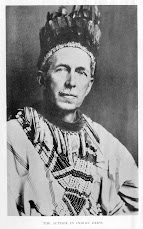
About this bibliography and Leonid Solovyov:
The intent here is to document the entire works of LS from the date
of the source, thus headings are numeric, indicating the first
publication of each work. LS wrote in Russian, but his works have
been translated in several languages, even by Moscow based
publishers.
The header of each story also includes the name in Russian and in
English. The primary author of this bibliography only understands
English, and the document is intended for English audiences.
In many instances LV stories were collected to make a larger work
following a theme. This is especially true of the war stories.
Sevastopol Stone: Collection contains some stories not available
elsewhere.
One outstanding ‘Collected Works’ was published in 2010. It is
listed, and in many cases it is the only source of LS works. Thus
2010.1 is important.
Definitions; these follow the standards of FictionMags:
vi (vignette): in the context of FictionMags, "vignette" is
always used to mean "short short story", which is typically
1–3 pages (or under 1,000 words)
ss (short story): typically 4–20 pages (or 1,000 to 7,999 words)
nv (novelette): typically 21–50 pages (or 8,000 to 19,999 words)
na (novella/short novel): typically 51–100 pages (or 20,000 to
39,999 words)
n. (novel): typically over 100 pages (or 40,000 words or longer)
additionally we have:
pm poem
pl play
ch chapter: in many cases, stories have become chapters in books, and
are listed in databases like LitLife. Where information exists these
are expanded upon.
Note that if a title is underlined, eg. 1949.2, it means we
have a copy in some digital form.
Леони́д Васи́льевич Соловьёв in English
becomes Leonid Vasilyevich Solovyov. Other variations are Leonide,
and for the family name ‘viev, vi’ev, etc. There are a number of
biographies of the author; several appear in the Stillwoods
translations of his works. There are a few errors that appear in
those translations.
-----
1926.01
Месть - Revenge
tentatively
publishing in One Love – Revenge 2400 words’ Great adventure
story along Syr-Darya.
This
is a short story that was published in “World of Adventures”
magazine. It won first prize in 1927 results. Illustrated ss
------
1927.01
На Сыр-Дарьинском берегу - On the Shore of the
Syr Darya
tentatively
publishing in One Love – Revenge 8900 words’ Great adventure
story along Syr-Darya.
Three
hunters—two Russians and a Tatar—live in a hut on the banks of
the Syr Darya. A gang led by Rakhmankul, a kurbashi, roams the area,
plundering villages and slaughtering and murdering civilians. The
hunters and a wounded Red Army soldier engage in an unequal battle
with the Basmachi. Illustrated ss
Included
in: —
magazine "World
of Adventures 1927' 8" ,
1927.
--------
1928.01
Тёмное дело – Dark Business
tentatively
publishing in One Love – Revenge 3000 words’ Great adventure
story, Central Asia.
Dark
Matter (Dark Business/Affair) illustrated ss
Synopsis -Amidzhan
has been working for old Mamed for four years for free, in exchange
for the promise of marrying his daughter, Nazakat. The village's
richest bey, the fat Boymat, who already has two wives, promises
Mamed a whopping 600 rubles in dowry for Nazakat.
from
World of Adventures 1928 '3 infosource https://fantlab.ru/work729317
-----
1929.1
Месть Шашибушана - Revenge of Shashibushan
-
Publication: Всемирный следопыт (World Pathfinder)
Illustrated ss
-
Issue: №9, 1929 - Pages: 671–679
-
Publisher: Государственное акционерное
издательское общество «ЗиФ»,
Москва–Ленинград
-
Notes: Early satirical short story with Eastern motifs; predates
Solovyov’s Nasreddin cycle. Published in a high-circulation Soviet
magazine aimed at youth and international readers.
----
1930.1
Ленин в творчестве народов Востока -
Lenin in the works of the peoples of the East: (Songs and tales)
https://fantlab.ru/search-works?q=леонид+соловьев&page=all#:~:text=Lenin
and Kuchuk-Adam
from 1926
Details
Shelf
Number 30-1/82
Library
card
Soloviev
L. V. (writer) Lenin in the works of the peoples of the East: (Songs
and tales) / L. V. Soloviev; With an introduction by A. M. Arsharuni.
- Moscow: State Publishing House of the RSFSR Moskovsky Rabochy, 1930
(printing house of Mospoligraf Iskra Revolyutsii). - 125 p., [2] p.
advertisment; 17x12 cm.
Author
Solovyov,
Leonid Vasilievich (writer, 1906-1962)
Editor,
compiler etc. Arsharuni,
A.M. -- Author of the preface, etc.
Language
Russian
Subjects
Lenin
Vladimir Ilyich -- (1870 - 1924)
Siglas
of other libraries RNB
System
number NLR01 007209613
------
1932.1
Кочевники - Nomads
(Nomadland,
Nomadism:
A Tale)
first
appeared the The World Pathfinder
Shelf
Number Mf
K1/1707
32-3/749
Library
card
Soloviev
L. V. (writer) Nomadland: A Story / L. Soloviev; Binding: D. Shmarin.
- Moscow; Leningrad: State Publishing House of Artistic Literature,
1932 (Moscow: Krasny Proletary Printing House). - Binding, 166 p.,
incl. title page, 2 p. advertisements; 20×14 cm. - (New Releases of
Proletarian-Collective Farm Literature / Russian Organization of
Proletarian-Collective Farm Writers (ROPKP))
Author
Solovyov,
Leonid Vasilievich (writer, 1906-1962)
Editor,
compiler etc. Shmarin,
D. -- Others
Series
Title
New
Proletarian-Collective Farm Literature / Russian Organization of
Proletarian-Collective Farm Writers (ROPKP)
Language
Russian
Siglas
of other libraries RNB
System
number NLR01
006973305
1934.1
Поход „Победителя“ - The Victor’s Campaign
(The Campaign of the Winner)
Might
be something here, no access
https://opac.flib.sci.am/cgi-bin/koha/opac-detail.pl?biblionumber=410718&shelfbrowse_itemnumber=721104
...see Copilot report
[Moscow]:
GIHL, 1934. - 176 p.; 20 cm. a collection of novellas and short
stories including:
The
Victor’s campaign (1934)
The
One Hundred and Twelfth Experiment (1934)
1934.03
Герой
Труда - Hero
of Labour
Done
thanks to Ludmila 20260224.
1934.04
Отец
- Father
The
Wheel (1934)
New
House (1934)
https://litvek.com/books/243890-kniga-leonid-vasilevich-solovyov-novyiy-dom
------
1936.01
Блудные сыновья - Prodigal Sons
Leonid
Solovyov in The Bolshevtsi Collection – 1936
(I
have this story and it is published in one of my books. Source file
was in LitLife and is saved in folder..)
------
0000.01
Одна любовь - One Love
I
have this story, but I have no idea of source! I have a picture of
the rerelease cover.
Подробнее
на livelib.ru:
https://www.livelib.ru/author/27187/top-leonid-solovev/~2”
dubious?
One
Love is listed as a title (ss) within the Sevastopol Stone:
Collection 1959 https://fantlab.ru/edition248537
-----
1938.1
Высокое давление: Роман - High Pressure
Details
Shelf
Number 38-2/402
Library
card
Soloviev
L. V. (writer) High pressure: [Novel]. - Moscow: Goslitizdat, 1938 (1
type. Transzheldorizdat). - 216 p., 1 incl. f. ill.: ill.; 17 cm.
Author
Solovyov,
Leonid Vasilievich (writer, 1906-1962)
Language
Russian
Siglas
of other libraries NLR
System
number NLR01 007073806
-------
1939.1
Stories
Details
Shelf
Number 39-2/1
Library
card
Solovyov
L. V. (writer) Stories. - [Moscow]: Sovetsky pisatel, 1939. - 264 p.;
17 cm.
Author
Solovyov, Leonid Vasilievich (writer, 1906-1962)
Language
Russian
Siglas
of other libraries RNB
System
number NLR01 006871134
also...Note
that these are different contents
----
1939.2
Stories
Shelf
Number
39-8/3227
Library
card
Soloviev
L. V. (writer) Solar Master; [The Ninety-sixth Woman]: Stories / L.
Soloviev. - Moscow: Pravda, 1939. - 48 p.; 14 cm. - (Ogonyok Library;
No. 55)
Author
Solovyov,
Leonid Vasilievich (writer, 1906-1962)
Series
Title
Ogonyok
Library, No. 55
Language
Russian
Siglas
of other libraries
NLR
System
number
NLR01
007073807
-------
1940.1
Возмутитель
спокойствия
- The
Troublemaker
(Disturber of the Peace)
Source
is the Afterword from Mid-life Stories, D. Moldavsky. ( now adjusted
with fantlab links to cover.)
-------
1940
(cover photo available in dropbox)
Повесть
о Ходже Насреддине (The Tale of Hodja Nasreddin).
Moscow
publication
-------
1944.1
The
Merry Sinner
(play)
Details
Shelf
Number
L30
G-8/89
Library
card
Solovyov
L. V. (writer), Vitkovich V. S. The Merry Sinner: Comedy in 4 acts, 9
scenes / Leonid Solovyov, Viktor Vitkovich. - Moscow: All-Russian
Directorate for the Protection of Copyright, Distribution Department,
[1944]. - 52 p. ; 28 cm.
Author
Solovyov,
Leonid Vasilievich (writer, 1906-1962)
Vitkovich,
Viktor Stanislavovich (1908-1983)
Language
Russian
Notes
Glass-glass
ed.
Siglas
of other libraries RNB
System
number NLR01 006938185
-------
1944.2
Long Voyage
Details
Shelf
Number L30 G-2/1115
Library
card
Solovyov
L. V. (writer) Long Voyage: A Short Story / Leonid Solovyov. -
Magadan: Publ. and printing house "Sov. Kolyma", 1944. - 16
p.; 14 cm.
Author
Solovyov, Leonid Vasilievich (writer, 1906-1962)
Language
Russian
Siglas
of other libraries RNB
System
number NLR01 006938188
This
may be a chapter from Sevastopol Stone
-------
1944.3
Черноморец - Chernomorets
You
can purchase a full copy of this through NLR:
Details
Shelf
Number
ONL
Komi-z./2-112
Library
card
Solovyov
L. V. (writer) Chernomorets : novel / Leonid Solovyov ; [transl. with
rus. D. V. Konyukhov] - Syktyvkar : Komigiz, 1944. - 114 s. ; 20 cm.
Author
Solovyov,
Leonid Vasilievich (writer, 1906-1962)
Language
Come
BBK
Sh6(2=Ko)-91R7-4
Siglas
of other libraries
RNB
System
number NLR01 01020615
----
1944.4
Black Sea Sailor
Published
only in English, it could be an adaptation of Tales
of Boatswain Vasyukov
-------
Рассказ, 1945 год
(short
story, illustrations by
G. Balashov),
pp. 10-12
magazine
Shift
No. 6, 1945
-----
1946.0
Imprisoned in Gulag, Dubravlag labor camp (Mordovia), to 1954
----
1946.1
Рассказы боцмана Васюкова - Tales of Boatswain
Vasyukov
ch
The Legend of the Black Sea [= Sevastopol Stone] (1944)
ch
Long Voyage (1944)
ch
Soul of the Ship (1944)
ch
Tomb of the Unknown Pilot (1944)
ch
The
Order
(1944)
ch
Alyonushka (1944)
ch
The Return (1944)
----
1956.1
Очарованный принц - The Enchanted Prince
-----
1956.2
Повесть о Ходже Насреддине - The Tales of
Hoddja Nasreddin
(both books as one
volume)
Возмутитель
спокойствия (The
Disturber of the Peace,
sometimes translated as Adventures in Bukhara or The Beggar in the
Harem).
I
believe this is in error. It should be ‘The Enchanted Prince’
and the above refers to the collection.
-------
1958.1
Funny Scandal
Details
from nlr.ru
Shelf Number 59-2/65
Library
card
Vitkovich
V.S., Soloviev L.V. (writer) Funny scandal: A play in 3 acts. -
Moscow: Iskusstvo, 1958. - 64 p.; 17 cm.
Author
Vitkovich,
Viktor Stanislavovich (1908-1983)
Solovyov,
Leonid Vasilievich (writer, 1906-1962)
Language:
Russian
Siglas
of other libraries RNB
System
number NLR01
008259903
-------
1959.1
Sevastopol Stone: Collection
(collection
– this may be mixed up with SS original. See 1959 important
collection, file, in Biblio folder.
· The Legend of the Black Sea [= Sevastopol Stone] (1944)
·
Long Voyage (1944)
·
Soul of the Ship (1944)
·
Tomb of the Unknown Pilot (1944)
·
Alyonushka (1944)
·
The Return (1944)
·
Briefly about myself (1959)
-------
1963.1
From the Book of Youth
Shelf
Number 63-3/2655
Library
card
Soloviev
L. V. (writer) From the "Book of Youth" / [Afterword by E.
Kalmanovsky; Ill.: V. Alekseev. - Moscow]: Mol. Gvardia, 1963. - 224
p., 1 p. portr.: ill.; 21 cm.
Author
Solovyov,
Leonid Vasilievich (writer, 1906-1962)
Editor,
compiler etc.
Kalmanovsky,
E. -- Author of the preface, etc.
Alekseev,
V. -- Illustrator
Language
Russian
Subjects
Uzbek
SSR (h. l.)
Siglas
of other libraries RNB
System
number NLR01
008690739
rc\4649773
63-3/2655
Soloviev.
L. V., Leonid Vasilievich (writer) (1906-1962).
From
the "Book of Youth" / [Afterword by E. Kalmanovsky; Ill.:
V. Alekseev. - Moscow]: Mol. Gvardiya, 1963. - 224 p., 1 p. portr. :
ill. ; 21 .
Kalmanovsky.
E., author. preface
Alekseev.
V., ill.
Uzbek
SSR (canvas).
RU
[63-33541]
-------
1964.1
Selected Works of Solovyov L.V.
Solovyov L.V. (writer) [Selected: Vol. 1-3]. - Leningrad: Lenizdat, 1964. - 3 volumes; 17 cm.
Author: Soloviev, Leonid Vasilievich (writer, 1906-1962)
rc\4726473
64-2/2373
Soloviev.
L. V., Leonid Vasilievich (writer) (1906-1962).
[Selected:
Vol. 1-3]. - Leningrad: Lenizdat, 1964. - 3 v. ; 17 .
[Vol.
1]: From the "Book of Youth"; Stories. - Leningrad:
Lenizdat, 1964. - 332 p., 1 p. portr.
[Vol.
2]: The Tale of Hodja Nasreddin: In 2 books, [Book 1. Troublemaker].
- Leningrad: Lenizdat, 1964. - 283 p.
[T.
3]: The Tale of Khoja Nasreddin: In 2 books, [Book. 2. The Enchanted
Prince]. - Leningrad: Lenizdat, 1964. - 475 p.
Data
from
https://webservices.nlr.ru/util/?method=recordFormat&vid=07NLR_VU1&sysid=008444942&format=037&base=NLR01
RU
[64-62377]
-----
1966.1
Сахбо Sakhbo: Notes of my friend
Details
Shelf
Number 67-6/1376
Library
card
Soloviev
L. V. (writer) Sakhbo: Notes of my friend: [For middle age] /
Illustration by A. Skalozubov. - Leningrad: Children's Literature
[Leningrad Department], 1966. - 48 p.: ill.; 21 cm.
Author
Solovyov,
Leonid Vasilievich (writer, 1906-1962)
Editor,
compiler etc.
Skalozubov,
A. -- Illustrator
Language
Russian
Subjects
Foreign
military intervention and civil war in the USSR 1918-1920 -- Central
Asia (d.l.)
Siglas
of other libraries RNB
System
number NLR01
0086907411966.1 САXБО - Sakhbo (Saxbo) Notes from my Friend
Illustrations
by A. Skalozubov
1st
Children's Literature Publishing House
Leningrad
1966
-----
1971.1
Леонид Соловьёв Повесть О...Leonid Solovyov
Story
about
Middle Life Fiction
Self
owned book
Contents:
Book
One. The Disturber of the Peace
Part One 9
Part Two 78
Part Three 128
Book
Two. The Enchanted Prince
Part One 210
Part Two 357
Part Three 449
IVAN
NIKULIN — RUSSIAN SAILOR (A True Story)
In the Hospital 535
To Great Deeds! 537
The Road 539
To the Front! To the Front! 545
First Battle 548
In the Ravine 550
Junkers from the Vesta! 556
Farewell, Friends! 560
Tikhon Spiridonovich 562
FD-1242 565
Cut off! 597
Marusya's Tears . . . . ... ... . . . '. . 570
Come on, "Fedya"! Push on, "Fedya"! ......... 573
Through villages and farmsteads . . . . . . . . 570
Nighttime Thoughts 582
On reconnaissance . . . 585
Red-haired Pharaoh 589
Destroyed the anchor . . . . . . 593
Military ruse . . 597
Raid, 600
Tikhon Spiridonovich's Feat, . . .603
Our Men Are Advancing. 605
Oath 607
Friends 610
Trial613
Tikhon Spiridonovich's Crime. . 618
The Last Night 622
The Execution of Marusya, 625
The Executioners Flee! 628
At the Crossing 631
Unequal Battle 635
Ivan Nikulin's Immortality.....638
Forward, to the West! 643
SEVASTOPOL STONE
The Legend of the Black Sea. ......649
Long Voyage 653
The Soul of the Ship 661
The Grave of the Unknown Pilot....670
Alyonushka. 678
Return
689
Dm. Moldavsky. Afterword 705
----
2010.1
Collected Works
See LSCW folder
for details.
Shelf
Number
2011-3/3175
Library
card
Soloviev
L. V. (writer) Collected Works: in
5 volumes - Moscow:
Book Club Knigovek, 2010. - 21 cm.
BBK
Ш6(2=Р)7я44
Notes
Lit.
adj. Spark
Is
Part Of Ogonyok Siglas of other libraries RNB System number NLR01
001727058
----
1931.11 В шерганских
песках - In the Fergana Sands
Research
Notes
The
two main libraries in Russia, which serve as the primary national
repositories for literature and research, are the Russian State
Library (Moscow) and the National Library of Russia (St. Petersburg).
RSL.RU
NLR.RU
Best Russian list of stories:
https://fantlab.ru/search-works?q=Леонид+Соловьёв&page=all
This link might go to LS
Collected Works ToC.
"C:\Users\frizz\Dropbox\Solovyov
folder\LS Collected Works\LS Collected Works ToC new.doc"