Wednesday, 29 September 2010

On Kedge


Links and information on Kedge emphasizing before it became a National Park


(Images are clickable for larger version)


Here are some family photos at Kedge Lodge including the layout of cabins around Kedge Lodge.

http://picasaweb.google.ca/frizzledr/KedgeNowTheNationalPark#


Here is a link to a number of black and white photos including some by Yates circ. 1906.

http://www.annapoliscounty.ns.ca/pdf/Photo%20Album.pdf


This document describes tourism in 1900’s.

http://www.gov.ns.ca/nsarm/virtual/tourism/american.asp?Language=English


Digital copy of the Tent Dwellers.

http://stillwoods.blogspot.com/2009/02/tent-dwellers-part.html


Friends of Keji

http://www.friendsofkeji.ns.ca/


Kejimkujik National Park

http://www.pc.gc.ca/eng/pn-np/ns/kejimkujik/index.aspx


Web Page by Doug Frizzle, September 2010.

Tuesday, 28 September 2010

Concerning Garlic


Concerning Our Garlic


Our family loves Garlic; since Gail is such a good cook, we use lots of it. We plan on one bulb of garlic a week or 52 a year. Garlic stores well, we are using it to just about when we bring in the next crop.

Garlic is planted just after the first real frosts, about the second week of October. It is planted so that the top is covered by an inch of soil, then two inches of light mulch is applied over the soil. Garlic is planted in rows of 3, rows six inches apart as are the cloves within the rows. At least 18” is reserved between the row groups, for any weeding.

As mentioned we plan on 52 bulbs for consumption per year. There are on average 4 cloves per bulb, so 52/4= 13 bulbs are required just for planting the following season. So now we are up to 66 cloves required. We plant 100, since we have lots of demands for our almost fist sized Ophio garlic; it is rare for a clove to die overwinter.

Good soil is required for a good crop; light, high compost soil is recommended and an airy location, moderate sun and water. The crop is gathered about August 15, when about half of the leaves, the bottom ones, have died.

Doug Frizzle - Stillwater Lake, Nova Scotia 2010

The Oldest City in the World -1932

From New York Herald Tribune Magazine, Mrs. William Brown Meloney, Editor -
Section XI Twenty Pages -

Sunday, July 31, 1932

Digitized by Doug Frizzle September 2010

The Gateway of the Sun at Tiahuanaco, the World's Largest Piece of Prehistoric Monolithic Sculpture

From a Painting by A. Hyatt Verrill

The Oldest City in the World

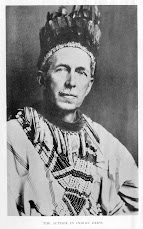
By A. Hyatt Verrill


Author of "Old Civilizations of the New World," "The American Indian," "Thirty Years in the Jungle," Etc.


TIAHUANACO, Bolivia, the oldest city in America and perhaps in the entire world, is situated on the trans-Andean plain, 12,000 feet above the sea-literally on the roof of the world. Here, ten miles from Lake Titicaca, are the astonishing ruins of a city populous in the days of Moses, old before the fall of Babylon and ancient at the time of the fall of Rome.

An expedition of the American Museum of Natural History now at Tiahuanaco—the first in thirty years that has received permission from the Bolivian government to excavate at these ancient ruins—has been on the ground for several months and will soon return to New York. Dispatches have announced many important discoveries. Among the noteworthy finds reported are a number of stone images or idols, one more than twenty feet in length; quantities of beautiful though broken pottery, and sculptured stones covered with strange hieroglyphs, or symbols.

When the Inca dynasty was founded, fully 1,000 years ago, this most ancient of cities had been a deserted ruin for so long that the Indians had no legends or traditions as to its origin or its former inhabitants. So the Incas called it Tiahuanaco—"The Place of the Dead"—and let it go at that.

No one can say with certainty when the city was built. But Dr. Rudolph Muller, the eminent German scientist and astronomer, computes its age as between 10,000 and 14,000 years! This he bases upon very careful astronomical observations to determine the extent to which the axis of the earth has shifted since the city was built. The sun-dial arrangement, used by the Tiahuanacans for determining solstices and other dates was the basis for his calculations. Using a formula adopted by the French Society of astronomers, Dr. Muller gave the city's age as 14,500 years. Unable to credit this almost inconceivable lapse of time, he tried another formula, and obtained 10,500 years as the age of Tiahuanaco. Even this would make it the oldest known city on earth, a city antedating by centuries Ur and Ish and the Pyramids. Yet even then, in that dim and remote era of the world's history the people who built this great city beyond the Andes' summit were a highly civilized race, possessing an advanced knowledge of astronomy and mathematics, having a written or at least an inscribed language, and with engineering and architectural abilities which never have been equaled.

Not only is Tiahuanaco the oldest city in America if not in the world—it is also the world's most mysterious city. For no archeologist can hazard a guess as to the identity of the race that built it, why it was deserted, how the people accomplished titanic feats which have no parallel anywhere, whence they came or whither they went or why it should have been built on the lofty plain where its amazing ruins now stand.

It is one of the true wonders of the world; a city absolutely unique. Nowhere on earth is there anything that resembles it in architecture, sculpture or culture. There are no known traces of an earlier culture from which Tiahuanaco might have been developed; no signs of a decadence. Judged only by what is known of Tiahuanaco it might well have been created by one of Aladdin's jinn and inhabited by giants, or brought bodily from some other planet.

Imagine a vast city covering more than a square mile, with immense edifices built of blocks of stone weighing hundreds of tons each and fastened in place not with cement or mortar, but with huge staples and bolts of solid silver!

A city with a stone-faced pyramid 200 feet in height and 700 feet square, towering above the magnificent temples and palaces, with a great stone stairway leading to the summit, where was a huge stone reservoir!

A city with a temple, with a stone-paved court 500 feet square, surrounded by hundreds of great stone columns twenty feet in height, with sculptured stone idols twenty to sixty feet in height, and with a titanic stone gateway hewn from a single block of rock!

Perhaps of all the remains of this once great city, this "Gateway of the Sun," as it is called, is the most famed and the most striking. Hewn from a mass of hard arsenite rock fifteen feet in length, eleven feet in height and nearly three feet in thickness, this marvelous specimen of stone cutting is the largest known example of prehistoric monolithic sculpture in the world. But it is fully as remarkable for the sculptures that cover it as it is for its size. Occupying the entire surface of one side above the doorway is a facade of 112 symbolic figures surrounding a great central figure of the "Condorgod" or so-called Sun God, all in bas-relief and embellished with intricate ornamental designs.

The other side of the huge gateway is even more amazing as an example of stone cutting. Here the ornamentation takes the form of severe moldings in geometrical designs framing six deep niches. Four of these are on the upper portion of the gateway, two on each side; and below these, one on each side of the portal, are larger niches. Not only are these rectangular recesses cut to a depth of several inches, but they are so accurately and mathematically executed that not even by using a steel square, micrometer dividers and a millimeter scale could I find a deviation of more than one-fiftieth of an inch in their angles, lines or surfaces!

To the ordinary visitor the most interesting and astonishing feature of the ruins is the gigantic size of the stones used in the construction of the buildings. There are flights of stairs with each step a single squared cut stone twenty feet in length, ten feet in width and three feet in thickness, flanked by ornately sculptured stone monoliths fifteen feet in height, which serve as newel posts. Yet these huge masses of cut stone are puny things compared to the stupendous slabs that once formed the walls of buildings—slabs larger than any others known in prehistoric architecture.

Blocks weighing sixty to eighty tons each are so numerous they scarcely attract notice; many weigh more than 200 tons each! And all as accurately and smoothly cut, trued, squared and carved as if sawed and planed by the most modern machinery—though for that matter no modern machine is capable of duplicating the work performed by the unknown ancient inhabitants of Tiahuanaco. Moreover, many of these stupendous slabs of hard arsenite rock are elaborately sculptured. Everywhere are geometrical designs cut deeply into the rock or left in bold relief—moldings, squares, rectangles, crosses and Greek key designs.

Often, too, these are cut far into the stone in a series of concentric steps to a foot or more in depth, the deepest portion being only a few inches square. And in many places there are identical patterns in high relief and evidently designed to fit into the recessed cuttings, thus locking the stones together, and so accurately cut that there is less than a millimeter variation in angles or size in a feat of mortising that few modern artisans could duplicate in wood, to say nothing of stone.

In other cases the titanic slabs were designed to serve as tiling for floors. About the edges of these numerous niches were cut, like seats, deeply into the stone, and intended, no doubt, as resting places for idols or statues.

Everywhere along the edges of these enormous stone slabs are numerous deep T-shaped recesses, frequently with the cross of the T extending through the stone as a perforation. In many places two or more of these cuts still remain in line so that their purpose is obvious, for, as I have said, the blocks were originally held in place by immense metal staples or keys. Until quite recently it has always been thought that these keys were of copper or bronze, but as several have been found which are of silver it is safe to assume that all were of the same metal.

This explains why the great structures, built of blocks of stone which should have endured forever, have fallen apart and are shapeless ruins today. Had the stones been fastened in place by means of bronze or copper staples the Spaniards doubtless would have passed them by and the buildings of Tiahuanaco, its palaces and its temples might be standing intact in all their impressive size and marvelous architectural details today. But the conquering Dons, coming upon the ancient deserted city by the lake, saw in the great silver staples only so much wealth. Each of the silver fastenings weighed many pounds and there were hundreds—thousands—of them—a fortune in silver holding the stones in position. Ruthlessly the avaricious conquerors wrenched and pried them loose, leaving the massive walls ready to topple and fall at the first earthquake or to collapse under the wear and tear of the elements through the centuries to follow.

Indeed, vandalism has played a far greater part in the destruction of this ancient city than have earthquakes, storms or the passage of countless thousands of years.

Not only did the Spanish soldiers rip the silver fastenings from the walls of the imposing buildings; the fanatical priests who accompanied them wrought even greater destruction. To their minds the utter annihilation of everything hinting of paganism or idolatry was a sacred duty. Much as we may regret and decry their misguided ideas, we cannot but admire their thoroughness.

Wherever they found a sculpture, a statue, an image, a temple, an altar or anything else connected in any way with the religion of the natives they literally tore it to pieces; and here at Tiahuanaco were stone idols, figures, statues and sculptures by the thousand, even though the people who had raised and worshiped them had vanished ages before and no living inhabitant remained to be converted to Christianity.

What a glorious orgy of holy destruction the padres must have had! It is recorded that in one spot they found an image carved from a single block of stone that measured sixty feet in length and fourteen feet in diameter. By the united labors of thirty men the huge monolith was reduced to fragments in the course of three days. Truly a triumph in the field of destruction—but what an irreparable loss it was to history and to science!

Why the padres ceased their destructive campaign before every idol, image and sculpture was eliminated is something of a mystery. Perhaps the conquerors were impatient to march and seek greater riches than Tiahuanaco offered in the form of silver staples and could not wait for their priests to break up the remaining idols. Possibly they were appalled at the number of stone images and realized the hopelessness of their task. At all events, they moved on, leaving the massive structures of a forgotten race to their fate and leaving scores of great stone idols undisturbed.

But the destruction of Tiahuanaco and its wonders did not end there. Through the four centuries that have passed since then wanton vandalism and destruction have been almost continuous. Every Indian farmer in the vicinity found the ruined city a source of stone for erecting walls about his fields. The slovenly little Indian village near the ruins has its streets paved with fragments of sculptured stones from the ancient city, and many a thatched Indian hut has an ornate, magnificently carved stone doorway filched bodily from the ruins in front of the little church—itself built of stone-work from the ruins—are the heads and shoulders of two colossal stone statues. Possibly they were decapitated by the priests in the days of the conquest, but more probably, finding entire images too large to be moved, the builders of the church knocked the heads from their bodies.

Even the few great stone monuments still standing among the ruins have been wantonly defaced and partly destroyed by soldiers who have used these priceless archeological treasures as targets, for rifle practice.

Finally, and playing greater havoc with the ancient city than the rapacious Dons, the zealous padres, the ignorant Indian farmers, the villagers and the soldiery combined, came the railway.

Straight through the marvelous city the tracks were laid. Ruthlessly buildings, monuments, sculptured columns and idols were throw down and incalculable treasures in pottery and other relics ground to bits by the hungry maws of steam shovels. Then, as a fitting culmination to all this, over 500 trainloads of sculptures, stonework, monoliths and stairways were broken up and crushed to be used in making fills and ballast for the roadbed!

In its heyday—even at the time of the conquest, when it had been deserted for untold centuries—Tiahuanaco must have been a most imposing, most beautiful and an enormous city. The existing ruins show that it covered an area more than a mile square, with paved streets, long rows of great columns, colossal statues and monuments, magnificent temples and palaces and its great stone-faced pyramid rising high above the plain, But today little remains except in three widely separated areas—the Kalasasaya, or Temple of the Sun, with its rows of stone columns and its impressive, marvelous monolithic gateway and gigantic stairway, the Tunca-Punca, or Palace of the Ten Doors, where the largest slabs of stone are lying where they fell after the Dons had pried the silver staples free, and the Akapana or Fortress, the great artificial hill from which the stone facing, the long flight of stone steps leading to the summit, the great stone reservoir, the stone conduit to the base and the monuments that crowned it were crated away, broken up and used in ballasting the railway.

And of all the hundreds—probably thousands—of gigantic stone statues or idols that once stood about Tiahuanaco only one remains, scarred and defaced by bullets, chipped by vandals and curio seekers, but still erect, gazing with sphinx-like, enigmatical face toward the rising sun. If only he could speak what an amazing story he might tell!

Could he but relate all that has passed beneath his sightless eyes the mysteries of Tiahuanaco would be the explained, the myriad puzzles of the past would be solved. We would then know how the inhabitants of the ancient city performed their amazing feats of stone cutting without—as far as is known—the use of steel tools; feats beyond our present comprehension, for no bronze tool ever found would cut hard rock, and no expert stone worker of today will believe for an instant that the accurately and mathematically and perfectly cut Tiahuanaco work was accomplished by the use of stone implements.

Even if the full story of Tiahuanaco is forever sealed behind the stone features of the solitary image much new light will doubtless be thrown upon it when a full report of the museum’s expedition is made public. One noteworthy discovery made was the image of a man with heavily bearded face.

Herein, perhaps, lies the key that may eventually solve all the riddles of Tiahuanaco and other ancient civilizations of America, for the bearded figure is doubtless a statue of the Bearded God— the Feathered Serpent of the Aztecs, the Kulkulcan of the Mayans and the Wira Kocha, or Bearded One, the supreme deity of the pre-Incans. This was the legendary bearded white man who, according to tradition, came from the “Land of the Rising Sun,” who taught the people their religions, their arts, their sciences and their civilizations, and then vanished after prophesying the downfall of their civilizations and the coming of the Spaniards.

Who can say how much of this ancient tradition is legend and how much is truth?

However that may be, the Bearded God is as great a mystery as is Tiahuanaco, the oldest, most puzzling of the ancient American civilizations.
Monday, 23 August 2010

Peter, A True Story

PETER.
(A TRUE STORY.)

A short story from the “Little Folk’s Illustrated Annual” 1899. Digitized by Doug Frizzle, August 2010.

DOROTHY lived with her grandparents on a little farm among the mountains. She loved animals, and was never without a pet of some kind.
One day as Dorothy's Grandfather was taking the cow to pasture, he noticed three little creatures playing near a large rock. He thought they were young foxes, and he started to catch one; but before he could reach the place two of the little fellows had tumbled into their hole. The other was about half in when Dorothy's Grandfather grabbed him.
It was not a fox, but a baby woodchuck,— a queer, fuzzy little ball of fur with beady black eyes, stumpy tail, and big yellow teeth.
The baby woodchuck bit, and scratched, and struggled to get away. But at last he was tied in a handkerchief, and then he was carried to Dorothy.
Dorothy was delighted with this new and strange pet; and though her Grandfather said woodchucks rarely became tame, she was sure this one would. She named him "Peter," and then took down her old squirrel cage, and lined it with soft hay and placed him in it, with some fresh-cut clover and a little dish of water.
For a few days Peter was very wild. He behaved very badly. He insisted on spilling his water, and he would snap and bite whenever his little mistress replaced it. But by and by he saw that Dorothy did not mean to hurt him. Then he gave up biting. In two weeks he would drink from his dish without upsetting it, and would nibble clover from Dorothy's hand, and let her scratch his funny little head.
In a month Peter had grown to twice his size, and had become so tame that he would let Dorothy take him in her arms and carry him about.
One day little Dorothy forgot to fasten the cage door, and Peter walked out. But he did not go far, and went back to his cage of his own accord. The door was never fastened again, and all day long Peter would play about the veranda or nibble grass in front of the house. He always returned to his wire house for the night. By this time he had learned to answer to his name. He would run to Dorothy whenever she called him.
One day Dorothy's Grandmother was baking cookies, and she gave one to Peter. It was funny to see the little woodchuck taste it, then taste again, as if he were not quite able to make up his mind whether he liked it or not. Finally he decided that he did like it and he ate it all. From this time, cookies were his favorite food. As soon as Dorothy's Grandmother began to bake he would run to the kitchen, and sit on his haunches in the doorway, and wait patiently until his cooky was given him; then he would scamper off to one of his grassy nooks and eat it at his leisure. He would hold it in his fore-paws and nibble here and there in the very cunningest way until it was all gone.
Several times during the summer Peter wandered off to the woods and spent the day. At last one cool October day Peter went off and did not return.
Dorothy was afraid some one had killed him. All winter long she mourned for Peter.
One fine morning in April as Dorothy was walking down the road with her Grandfather they espied a big red woodchuck sitting on a stump in a field.
"Oh, Grandpa!" cried Dorothy, "see that woodchuck! doesn't he look just like my dear old Peter?"
"Perhaps it is Peter," said her Grandfather. "Call him and see."
Stepping to the side of the road, Dorothy waved her hands and called, "Peter Peter! come here Peter!"
And what do you think happened? Why, the big red woodchuck first looked at Dorothy for a minute, with his head on one side, and then came running across the field— and it was her dear old Peter, safe and sound, coming back to her after his long winter sleep.
Dorothy took the great red fellow in her arms and hugged and kissed him. Peter seemed to share her delight. He rubbed his nose against her cheek and grumbled down in his throat as woodchucks do when they are pleased.
Of course Dorothy carried Peter home and fed and petted him, to make up for all the time he had been away. That afternoon Dorothy's Grandma got out her baking tins and rolling pin. And the moment Peter heard the sound, he started up and ran to the kitchen door, and took his old place again, to wait for his cooky. So you see that during his long winter sleep he had not forgotten about the cookies.
One day Dorothy's Grandpa found that his vegetables had been nibbled off, and as Peter had never been known to go into the garden he thought some wild woodchuck had made his home close by to be near Peter. That night he set a trap. The next day when he visited the trap, there, caught fast by one leg, was Dorothy's Peter!
Poor Peter's leg was broken. He moaned and groaned while it was being bandaged. He was put to bed, and Dorothy smoothed him and petted him, and cried over him, and she felt that Peter understood how sorry she was for him.
After a long time Peter was able to go about as well as ever, but he never again showed any inclination to go into the garden.
A. Hyatt Verrill.

There are at least three more of AHV's illustrations in this book. Here is a Whipoorwill.

The Legend of the Crossbill


THE LEGEND OF THE CROSSBILL.

From the Little Folks Illustrated Annual, 1899. Digitized by Doug Frizzle Aug 2010.

THE cold north wind whistled through the vines of the veranda and scattered the dried blue honeysuckle berries on the ground. Eric stood by the window watching the falling snow. "Oh, papa," he cried suddenly, "come see these birds!"
Eric's father laid down his book and went to the window. In the vines, and hopping about on the snow-covered ground, were a number of birds eating the berries and chattering to one another in low tones. Some of these birds were dull olive and yellow; others were dressed in brilliant red, their bright feathers showing like blood against the soft white snow.
"These are Crossbills, Eric," said he, "and if you look at them you will see why they have such a queer name."
Presently one of the pretty creatures came close and Eric called, "Oh, I see now—the bird's bill is all twisted."
Eric's father laughed. "It is not twisted," he said, "but the ends are bent past each other."
"Well," said Eric, "why are they like that, instead of straight?"
Eric's father drew a chair to the window and took his little boy on his knee. "Crossbills," he said, "live in the far north— they only visit here in winter. They feed on pine and fir seeds and use their scissor-like bills to chip off the scales of cones so as to reach the seeds beneath. When pine-cones are scarce, they come to the shrubbery near houses to feed on the berries. In their forest-home there are few people, and they are never harmed, so they are always tame and fearless of man.
"And there is a very pretty little legend, Eric, that tells how the Crossbills first came by their queer beaks and red feathers.
When Christ was taken out to be crucified all the birds and animals were grieved, but only one, a plain little brown bird, tried to help Him. This little bird stayed near the Cross, and when the cruel nails were driven through the Saviour's hands he fluttered down and tugged and pulled to draw them out. But though he struggled until his little bill was bent out of shape, and his feathers dyed with the Lord's blood, he failed to start the nails. But Christ saw his efforts and smiled and thanked him. And ever since, says the legend, the bird's feathers have been red and its bill crossed.
A. Hyatt Verrill.

Tuesday, 29 June 2010

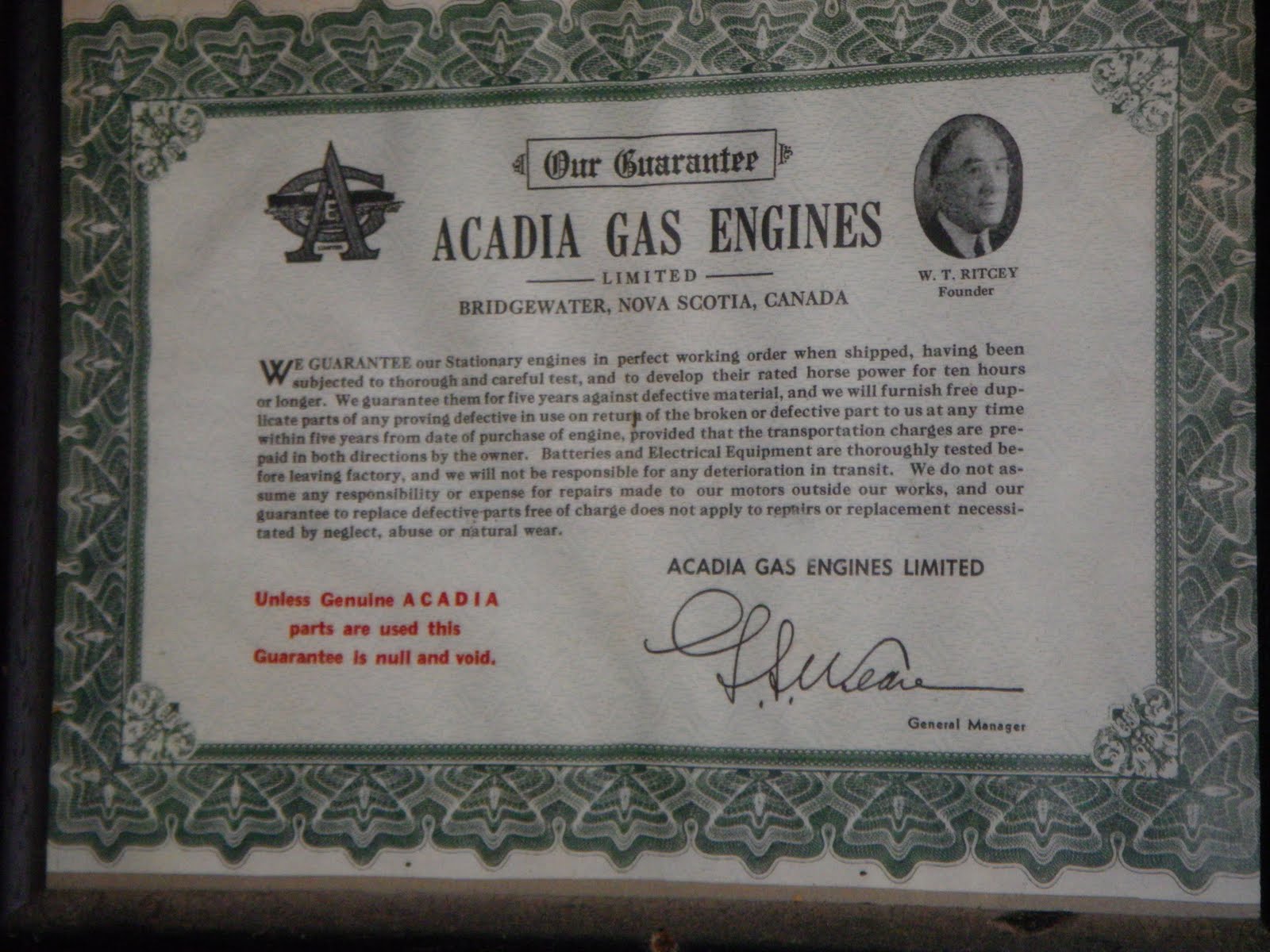
Making Acadia Gas Engines


THE MAKING OF THE ACADIA GAS ENGINES - from THE BUSY EAST magazine 1918

Adapted from http://www.oldmarineengine.com/history/Acadia/AcadiaBusyEast.htm

by Doug Frizzle June 2010.

One of the marvels of modern mechanism has been the development of the gas engine, and a few paragraphs can very profitably be devoted to the history of this machine, which occupies such an important place in the industrial life of the present day.

Soon after the discovery of the piston, attempts were made to employ it for other powers than steam. Huyghens (1629-1695) tried to utilize the explosive force of gunpowder as early as 1680. Illuminating gas was later tried by many inventors. In 1799 Le Bon, a clever French artisan, patented a gas engine, which employed a piston and cylinder, took illuminating gas from a reservoir, mixed it with atmospheric air and exploded it by means of an electric spark on alternate sides of its piston. His engine was automatic and theoretically all right but the high price of illuminating gas and the difficulties of generating electricity rendered his engine impractical from a financial standpoint, though considering the state of the general mechanic arts of that time, the Le Bon engine was an excellent one. In 1860, sixty years after Le Bon, a man named Le Noir obtained a French patent for practically the same engine, but it used one hundred cubic feet of gas per horse-power-hour. As gas for the test cost about $2 per thousand feet and coal $6 per ton, the fuel for the gas engine cost several times as much as the fuel to do the same work by steam. A Parisian inventor, Hugon, produced an engine which was slightly more economical than Le Noirs. In 1867 Otto and Langen, of Cologne, exhibited at the Paris Exhibition a gas engine which consumed thirty-eight cubic feet of gas per horse-power-hour. This was a great improvement over the LeNoir and Hugon type of engine but was intolerably noisy. The cost of fuel, too, was still too high. Brayton, in 1872, patented a gas engine or more strictly speaking a hot air, for he used largely the expansive force of hot air. The Brayton engine was eighteen per cent more economical than the Otto and Langen engine and worked without any of the distracting noise of the latter. In 1876 Otto brought out a new engine in which was embodied the famous Otto Cycle (a definite series of motions constantly, repeated) the method in general used today. It was found that if the gas and air were subjected to a heavy pressure and then exploded, the resulting force was much greater than under less pressure. The essential feature of the Otto Cycle is the application of this principle. It was advocated by Barnett in 1838, tried by several, and successfully applied by Otto in 1876. During the past thirty or forty years the development of the gas engine has been rapid. One by one have difficulties been overcome; step by step has progress been made nearer and yet nearer perfection has the engine been brought, until today gas or gasoline engines are simple and easy of operation, and are used widely for all purposes where power in moderate quantities is required.

It would he interesting to trace the development of stationary gas engines and of automobiles, but for the present we will confine our attention to marine engines operated on gasoline or kerosene. Not so many years ago the departure of a fishing fleet for the Banks of Newfoundland meant the unfurling of countless sails to the wind, the noiseless gliding of the graceful schooners with their fair sails set to catch the faintest breeze. In former days a fishing fleet presented an artistic picture of exceeding beauty. Today the beauty has given place to the modern boat, which goes rapidly to sea to the rhythmic chug, chug, of the efficient, up-to-date gas engine.

It was recently the pleasure and privilege of the writer to visit the plant of the Acadia Gas Engines, Limited, of Bridgewater, Nova Scotia, and to trace step by step the process which takes gray iron, brass, steel, bronze and copper, and converts them into a marine gas engine which provides cheap, efficient and reliable power at very moderate cost.

Of course the beginning of anything is the thought, the idea, which take shape in blue prints, plans, sketches, figures. Few things worth while happen by chance. The idea of making gas engines at Bridgewater, of building up a great industry on the banks of the La Have, had its birth in the mind of the present general manager and president of the company. Mr. W. T. Ritcey, who in 1908 established the business in Bridgewater.

It will be impossible to describe in detail each step in the process of making an Acadia gas engine. Such a task is quite beyond the writer to whom a gas engine has always been a thing of mystery. We will, however, touch upon a few of the more important things and will describe with some particularity the chief parts of that wonderful machine; which has done so much to make the fisherman's life pleasant and happy.

In an upper chamber in the Acadia plant, from plans and blue prints, the wooden, brass, and aluminum patterns of the various parts which compose the Acadia engine are manufactured. These patterns go to the foundry, a structure one hundred by forty six feet in size. To the casual observer this shop resembles an ordinary stove foundry, but closer inspection a number of important differences. Not only do we find an iron furnace, as in a stove foundry, but brass furnaces as well. There the molding of the parts for an engine offers greater difficulty than in the case of a stove, for the reason that an engine is much more complex. The mold of the outside of an engine cylinder, for instance, is fashioned in ordinary molding sand by the use of the wooden pattern. The molds for the bore and water jacket, are made by mixing sand, core oil and other ingredients together, molding the sand into the required shape in what are called core boxes, and then baking these cores for about twenty five minutes in an oven having a temperature of 200 degrees Fahrenheit. When it comes from the oven this core can be handled without breaking, provided care is exercised. The cores are placed in the flask or wooden case containing the molds. Everything is carefully prepared, the two parts of the flask are clamped together and all is readiness for the cast. In the top of the flask is an aperture through which the liquid metal runs, the casting being done as in the case of stoves and ranges. The heat of the molten metal burns up the oil used in making the core mold, and the sand falls away from the casting, the same as the green sand, which has been mixed with water. In the Acadia plant castings are made three times a week, an average of five and a half tons of gray iron being used each time. About seven hundred pounds of brass is cast each working day.

After being taken out of the flasks, the castings are carried to a machine known as a mill to be cleaned, later being taken to the machine shop, where very interesting work is done.

Upon entering the machine shop, one is attracted by a very large machine, which suggests a turret on a man-of-war. This is a Bullard vertical boring and reaming machine, specially designed for the purpose of boring gas engine cylinders. After being bored the outside surfaces or bosses of the cylinder are milled to make perfectly square and true joints, and they are then drilled by the use of a machine called a jig, which accurately places each hole and makes them strictly interchangeable. Various operations follow in quick succession, until finally the cylinder goes to the paint shop where it is cleaned and painted later going to the basement where the water jacket is tested. Eventually the cylinder finds itself in the erecting shop where the assemblers do their work. The water jacket of the Acadia cylinder has a large space completely encircling the combustion chamber, which ensures a cool piston, avoiding the possibility of over heating and making the oil more efficient.

The principle parts of the gas engine are of course the cylinder, crook cases, crank shaft, connecting rod, piston, igniter and carburetor. We have referred to the cylinder and now we will describe briefly the other parts of the Acadia engine.

The crank cases are made of cast iron and are surfaced on milling machines or by heavy shapers giving a true surface. They are designed for large bearings which are made of a high grade babbit metal, reamed to standard size and guaranteeing a perfect running bearing. The crank case of each Acadia engine has either one or two large hand holes which permit quick removal of the connection rod.

By referring to the cut of the crank case herewith the reader will note the design of the top and bottom crank cases, which gives a split bearing and which affords an opportunity of removing the liners and taking up the wear and having a tight bearing.

Acadia crank shafts are drop-forged from specially designed dies and made of open hearth steel by the largest drop-forging company in the country. The bearings are large and made to exact size; the cranks are guaranteed against breaking.

The connecting rods are of the I beam design and are made extra long to eliminate the lateral strain as much as possible. The rods are made of a high mixture of bronze, which is designed to withstand the severe shocks and stresses set up by the force of the explosions, and does not crystallize under such conditions. The wrist pin end is made to fasten the pin securely to the connecting rod and the crank pin end is fitted with bearings of the best quality of white metal, and so constructed that any wear occurring may be readily taken up or adjusted by the removal of liners.

Acadia pistons are the same high grade iron as the cylinders so that the expansion is the same. They are of the trunk pattern, being extra long and having a curved baffle plate to prevent the entering charge from mixing with the exploded gases. The rings are ground true and are eccentric, so that they will expand with equal pressure against the walls of the cylinder, making a perfect compression. The piston bushings in which the wrist pin turns are the best quality of Phospor bronze and are interchangeable.

The make and break igniter is a special feature of the Acadia engine on account of its simplicity. The number of parts used in its construction are reduced to a minimum and each part can be removed and replaced at little expense. The igniter in held in place on the motor by two steel studs and nuts, and is provided with a copper gasket so that a slight strain on these nuts will make a tight joint The spark points can be readily adjusted without removing the igniter and the electrical current cannot be short circuited by water, which has much to do with the superior operation of the engine.

All Acadia engines are designed to lubricate through the gasoline supply, which is the most reliable and accurate method. The heavy duty types are also fitted with sight feed oilers which oil the cylinder and wrist pin in piston, and the crank pin is lubricated by means of a centrifugal ring oiler which is a positive lubrication.

Acadia combined kerosene and gasoline injector carburetor has proved a great success because of its simplicity and efficiency, and its adaptability to any of the thousands of two cycle engines in use. This carburetor is attached to the engine by means of one connection only and will burn kerosene with equally an good results as any carburetor, either kerosene or gasoline in use at the present time.

The Acadia is of the two cycle or two stroke design, which eliminates gears, cams, valves, etc., thus affording the most simple construction. Nearly every part going into the construction of this excellent engine is manufactured in the Acadia plant, the only exceptions being the necessary electrical apparatus, and small parts such as screws and bolts, which are manufactured by specialists in that line of work.

After being assembled the engine is taken to the testing shop, where it undergoes a most rigid test lasting from one to five hours. Later the engine is painted, numbered, crated and made ready for shipment.

The growth of the business of the Acadia Company has been remarkable. Starting in a small way in 1908, only ten years ago, this concern today enjoys the distinction of being the largest manufacturer of two cycle gas engines in Canada. The corporation was originally called the Acadia Gas Engine Company, Limited, but upon re-organization in May, 1917, the name was changed to the Acadia Gas Engines, Limited. The authorized capital is $200,000 in common stock and $100,000 in bonds. So far $150,000 in common stock and $75,000 in bonds have been issued. The Company is incorporated under a Nova Scotia charter and is conducted in a way to merit the approval of its patrons and its shareholders. Nearly night thousand Acadia engines are now in use and that number is being increased yearly by about twenty four hundred. The company's turnover this year will be upwards of $700,000 and the day is not far distant when the output will reach the million mark. The most popular engines manufactured by them are the 1, 2 and 3 cylinder variety with make and break spark. Acadia engines are mostly found throughout the Maritime Provinces, the Gaspe coast of Quebec, Newfoundland and Labrador. Three years ago a branch office was opened in St. John's. Newfoundland, with Mr. David 0. Neill, manager, and Mr. R. W. Ritcey. superintendent. The present officers and directors are as follows: President and general manager, Mr. W. T. Ritcey; secretary treasurer, Mr. M. S. Lohnes; R. W. Elliott, Halifax; Frank W. Elliott. Middleton. N. S.; C. A. Hubley; D. H. Ritcey, Bridgewater; William Duff, M. P.,Lunenburg. The company employ nearly a hundred men, on an average, and pay out upwards of one hundred thousand dollars per year in wages.

The plant of the company is conveniently located, the buildings are admirably adapted for their purpose, the machinery particularly well arranged and the system of work of undoubted excellence. In a word their facilities for manufacturing gas engines are splendid and one can well understand the reason that their business has grown seven thousand percent in a decade. A growth so wonderful, so phenomenal, must be the result of undoubted merit. The Acadia gas engine has assuredly "made good."

During the past summer a splendid garage, built of concrete blocks, has been erected. This building is 55 by 61 feet and two storeys in height. On the first floor is a well equipped garage, while on the second floor is stored "United" Stationary gas engines. American machines, of which the Acadia Company are Newfoundland and Eastern Canadian distributors and who sell large quantities. They are also selling agents for that excellent car the Chevrolet, selling seventy during the present year, with splendid prospects for large sales in the years to come. The company are also selling agents for the Maritime Provinces for the celebrated Ford-Smith Form-a-truck which solves delivery problems.

In addition to the manufacturing of internal combustion engines, Acadia Gas Engines Limited also manufacture vessels' heaving outfits, power hoists, winches, lobster pot hoists, etc.

This industry is one of the most important in Eastern Canada and without doubt has a bright future before it. With the development which must of necessity take place in the fishing industry the demand for reliable, efficient gas engines will increase rapidly. Having had ten years of unique and wonderful success and with the experience which this success has brought, the Acadia Company are in a particularly favorable position to supply the demand for high grade gas engines which will do the work that is expected of them. To increase from a turn over of $10,000, the sales of 1909, to an output of $700,000, ten years later, is surely progress rapid enough to satisfy the most ardent advocates of Maritime industrial progress, advancement and development. With so courteous, capable and energetic a president and general manager as Mr. W. T. Ritcey; with so reliable, painstaking and obliging a secretary treasurer as Mr. M. S. Lahnes; with an office force of undoubted ability, and a band of expert, faithful mechanics, Acadia Gas Engines Limited is to be heartily congratulated, for the future assuredly holds big things for the flourishing manufacturing industry on the banks of the beautiful La Have.

Thursday, 17 June 2010

From Nova Scotia Blue Book and Encyclopedia 1932


From Nova Scotia Blue Book and Encyclopedia – published by Historical Publishers Association 1932 (A book first encountered at The Halifax Club, May 2010)

BIOGRAPHIES

ACADIA GAS ENGINES, LIMITED, BRIDGEWATER, N.S.— An old established firm and leader in its line which is manufacture of Acadia two and four cycle marine and stationary engines, vessels' heaving outfits, hoists, winches, lobster pot hoists, etc.

This concern occupies 65,000 square feet of space and has 65 employees. It does a large trade in Eastern Canada and British Columbia. Fifty percent of the business is exported. Business started in 1908 with 3,400 square feet for plant.

Officers are: W. T. Ritcey, president and general manager; D. A. O'Neil, vice-president and sales manager; J. E. Hirtle, secretary and treasurer.

THE PHINNEY MUSIC CO., LIMITED, HALIFAX, N.S.— Few firms in Canada can boast of as long a record of service to the musical public as The Phinney Music Co., Ltd. Established at Lawrencetown, Annapolis Co., away back in 1872 by the late Mr. N. H. Phinney, this firm has had a continuous growth, and has for many years held the position of the leading music house of the Maritimes. The present officers of the company are J. A. C. Moore, president and manager; E. F. Lordly, secretary-treasurer and manager of the sporting goods department; V. S. Josey, director.

The Phinney Music Co., Ltd. advertise a complete musical service, which with them is a statement of fact, for not only do they carry a large stock of high grade pianos, phonographs and radio receivers, but they also have a very complete line of small instruments, records and sheet music. In addition to this they maintain a strictly modern service department which is equipped to handle any and all repairs to musical instruments from the violin to the pipe organ.

In 1924 a Sporting Goods Department was opened, specializing in high grade sporting goods and in 1931 an electric department was added, featuring electric refrigerators and washing machines.

From the inception of the firm in 1872 until this present day their name has been synonomous with fair dealing, honest value, courteous and efficient service.

Independent of their successful commercial activities, the directors have always shown a deep interest in civic and community affairs. They are convinced that Nova Scotia is by nature the finest country in the world and all their efforts are directed toward making it a yet brighter and happier place in which to live.

John Alexander Campbell Moore of Halifax, president of the company, is of pioneer stock, his grandparents coming, two from the north of Ireland and two of Scottish descent. He was born in Mechanic Sett, King's County, N.B., son of John and Frances (Cochrane) Moore. He attended the public schools at Mechanic Sett and at Lawrenctown (Anna County) Nova Scotia. He was brought up on a farm, taught public school for one year, spent a short time in lumbering and joined Phinney Co. in 1910. He began as office assistant, then was accountant, manager credit department, secretary-treasurer, manager. In 1928 he organized the present company, taking over the business of Phinney's, Ltd., and becoming president and manager of the new company.

Mr. Moore was married at Lawrencetown (Annapolis County), October 20, 1915, to Georgina Uniacke Whitman, daughter of Mr. and Mrs. C. B. Whitman, and grand-daughter of the late Hon. William C. Whitman, former member Nova Scotia Legislative Council. They have one child, Marion Frances Moore, born March 20, 1920.

He is a Mason, St. Andrew's Lodge, No. 1, A. F. & A. M, R.N.S. Scottish Rite — Valley of Halifax. He is also a member of the Rotary, City, and Halifax (Curling) Clubs. Is a member of the J. Wesley Smith Memorial Church and at present treasurer, and was in charge of the Young People's Work for three years. Hobbies are curling, fishing and books.

Associated with him as directors of the company are Messrs. E. F. Lordly, secretary-treasurer, and Verner S. Josey.

Mr. Lordly is a Halifax boy who began his business career with the Royal Bank of Canada, resigning from there to become office manager for the Phinney Co. Upon the opening of the Sporting Goods Department Mr. Lordly was appointed manager. His keen interest in every form of sport made this department a success from the start. It has grown steadily and has been an immense asset to sport lovers of Nova Scotia who are now able to procure locally the best known makes of English and American sports equipment.

Mr. Verner S. Josey is also a native of Halifax. As a very young man he became connected with the Sales Department of Nerlich & Co. of Toronto and travelled the Maritime Provinces in their interests for several years, resigning to accept a position with A. M. Bell as manager of their toy department. In 1918 he became associated with the Phinney Co. as manager of the Music Department. In this capacity he has taken a particular interest in radio broadcasting and has had charge of the broadcast programs of the company, with the result that "The Phinney Cabinet of Melody" has become one of the most popular features on the air from Halifax station CHNS.

Blog Archive

Countries we have visited