Showing posts with label Kenaima. Show all posts

Wednesday, 26 March 2014

In Unknown British Guiana -Part 1

In Unknown British Guiana . . . Part 1
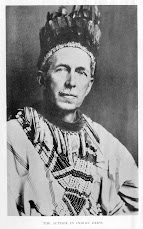
By A. Hyatt Verrill
ILLUSTRATED FROM PHOTOGRAPHS.
From The Wide World magazine, September 1918, Vol. XLI, No. 245 (American Edition). Digitized by Doug Frizzle, March 2014.

It is no exaggeration to say that British Guiana, a vast stretch of territory on the shoulders of the South American Continent, is one of the least-known portions of the globe. Here are great primeval forests, mighty rivers, huge waterfalls, extensive plateaus, and great mountain ranges, where dwell strange Indian tribes and quaint animal life of which virtually nothing is known. The Author, who has made it his business to penetrate into the unknown interior of this land, has specially written for “The Wide World Magazine” an account of his journeys and adventures, which will be found of absorbing interest. He discovered large rivers and mountains whose existence was unknown, and stumbled across primitive races who had never seen a white man before. His striking photographs give an added value to a fascinating narrative.

WE are prone to form opinions of strange places from our first impressions, and, in the majority of cases, such opinions are unjustified. This is the case with British Guiana, and the traveller whose experiences are confined to the low-lying coasts and mud-flats has no conception of the country as a whole.
Georgetown, the capital, is by no means unattractive, and the belt of swampy level land that extends inland for forty or fifty miles holds much of interest and beauty. But beyond this—a terra incognita to the majority of visitors and to a large proportion of the residents as well—lies a marvellous country of vast forests, limitless plains, towering mountains, mighty rivers and stupendous cataracts, a veritable wonderland teeming with the bird, animal, and insect life of the equatorial jungles, inhabited by peaceful but primitive Indians, and hiding in its fastnesses inconceivable resources and immeasurable wealth.
Much of this wonderful country is inaccessible and vast areas are still unknown and unexplored; but much may be visited by anyone who is willing to rough it and who does not mind discomforts, hardships, and a modicum of danger. To such, British Guiana offers attractions which cannot be found in any other land. Here one may see the illimitable tropic jungle in its natural, untouched state—the forests of Humboldt and Darwin; here the naturalist may revel in the wonderful flora of the South American “bush”; here the sportsman may hunt the stealthy jaguar, the clumsy tapir, the puma, the peccary, and hosts of smaller game both furred and feathered, while the angler will find ample opportunities for his skill with rod and line. The gamy lukanani, tropical prototype of the muscallonge; the flashing leaping pacu ; the giant haimara—often weighing upwards of two hundred pounds; the fierce man-eating perai, and even the regal tarpon, all abound in the rivers and streams. Here too the explorer will find a wide field and the mountain climber will see many a towering peak whose summit has never been trodden by human feet, while to others the strange primitive races with their savage weapons, their weird dances, their beautiful bead and feather ornaments, and their curious customs will prove a source of greatest interest. Finally, there are the magnificent scenery, the luxuriant vegetation, the gorgeous colouring, and the innumerable strange sights, which will prove a revelation to the most jaded globe-trotter.

And despite popular ideas to the contrary, it is neither a dangerous nor an unhealthy country. Back from the coastlands mosquitoes are almost unknown, and sand-flies, while abundant at times, are not unduly troublesome. Centipedes and scorpions there are, but one must search diligently to find them, while poisonous snakes are so rare that one may spend a year in the "bush” and never see one. Above the first rapids there are no swamps, and while many of the natives and some strangers suffer from “fever”—which is a mild form of malaria—yet such attacks are usually due to carelessness or to defying the simplest rules of health and hygiene.
In a way, travelling through Guiana is easy, for journeying is largely by boat upon the rivers, and the dangerous rapids and falls only add a thrill of adventure to the trip.
A brief journey into the Guiana wilds served only to whet my desire to see more of the country and to penetrate farther into its fastnesses. At the first opportunity I returned, and although a year of almost constant travel has been spent in the wilderness there is still much that I have not seen and many ambitions are still unsatisfied. As on my first trip, I set forth on my second expedition from Bartica, a tiny outpost of civilization at the junction of the Essequibo and Mazaruni Rivers. Bartica is the terminus of steamboat service from Georgetown, and is the starting place for the gold diggers and diamond-field workers far up the Cuyuni and Mazaruni Rivers, and otherwise is of no importance and little interest.
Here I procured my boat and crew, the former a spoon-bottomed, heavily-built craft about twenty-five feet in length, and designed especially for breasting the cataracts and running the rock-filled rapids of the rivers and known locally as a “batteau.” The crew consisted of six Indians—representing four tribes—with a Boviander, or captain, and bowman, while last, but perhaps most important of all, was my black boy Sam, jack-of-all-trades and master of all, but whose chief duties were to look after my personal comfort and outfit and cook my meals.
And now a word as to outfit, for in travelling through the Guiana hinterland one must carry everything required for the entire journey. First there are the men’s rations, provided in accordance with the Government regulations. Then the traveller’s personal provisions; the cooking utensils, hammock bags, steel canisters containing clothing, waterproof bags, hammocks, medicines, guns and ammunition, fishing tackle, trade goods for the Indians, axes and machetes, and, finally, the huge tarpaulin used as a covering for the load by day and as a tent at night.
It is no small matter to condense all these, and the thousand and one other essentials, so as to fit the capacity of a twenty-five-foot boat and yet leave space for ten men. Moreover, the outfit must be so arranged and packed that it is safe from the torrential tropical rains, and yet is readily accessible and can be transported piecemeal over the portages and around the rapids.
But at last all was in readiness; the officials inspected our craft and passed it—for no boat is permitted to start up the rivers until examined by a Government official and declared staunch and safe and branded with its load-line above the water-level—and with shouts of farewell from the assembled villagers the Indians dug their paddles into the river and we were off.
Swiftly the little town dropped astern. On our right the extensive buildings of the penal settlement gleamed upon their grassy hill, and ahead loomed Kartabo Point, with the Cuyuni mouth just beyond.
Kartabo Point is an interesting spot, historically, for here the sturdy Dutch had trading posts and a fort which was known as Kykoveral, the ruins of which still stand; but to-day the point is mainly of importance as the terminus of the Kartabo road, a trail leading for some seventy miles inland to the Peters gold mine, now abandoned.
Beyond Kartabo Point the scattered huts and cleared lands became fewer, and by sundown the last vestige of civilization had disappeared and our boat was run ashore just below Marshall Falls and camp was made in the primeval forest that hemmed the river on either hand. It is an interesting sight to watch the experienced river hands prepare camp. While one or two men rapidly clear the brush and small growth from the selected site, the captain and two helpers cut and trim small saplings. Placing the ridgepole on the ground between two trees the tarpaulin is spread over it. Then one end is lifted, placed in the forked end of another pole, and is quickly lifted and rested against one of the trees.
The process is next repeated at the other end of the ridge-pole; the tarpaulin is spread out and its edges tied to light poles set in the ground. A few lengths of saplings are laid to serve as a floor, and camp is complete. Meanwhile, one of the Indians has “caught” a fire, pots and pans are sizzling and boiling over the flames, and by the time the luxurious cotton hammocks are swung under the canvas shelter the meal is ready.
As with satisfied appetites we lit pipes and cigarettes and lolled in our hammocks the roar of the falls seemed close at hand. And here it may be well to explain that the so-called falls of the Guiana rivers are not true falls, but rapids; the real falls, no matter how small, being known locally as cataracts. These rapids are both dangerous and treacherous.
In the first place, the foaming, cream-coloured, broken water marks the channels, while the smooth brown spots denote jagged reefs and hidden rocks. In the second place, the rivers rise and fall with marvellous rapidity, and to pass the rapids in safety one must know each rock and reef, each eddy and current, at every stage of water. Moreover, there are backwaters, eddies, cross-currents, and huge whirlpools both above and below the falls, which may easily spell disaster and death if the least mistake is made, if a paddle snaps, or if there is the slightest hesitation, the least error of judgment, on the part of captain or crew.
Long before daylight we were aroused by the reverberating roars of the howling monkeys, although, after a few days in the bush, one becomes accustomed to the weird, rolling, thunderous voices of the “baboons,” as they are called, and sleeps soundly through their uproar, which invariably heralds the approaching dawn.
It was still dark when camp was broken and tarpaulin and dunnage were stowed and the men took their places at the paddles. Through the soft, white river mist we slipped away from the shore and headed for the falls. Very soon we were in the grip of the current, and the men paddled lustily, breasting the foam-flecked waters diagonally until a rugged mass of rocks was gained and we disembarked preparatory to hauling through the rapids.
The sun had now risen above the walls of forest to the east, the last thin wisps of vapour were being whisked away by the cool morning breeze, the rushing brown river glimmered and sparkled in the sunlight, flocks of parrots winged screeching overhead, and all about us the tumbling, foaming falls roared, plunging, between the sharp black rocks. There is always a thrill, a bit of excitement, in hauling through the falls, and no matter how often it is accomplished—and it must be done a score of times a day oftentimes—I never tire of watching the bronze-skinned men as they strain and labour, fighting their way inch by inch against the angry waters, shouting and laughing, wading, swimming, holding their own on submerged rocks and, at last, winning their battle with the boat safely above the falls.
And wonderful skill and judgment are required to accomplish the feat successfully. Two men grasp the stern lines, four others seize the bowline, and, half-wading, half-swimming, gain a foothold a hundred feet or more up-stream. Then, at a cry from the captain, the bowman swings the boat into the current; the men on the bow rope haul with all their strength; the captain shouts orders; the bowman paddles furiously, the men on the rocks strain to their task, and slowly the boat forges ahead. With consummate skill captain and bowman swing the craft clear of rocks, the stern warps keep it headed into the racing waters, and little by little the boat creeps up the rapids. About its bow the waters foam and seethe and the hungry waves leap above its rails, but in a few moments the fight is won and the craft shoots from the torrent into the calm waters above the brink of the falls.
Often, too, the excitement has just begun when the boat has been hauled through the rapids, for in many places huge whirlpools form above the falls, and through these the men must paddle for their very lives. With every ounce of strength of their knotted muscles the Indians ply their heavy paddles, the boat hangs motionless for an instant, quivering and vibrating to the drag of water, and then with a lurch darts forward. High above the rails boils the swirling maelstrom, and as the centre of the pool is reached the boat seems actually to rear on end. Then, ere one can realize how it has been accomplished, the craft dashes beyond the danger-point and floats safely in the narrow, swift-flowing channel beyond.
Many a boat has been sunk, many a man has lost his life, in these treacherous rapids and whirlpools, but in nearly every case it has been due to incompetent or intoxicated captains or bowmen, to overloaded boats, or to ignorance of the river. I have travelled up and down nearly every river in the colony, have run many a prohibited rapid, and have never met with a serious accident, my only mishap being a washout when hauling through a supposedly impossible fall on the Potaro.
Very often, however, the new-comer sits gripping the boat’s rails and gulping with mortal fear, for it seems as if no craft made by man could withstand the knocking about that the river boats receive. It is humanly impossible to avoid rocks at times, and with a sickening lurch and a crashing, grinding sound the boat will bank full upon some hidden boulder. Each second one expects it to fill and sink, for, perched upon the rock, it swings and tips perilously. But instantly the men slip overboard and, up to their necks in the water, tug and strain and lift it bodily from the reef, leaping nimbly in and grasping paddles once more when the craft floats free. It is to avoid sticking fast on rocks that the Guiana river boats are made spoon-bottomed and with no stem or stern posts, for modelled as they are they can be shoved forward, backwards, or sideways with equal ease.
It was a long hard tussle up Marshall Falls, for the tide was out—the tide rises and falls to the first rapids in all these rivers and the falls were at their worst. But at the end of two hours of herculean labours the last of the rapids was passed, and resuming our seats we sped swiftly up the still waters beyond.
These stretches of tranquil river are most welcome to the men, as they afford a respite from the terrible labour of hauling through the rapids. And they are so beautiful that one does not chafe at the loss of time, as with short lazy strokes the tired crew loiters along in the shadow of the verdured banks.
In a sheer two-hundred-foot wall the vast forests rise from the water’s edge in a thousand shades of green, so interwoven and dense that they seem draped in folds like a gigantic curtain of plush. Here and there blooming vines and flowering trees break the emerald ramparts with masses of scarlet, white, magenta, mauve, yellow, and blue, while fallen petals carpet the surface of the water with a multicoloured mosaic overhung by graceful palms and drooping festoons of foliage.
And such trees! Gigantic moras with huge, buttressed roots and gnarled trunks towering in massive four-foot columns; dark, brown-red purplehearts smooth and symmetrical as titanic iron pipes; scaly, pale-grey greenhearts;. balata and locusts, souris and letter-wood—a score of varieties of “ballis” and a hundred trees known only to the Indians and bush-men—spring upward and are lost to sight amid the canopy of foliage a hundred feet above the forest floor, like endless columns supporting a vast roof of green.
Swinging down from far-off branches, shooting upward from the earth, draping the mighty trees, crawling over the ground, clambering across rotting logs, knotted, twisted, inextricably tangled and interlaced, are the lianas, vines, and creepers, some delicate as silken threads; others great six-inch cables, and all binding and knotting the entire fabric of the forest into an impassable maze everywhere decked with strange orchids and weird air-plants. It is as if Nature had gone mad and, in a debauch of floral extravagance, had exhausted all her resources to produce this grotesquely beautiful, this impossibly unreal “bush,” so full of contradictions and surprises.
One sees huge trees with trunks ending a yard or more above the earth and supported only by scores of tiny, stilt-like roots no thicker than a lead pencil; soft, moss-grown palm trunks are armed with a myriad encircling rows of six-inch poisonous spikes; a gorgeously flowered trailer hides wicked recurved thorns beneath each bloom; a mass of maidenhair ferns forms a jungle higher than one’s head, with each fragile, delicate frond armed with needle-like spines; a dainty, fairylike flower gives off the stench of putrid flesh, and mosses upon the trees are so magnified that they appear as though viewed through a microscope; but everything is monstrous, gigantic, in this wonderland, and man seems puny, insignificant, and overwhelmed. And at every turn one meets with some new and amazing surprise, some dream-like, unbelievable condition. One brushes carelessly against a swinging tuft of grass and finds its innocent-looking blades shear through flesh and clothing like the keenest razor; one plucks a charming orchid and instantly, from hidden recesses, a horde of ants swarm forth and bite viciously at the offending hand; thoughtlessly, one strikes with machete at a six-inch shaft of silver-white, and the blade slices through it as through paper and, as the lofty top rips and crashes to earth, crimson blood oozes from the severed trunk; a moment later, the way is barred by a slender sapling, and one gapes dumbfounded when the keen-edged cutlass glances from it as though it were a bar of hardened steel.
To move about in this forest, even for a few yards, is well-nigh impossible, and only by forcing one’s way inch by inch, by hewing a passage and by constant exertion, can any progress be made. If the traveller covers a mile an hour he is doing well, for at every step he is tripped, bound, barred, torn, and scratched as if the vegetation were endowed with life and with devilish ingenuity were striving to keep back the intruder.
It is impossible to proceed quietly, and all living things take warning and become invisible, and one imagines the forest is barren of life; but in reality the bush teems with birds and beasts, and the native Indian, naked save for his scarlet lap, glides like a shadow through the labyrinth and finds game in plenty. Upon the wet and muddy ground his sharp eyes note the tracks of jaguar, deer, peccary, or tapir; a fragment of nibbled fruit or root tells him a shy agouti or a paca is close at hand; bits of seed or fruit drop from the lofty tree-tops, and his sharp vision discerns a troop of monkeys or a flock of curassows among the foliage. At times even the clumsy, blundering white man may stumble within sight of some strange bird or quadruped. It may be a huge ant-bear, so engrossed in tearing a dead tree to bits that he fails to hear your approach and continues his labours and laps up the swarming ants with his yard-long tongue while you watch him; or it may be a lithe and graceful ocelot, so intent on stalking an unsuspecting bush-turkey or a sleepy monkey that your proximity is unnoticed; or again, it may be a flock of trumpeters feeding or dancing in some tiny open glade.
And far overhead, unknown, unseen, forever out of reach of puny man, is another world, for in the dense roof of the jungle dwells a host of creatures who never descend to earth. Here is the home of the huge-billed toucans, the parrots, and the loud-voiced macaws; here troops of howlers and a score of smaller monkeys pass their lives; here myriads of bright-hued birds twitter and sing and fly from twig to twig and rear their young; here the slow-moving sloths spend their upside-down lives; and here the fierce Harpy eagles, the ocelots, the margay and the longtailed cats, the puma, and even the great spotted jaguar, find a happy hunting-ground.
But don’t expect to find the tropical bush as pictured in geographies of school days, or disappointment will be yours. Such forest, with its veritable menagerie, is a thing of the imagination, and one may travel for days in the Guiana wilderness and never see a four-footed creature nor any feathered life save parrots, toucans, and small birds.
At other times the traveller may be fortunate enough to see many denizens of the wilderness as he makes his way up the rivers by boat. Close to the banks, alligators and crocodiles rest like floating logs; otters swim and frolic in the stream and voice their resentment at the intruders by sharp dog-like yelps; monkeys may chatter from a vantage-point in the Mazetta trees along the shores; capybaras may be inquisitive enough to stand their ground until the boat is close at hand ere seeking refuge under water; deer, tapirs, or jaguars may be surprised in swimming from shore to shore, or if luck favours, huge twenty-foot anacondas may be seen as they lie coiled on the sun-warmed rocks or on weathered snags.
Even more wonderful than the bush and its inhabitants, and far more beautiful, are the reflections on these calm stretches of river. The water, stained a deep red-brown by the vegetation, mirrors the jungle-covered banks, the palms, and trees—each leaf and twig and detail, so perfectly that it is scarcely possible to say where water ends and land begins, and one has the strange sensation of travelling through air with forests above and beneath. Indeed, so polished and oil-like is the water that even the great dazzling blue butterflies flitting across the rivers have their cerulean counterparts in the waters over which they pass.
Amid such sights and through such scenery we paddled up the Mazaruni until, all too soon, the still waters were wrinkled with the current and lumps of creamy foam announced rapids ahead, and presently I was again standing on the rocks while the tireless men hauled their boat through the falls. A dozen times that day the boat was hauled through falls, and by ten in the morning we had passed Kwaipan, Mapituri, Espanol, and Tarpi Falls, and ran ashore at Sarpi Island for breakfast.
Breakfast in Guiana is not an early morning meal, but corresponds to our midday repast, and, when travelling on the rivers, it is customarily taken between ten and twelve.
While the meal was being prepared one of the Indians grasped bow and arrows and started over the rocks towards the nearest falls in search of fish, for shooting fish with bow and arrow is the common method of fishing with the Guiana Indians. They are wonderfully expert at this, and use a powerful seven-foot bow and six-foot arrow with a detachable, barbed, iron head. This tip is attached to the shaft by a strong line and thus forms a miniature harpoon shot from a bow. I never tired of watching the Bucks, as the aboriginal Indians are called, at this feat, and followed Joseph as he hurried towards the falls, stringing his bow as he went. To my eyes, there was nothing to be seen but a tumbling mass of foam and water, but the Indian evidently discerned a paku or a lukanani, for, crouching low, he slipped rapidly towards the cataract with weapons ready for instant use. Gaining a jutting spur of rock he suddenly rose, drew his bow to his ear, and drove the arrow half its length under water. Dropping his bow and extra arrows he sprang forward, plunged into the torrent, and seizing the bobbing shaft, scrambled back to land. Quickly he hauled in the line, and an instant later a ten-pound paku was flapping about on the rocks. In almost as many minutes he had shot five more fish, and grinned with well- merited pride at his success.
Breakfast over, we again resumed our journey, and all through the afternoon hauled through rapid after rapid. Sometimes these were small, and I remained in the shelter of the "tent” in the boat; but more often they were too swift and dangerous, and I was compelled to disembark and clamber over the rocks to the head of the falls. Strangely enough, these forbidding, water-worn rocks are by no means devoid of life. In the crevices, stunted wild guava trees find root; upon stranded logs and dead trees bright-flowered orchids grow in profusion, and every inch of surface, above the high-water mark, is covered with a miniature jungle and a number of large trees. Upon the bare, sun-baked rocks scores of nightjars roost and flit away a few feet at one’s approach; hummingbirds and tyrant flycatchers nest in the guavas, and parrots, parakeets, and red-headed finches are ever present in the denser growth.
And when the queer pink flowers, already mentioned, cover the rocks, immense flocks of yellow butterflies frequent them, transforming the ledges into sheets of gold and ever winging backwards and forwards across the river like clouds of wind blown autumn leaves.
Crab Falls, Mope, Okami, Maripa, and Popikai Falls were all safely overcome and, well satisfied with the day’s work, I let the weary men go into camp at Wasai Itabu shortly after four o'clock.
Here we were in a wonderful timber country, and camp was made in a greenheart forest. From my hammock I counted no fewer than fifty-five greenheart trees, the hardest and densest of wood, every one of which would have squared to eighteen inches or more, and yet, owing to lack of transportation, not a single stick of timber is ever cut here. Throughout a large part of British Guiana it is the same. There are vast resources in timber, forest products, and minerals, but between lack of transportation, the hopelessly inert Government, and the total absence of progressive energy on the part of the inhabitants, this marvellously rich land remains undeveloped, unproductive, and largely unknown. A few “pork knockers,” or independent gold-diggers, eke out a precarious livelihood by working the gold placers, a certain number of diamonds are won from the claims up river, and balata bleeders range the forests following their trade; but there is no organized, no extensive effort made to develop the interior, no improvement or advance in existing conditions, no incentives to induce either capital or labour to wrest wealth from the forests or the mineral deposits of the vast area of untrodden country stretching for hundreds o f miles away from Georgetown’s back door.
Early the next morning we reached Yamatuk Rapids; an hour later we were beyond Tokaima Falls, and we stopped for breakfast at Kapasi Island. Here the river was dotted with islands, varying in size from several miles in length to tiny rocks, but all covered with a marvellously luxuriant vegetation and hiding the shores from view, for at this point the river is nearly three miles wide.
For several hours we paddled rapidly upstream through the long stretch of Tupeku Still Water, and then, having negotiated Tupeku and Mary’s Falls, made camp below Itaballi Rapids.
So far we had seen no game, and I went into camp at three o'clock in order to send two of my Indians on a hunt. Shortly after they had left the report of gunshots reached us, and I felt sure of fresh meat for dinner, for very rarely does an Indian miss his quarry. They feel heartily ashamed at wasting a charge of powder and shot, and to make sure of every shot invariably get very close to their game before firing. As a result, small creatures are usually blown to bits, and the largest game, such as tapir, peccary, and jaguar, are killed with B.B. shot.
My faith in the Indians proved well-founded, for just before sundown they stepped from the forest, one carrying a good-sized deer and a pair of curassows or “powis”; the other with a bush-hog or peccary across his bronze shoulders. We dined regally that night, the Indians gorging themselves in their customary way, and the meat left from our feast was prepared for future use by “babricotting.”
This is done by suspending the meat on a grid of sticks above a smoky fire for a few hours. Partly dried and smoked in this way the meat will keep fresh and tender for weeks, and is as nourishing and palatable as when first killed.
As the Indians squatted about the glowing fires, or lounged in their hammocks, while waiting for the meat to cure, they whiled away their time by telling stories. These Indian tales are usually of a highly imaginative character, age-old legends, myths, and folk-tales. Some are picturesque and weird, others symbolical, many are humorous and a few truly poetical, and all are extremely interesting. But in order fully to appreciate them one must understand the Indians’ dialect, with which I was fortunately acquainted and thus able to follow them. There were stories of “Kenaima”—the fearful, mysterious blood-avenger; tales of "Gungas,” Warracabra Tigers, and other fierce, supernatural man-eating beasts; yarns of Didoes and Hooris, of the awful two-toed, claw-handed monkey-men, and of many another weird creature and spirit. All of these were fascinatingly interesting and were so convincingly told that one felt decidedly “creepy,” and started involuntarily and glanced nervously about when some soft-winged night-bird uttered its plaintive call or a tree-toad croaked unexpectedly in the black forest that hemmed us in.
It was nearly midnight when the last of the babricotted meat had been hung out of reach of prowling beasts, and the fires having died to smouldering coals, the Indians wrapped themselves in their hammocks like gigantic caterpillars in their cocoons. No doubt the Indians’ habit of thus completely enshrouding themselves is partly due to superstitious fear, but it is mainly to protect themselves from vampire bats. These blood-sucking, repulsive creatures abound in the Guiana bush, and passing up the river in the day one may see them by hundreds as, alarmed at the boat’s approach, they flit from their roosting-places and seek refuge a few yards ahead. Although greatly feared by the Indians and black people, in reality there is little danger of being bitten, for the bats will not enter a camp where a light is burning, and in all my experience in tropical forests I have never been attacked by a vampire, although on several occasions my men have had ears, toes, and fingers nipped by the creatures.
Itaballi, Sapira, and Koirimapa Falls form a long continuous chain of rapids, and for four hours the next morning the men toiled like demons to cover the five miles of tumbling broken water, the innumerable whirlpools, and the rushing sluiceways that stretch from Tamanu Hole to the foot of Farawakash Falls.
Then, having rested and breakfasted, the difficult and dangerous haul through Farawakash was begun. Here an impassable cataract bars the river and the passage is made through a narrow channel or “itabu,” which tears like a mill-race through the forest around the cataract. So swift is the current that time and again the men were swept from their footholds and only saved themselves by grasping overhanging lianas or jutting tree-roots. Frequently, too, they were compelled to make the warps fast to trees and rest from their labours, while in many places it was impossible to make headway against the swirl of water without taking a turn of the bowline around a tree and hauling in the slack inch by inch. But after two hours of heartbreaking exertions the boat emerged safely from the forest-walled itabu and was run ashore in the small lake-like expanse of still water at the head of the falls. Ten minutes’ paddling carried us across this to the foot of Kaburi Cataract, a lovely cascade a score of feet in height and stretching across the river from shore to shore. Here a portage has been constructed by the Government—a graded concrete way into which semi-cylindrical iron cross-pieces are embedded. These are supposed to serve as rollers, but they have been neglected until they have worn and rusted through and their jagged edges make hauling about as difficult as over the bare rocks, and they cut and scar a boat’s bottom horribly.
At this portage every article in our outfit was unloaded and carried overland on the men’s heads, and all hands were required to lift the heavy boat from the water to the portage. But once on the run it was comparatively easy to keep the craft moving, and an hour later everything had been restowed and we once more headed up the river.
Morawa Falls and Makasi were easily passed, and camp was made in the dense forest below Koimara Hole.
While camp was being made an Indian coorial, or light dug-out canoe, arrived with a party of Patamonas on a hunting and fishing trip. The frail and cranky craft was loaded to the gunwales with the two men, their wives, half-a-dozen children, several yelping, flea-bitten, emaciated dogs, bundles of cassava bread, hammocks, and cooking utensils, in addition to the weapons and fishing paraphernalia.
The men were short but finely-built fellows, broad-shouldered, deep-chested, and small-limbed, like all the bush Indians; the women were as unprepossessing as usual and bore the blue tattooed "benna” lines about their mouths, which are typical of the Akawoia race, and, in addition, had designs painted in red upon foreheads and cheeks—potent charms to keep off evil spirits and safeguard the wearers when on a journey. All were as yet unspoiled by missionaries or civilization, and were garbed in their native costume, or lack of costume, consisting of scarlet laps or breech-clouts for the men, beautifully-wrought bead aprons or “queyus” for the women, and with innumerable strings of beads, teeth, and seeds about necks, arms, and legs; while the children were as innocent of clothing as so many brown monkeys.
The men were armed with bows and arrows, and, in addition, one bore an ancient muzzleloading gun and the other a twelve-foot blowpipe with a quiver of deadly poisoned arrows slung at his side.
With a low-voiced guttural “Howdy,” they made themselves at home with the confident freemasonry of the bush, while the women, ever silent and shy, erected a rude shelter of palm leaves, slung the hammocks, and prepared the evening meal. As usual, presents were exchanged, the Bucks giving us a haunch of labba (paca), a lukanani, and some cassava bread in exchange for black leaf tobacco, sugar, and salt, and, friendly relations having been thus established, the Patamonas cast aside their dignified reserve and were soon chatting and laughing with us on the best of terms.

(To be continued.)


Friday, 6 July 2012

Kenaima


This story is perhaps the rarest acquisition of this year. It is a fictional work based in Guyana, British Guiana formerly. The story was published in Britain, and never seems to have been available in a North American publication. Verrill was in British Guiana researching the Indian tribes; that work was for the Museum of the American Indian./drf
Kenaima
By A. H. Verrill
From Hutchinson's Adventure Story Magazine, November 1922; provided kindly by Mike Ashley. Digitized by Doug Frizzle, July 2012.
 
A stirring story of a native vendetta through the little known country on the upper waters of the Amazon.

DAN HAZEN stepped from the palm-roofed shelter and lazily stretched himself. Back of the hut, the vast, unknown Guiana bush swept unbroken to the upper waters of the Amazon and Orinoco. Before him swirled the brown waters of the Coyoni, and to one side a tranquil creek cut its serpentine way between high gravel banks into the jungle. From where Dan stood he could see the rude dam, the sluices and the sieve-hoppers, which daily, and with much back-breaking toil on his part, were adding their quota of gold and diamonds to his little hoard.
From the Indians logi beside the river a slender thread of blue smoke rose straight upward in the still morning air, and Dan could hear the subdued, guttural voices of his men as they busied themselves about their breakfast.
Suddenly one of the bronze-skinned Arekunas stepped from his shelter and peered intently down the river. The next instant a big ten-paddle bateau dashed around the bend and into sight, and its crew of huge black Dutch negroes swung their craft about and headed for the shore.
Thinking it some gold boat bound upstream, Dan stepped forward to the bank as the heavy, bull-necked white man in the stern rose and leaped ashore.
“Hello!” he growled, in response to Dan’s cheery greeting “See you’ve got a claim here. I suppose you don’t mind if a fellow stops a while. Rotten trip up!”
“Certainly not,” Dan assured him. "Make yourself at home, Mr. —”
“Wilcox.” Supplied the other, “Yes I will. Got any grub?”
 “Sure thing.” Laughed Dan, ignoring the other’s rudeness. “Come back to the shack."
Followed by the surly Wilcox, Dan led the way and inviting the other to be seated, he summoned his Arekuna camp-boy and breakfast was served.
Throughout the meal Wilcox said little and vouchsafed no information in regard to himself, while with furtive eyes he took in everything about the place as Dan rattled on, telling of his hopes and fears, of his success and work, and finding, even in the company of the rough Wilcox, a deal of pleasure, for it had been many months since he had talked to or had seen a fellow white man.
The meal over, Dan showed his visitor his sluice and hoppers; he panned out some of the rich gravel to show its value, and enthusiastically expatiated upon the richness of his claim.
With scarcely a comment Wilcox followed him, and when all had been shown, remarked that he'd better be getting on, and with never a word of thanks, but with a curt nod, stepped into his craft and was soon out of sight.
"Beastly rude chap!" murmured Dan half to himself, as he turned away, and thereupon dismissed the matter from his mind.
* * * * *
It was long after midnight when Dan awoke from a sound sleep with a feeling of impending danger.
Cautiously raising himself from his hammock, he peered into the moonlit night, and instantly two enormous arms were flung about him, a cloth was roughly forced into his mouth, and in an instant he was bound, gagged and helpless, and was flung unceremoniously upon the earth outside his hut. Inwardly raging but impotent Dan glared about, and to his amazement saw four huge negroes squatted near and looking at him with self-satisfied grins on their repulsive faces. Instantly Dan realized that they were the Surinam blacks of Wilcox, and he knew the reason for his seizure. The stranger had decided to have him put out of the way so he could jump his claim in safety, and no doubt he was waiting only until his men should report the deed done before taking possession.
Where, wondered Dan, were his Arekunas? Had they too been seized or killed? It was hardly likely, for the Indians were not men to submit without a struggle. Perhaps, he thought, they were still sleeping, totally unaware of what was taking place; but this too, seamed unreasonable, for the Arekunas were born and bred in the jungle, and Dan knew that they would awaken at the lightest footfall or unusual sound.
And even as he wondered, a frenzied scream of agony and fear reverberated through the forest, as one of the squatting negroes clutched wildly at his neck, writhing and screaming, while his fellows leaped to their feet and dashed first one way and then another, chattering and yelling as though beset with awful terror.
One darted towards the river and the boat, but before he had taken a dozen stops he threw up his hands, stumbled forward, and fell shrieking into the stream. At the sight the others turned and rushed back towards the forest, but again one uttered that awful cry, and rolled upon the earth. The two remaining now cowered trembling for an instant, and than a slender, tufted object appeared to spring as by magic from the chest of one, and at his scream the other fled madly to the canoe, stumbling across the bodies of his comrades as he ran. Casting loose the painter, he leaped in and shoved the canoe from the shore, only to fall back in his death-throes as another dart buried itself in his back.
It was all so sudden, so amazing, so unexpected, that Dan was thunderstuck. Within as many minutes his four assailants had been wiped out of existence, and he knew now that his Arekunas had not failed him, for he realized that the negroes had fallen victims to the awful woorali-tipped darts of an Indian blow-gun; but not a sound betrayed the presence of the Indians, and where the Arekunas might be he could not imagine.
Suddenly from the silence of the forest came the clear, querulous of a goatsucker, the tribal call of the Arekunas, and from the shadows stepped his five naked Indians, their long blow-guns in hand and their quivers of poisoned arrows slung over their shoulders.
Tersely and rapidly in their "talky-talky” lingo, the Arekunas explained what had occurred as they swiftly released Dan from his bonds. Aroused by the sound of the negroes’ stealthily approaching boat, they had instinctively realized that some deviltry was afoot, and seizing their primitive weapons, they had slipped into the jungle to await developments. Then, as soon as the negroes had withdrawn sufficiently from their captive to allow them to use their darts without endangering Dan, they had blown the silent messengers of death with unerring accuracy. But while the four negroes had been disposed of and Dan's liberty obtained, there was still Wilcox and six more of his bushmen to be reckoned with. If he were waiting to hear from his four men before descending on the claim, he would, no doubt, soon tire of waiting and come himself to investigate, and Dan realized that at any instant his enemy might appear. Unquestionably he and the Arekunas might conceal themselves in the forest and pick off Wilcox and his men; but while this might satisfy the savage instinct of the Arekunas, Dan's mind revolted at the idea of cold-blooded murder, even to protect his property. On the other hand, to attempt to hold off Wilcox and his negroes openly would be suicidal, for he realized the ruthless character of those with whom he had to deal, and his only weapon was a shot-gun. Even if he did succeed in holding his claim for the present, he knew that Wilcox would only await another opportunity to surprise him, and rapidly weighing these matters in his mind, Dan decided his only course was to travel as rapidly down river as possible, reach the nearest outlying Government post, and call upon the bush police to overpower Wilcox and recover his claim.
Hastily gathering a few supplies and belongings and his little store of gold and diamonds, Dan hurried his Indians to the boat, and a moment later was speeding swiftly down the great river through the night.
In the meantime, hidden in a creek half a mile above Dan's claim, Wilcox sat in the stern of his bateau, with his six bush negroes resting on their paddles, while he waited for the signal which would tell him that Dan was safely secured and his Indians put out of the way. Slowly the time dragged on, and Wilcox, impatient, fumed and growled. Half an hour, he had decided, would be ample time, and now over three-quarters of an hour had passed and still no sign. "Hang those lazy niggers!" he muttered. "What in blazes is keeping them?" Then, as a new thought entered his head, he cursed loudly and fluently, for he suddenly remembered Dan's store of gold and precious stones, and it dawned upon him that perchance his men had seized these and in Dan's canoe had started down the river. This thought spurred him to instant activity, and urging his men to their utmost, he swept from his hiding-place and down the stream. Not a sound or sign of life showed at Dan's place as he passed it, and now, fully convinced that his men had played him false, he was fairly beside himself with rage, and intent only on overtaking the negroes and recovering the booty that he was convinced they had taken.
Suddenly one of his men uttered a cry and swung the bateau sharply to one side, for his eyes had detected Dan's canoe floating, apparently empty and deserted, ahead. An instant later they were alongside; the bowman reached forward to secure the canoe's painter, and the next second tumbled backward with a cry of terror. Face down upon the bottom of the boat was the form of a negro, with a poisoned dart between his shoulder blades. Wilcox reached into the drifting canoe and turned the dead man over. It was the body of Wilcox's boat captain, and with a curse he let the corpse drop back, and casting loose the canoe, ordered his men to turn back to the claim. Running the bateau upon the bank, Wilcox leaped ashore, closely followed by his men. Stumbling over the bodies of the negroes, they dashed to the hut, only to find it empty, deserted, and the bags of treasure gone, and to see the bodies of the negroes sprawled in grotesque, awful attitudes where they had fallen.
Wilcox was furious, mad with rage; he had planned to secure the claim and Dan's hoardings, to put the owner and the Indians where they could tell no tales, and now Dan and his Indians had escaped to carry their story to the police; his bush negroes had been killed by the Arekunas' darts, and the diamonds and gold were gone. He could not hope to stay and work the claim; he knew that within a week the hand of the British law would be upon him; he could not escape down river without passing the gold station with its police; he could not wander for long in the unbroken wilderness above the claim. His only hope lay in overtaking Dan and his Indians, in destroying them and all evidence of his deeds, and cursing and swearing, he ordered his men to the boat and drove them with threats and vile epithets to strain every muscle in their mad rush after Dan's canoe.
Already Dan and his Arekunas were miles below the claim. They realized that Wilcox might follow, but speeding down stream they felt fairly safe. Nevertheless, when day dawned they took no chances and hugged the shores, while constantly keeping a sharp lookout astern. There were no signs of pursuers, however. Nothing disturbed their camp that night and the second day passed safely by. Little effort was required to make good time, for the stream flowed swiftly; they flashed through rapids which fairly took Dan's breath away, and only when taking short cuts through hidden creeks known only to the Arekunas were the men obliged to exert themselves at the paddles.
At last the broad Essequibo was reached, the unknown wilderness was astern, no pursuing boat had been sighted, and Dan and his Indians felt that Wilcox had decided not to follow and that danger was over.
That night, camp was made within the shelter of a small creek, and at sunrise the canoe crept forth to resume its way towards the gold station fifty miles beyond. Scarcely had the bow issued from the screen of foliage when the Arekuna bowman hissed a low cry of warning; within two hundred yards and rapidly approaching them was the big bateau with Wilcox in the stern!
To retreat within the creek was useless; a shout from the negroes told that they had been seen. Their hope lay in speeding down the river and outdistancing the heavier boat, and without an instant's hesitation the Indians dug their paddles into the water and dashed away.
Leaping to his feet, Wilcox raised his rifle to fire at the fleeing canoe; but the craft was dancing crazily upon the river, his own boat was lurching forward at every stroke of the big paddles; it was impossible to secure a steady aim and, confident that he could overtake Dan's boat, he contented himself with waiting and cursing his men to redoubled efforts.
In speed the two boats were nearly equal, for Wilcox's bateau, although heavier than Dan's canoe, was handled by more and stronger men, while the superior knowledge of channels, rocks and currents possessed by the Indians enabled them to follow a shorter and more direct course and to take advantage of the river's swiftest currents to aid them.
It was a mad, wild race, and much as Dan feared the result—for he knew that Wilcox would not stop at murder to save himself from the law and to secure the gems and gold—yet he thrilled with the excitement, and grasping a paddle did his utmost to add a little to the canoe's speed. Now and again he glanced furtively back, and each time he realized that the space between the two craft was rapidly decreasing.
Onward they swept; now they rounded a sharp bend, anon they dashed diagonally across the stream, the Indians taking advantage of every current, every eddy to aid them in their flight, while close in their wake hung the big bateau following their every turn and ever creeping closer and closer.
Each second Dan expected to hear the roar of Wilcox's gun, to feel the sting of the bullet, and then it dawned upon him that his pursuer could not fire without endangering his own men, that as long as he was compelled to follow bow on, the Indians and himself were safe, and that if Wilcox swung his boat to one side in order to cripple the fugitives it would mean such a loss of time that there would be no hope of overtaking the Arekunas, to say nothing of the danger of striking rocks.
But despite this, Dan knew that the end must soon come—even now the distance between his canoe and the bateau had been lessened by half, and in another half hour Wilcox's boat would be alongside and resistance would be hopeless. And as these thoughts came to him, he heard the roar of falls ahead; the canoe leaped forth like a frightened bird at the drag of the current, and an instant later they were tearing madly, furiously through the rapids, grazing jagged rocks, leaping over miniature cataracts, grinding over submerged reefs and escaping annihilation by a miracle, while all about the water was churned to foam that dashed high in showers of spray. The boat jumped, rocked, swung dizzily, whirled like a teetotum, and water poured over the gunwale; but unflinchingly, steadily the Indians kept on, the bowman standing aloft on the sweeping, swaying stem, and the others plying paddles furiously to add to the canoe's terrific speed.
Dan strove to glance back, and in the seething torrent behind he caught a glimpse of Wilcox's boat, gleaming black amid the white water and leaping after them like a thing of life.
The next moment they swept through a narrow channel between two islets, and the bowman shouted to Dan to hold fast, that they were about to try a final and perilous expedient to escape. Hardly were his words uttered when the frail canoe swept past the islands and into an area of smooth, open water from which two channels led. Into the left of these dashed the Arekunas, and Dan's heart seemed to cease beating as he saw that the canoe was headed for the brink of a cataract. The roar of the falling water filled his ears, clouds of spray rose above the spot where the river appeared to drop into space, and Dan knew that their chances of life after plunging over the falls was not one in ten thousand.
But he felt perfect confidence in his Indians. If they could take the risk so could he, and he gripped the sides of the canoe, crouched low and with compressed lips awaited the sickening drop.
Now the verge of the cataract was close at hand, the smooth, green crest seemed almost within arm's reach, and then, with all their power, the men backed water furiously, the bowman strained at his big paddle, the canoe spun about as on a pivot, and darted to one side so close to the verge that Dan could see the tumbling, churning waters and the jagged rocks fully fifty feet below. Then, as he grasped what had occurred, the canoe was swept in safety to a quiet backwater to the right of the cataract.
In the meantime, Wilcox's men, intent upon the chase, had not noticed their danger until too late; they did not know the eddy which allowed the Indians to check their mad rush and swing aside, and as Dan's canoe reached the backwater the pursuers were swept onward to destruction. Although the Arekunas' ruse had succeeded, yet they did not escape unscathed, for as the negroes flung themselves from their boat and strove vainly to save themselves by swimming, Wilcox levelled his rifle and fired. At the report the Arekuna bowman threw up his hands, and staggering back, plunged lifeless into the river, while his murderer, with a shout of triumph and a curse, shot over the brink of the cataract and into the maelstrom beneath.
Wilcox escaped death by a veritable miracle. His bateau shot far beyond the tumbling mass of water and landed right side up between the rocks and was swept unhurt down the river below the falls. But he had not escaped unseen, for the Arekunas had leaped ashore and, hurrying to the brink of the cataract, peered into the abyss to learn the fate of their pursuers.
From the hunted, the Indians had been instantly transformed to the hunters by the death of their leader, for tribal law demanded that he must be avenged. If Wilcox came to his death in the falls all was well—Tumaki the Great Spirit had taken the matter into his own hands—but if by chance he survived he must be followed, tracked down, and blood vengeance obtained in full.
No court of justice would be resorted to; no white men's laws invoked. By the methods established through untold centuries of tribal custom, by tradition sacred to their minds, there was but one way in which the debt could be paid—death at the hands of Kenaima, the Avenger of Blood.
And when, from the turmoil and spray, the Arekunas saw the black form of the boat emerge with Wilcox, white-faced, terror-stricken and half stunned, crouched upon the bottom, a subdued cry of joy and exultation sprang from the Indians' throats.
For a moment Wilcox's boat gyrated wildly in dizzying circles within the grip of the whirlpools below the cataract, and then, seized by the current, it was swept clear and darted out of sight beyond a bend in the stream.
Satisfied that Wilcox still lived, the Arekunas returned to their boat, covered the body of their slain comrade with broad leaves, and bearing their dead, paddled from the scene of the tragedy. By swift-flowing channels between the rocks the canoe slipped down the river, and ever and anon, as the Arekunas talked together in low tones, Dan caught the word "Kenaima."
So great had been their peril, so swiftly had death come to both enemies and friends, that Dan had sat silent, awed and dumbfounded. But now he spoke, inquiring of his men if Wilcox had been killed, lamenting the death of the bowman and praising the Indians for the success of their daring trick which had won their escape.
But when he learned that Wilcox had survived, that he was unhurt and had been carried down the river ahead of his canoe, he felt that all danger was not over, that the rascal might lie in wait upon the bank and pick them off as they slipped by.
The Indians, however, laughed at his expressed fears; and in positive tones one of them declared: "Me tellum him all same dead like so. Kenaima must for killum. No can makeum walk from Kenaima. Mebbe long time, mebbe same day, all same Kenaima catchum."
Dan could not understand. “What do you mean Kenaima?" he asked.
The Indian spoke rapidly with his companions and then, addressing Dan, replied: "You good fella, good friend, all same Buckman—all same brother. Me tellum how makeum Kenaima for killum." Then, as he plied his paddle and the canoe shot swiftly down the river, he told Dan of the Arekunas' code of vengeance.
He explained how blood must be paid by blood; how Arekuna law demanded an eye for an eye, a life for a life—yes, more, for not only must he who has slain another be killed, but all his relations must also pay the penalty of his act. He related tales of whole families wiped out through this law, and of tribes decimated by the feud of blood vengeance. In his crude "talky-talky" jargon he described the Kenaima—the one selected to wreak vengeance for the slain—how there were various kinds of Kenaimas, the commonest of which were the "Camudi Kenaima" and the "Tiger Kenaima," and how they killed their victims; the first by strangling like his namesake, the great boa or camudi, the other striking them down like a tiger by a short wooden club. He dilated upon the impossibility of anyone escaping from the Avenger, and the patient, unceasing, unremitting determination with which the Kenaima trailed the doomed man for weeks, months or years, if need be, until the execution was accomplished.
"But why in blazes don't the Kenaimas get killed?" asked Dan, to whom all this was absolutely new and almost incredible.
"Mebbe some time make for killum," replied the Arekuna " 'Spose killum one Kenaima, other Kenaima make for catchum same way. Me tellum no good try for run from Kenaima; Kenaima all same like devil."
"So a Kenaima's going after Wilcox, eh?" muttered Dan. "Glad I'm not in his shoes. He'd better have been killed in the falls!"
The Indian grinned. "When gettum Arekuna camp, makeum Kenaima," he stated grimly, and relapsed into silence.
While they had been talking the canoe had been sweeping past wooded shores, but no sign of Wilcox or his craft were seen, for the river forked below the falls, and the Arekunas had descended the right-hand stream while Wilcox had been carried to the left.
By midday the Indians' canoe had passed the rapids; it floated upon a broad, tranquil, lake-like expanse of river, and paddling rapidly across this, the Arekunas entered a small creek. For several miles the stream wound through the forest, and then a small clearing was reached with an Indian logi, or hut, upon the bank. Here the canoe was run ashore, and one of the tribesmen uttered a long, mournful, wailing cry. An instant later a score of Indians came hurrying towards the boat, and in excited tones held converse with the new arrivals. Then, lifting the body of the slain Indian, they moved up the narrow trail with Dan, feeling out of place, bringing up the rear.
Everyone was too busy, too excited and too angry to give any heed to the white man, and Dan sat alone in a hammock in a benab, watching the Arekunas, who buzzed and swarmed about the hut containing the body like so many angry hornets.
At last order was restored, the Indians quieted down and the dead Indian was carried to a sandy spot outside the village, where a grave was scooped and the body buried. One of Dan's men now approached and explained that a Kenaima was being selected, for, as the dead man had no male relatives, the duty of avenging him fell upon the tribe as a whole, and a Kenaima would be chosen by drawing lots.
Much as Dan would have liked to witness the ceremony, the Arekuna declared it impossible, as no white man could be permitted to look upon the ceremonies connected with choosing and sending forth the Avenger.
Suddenly a low, chanting song issued from the hut where the ceremony was being held, and glancing up, Dan beheld a strange and striking figure stepping forth. His bronze skin was hideously daubed with white, black and scarlet in imitation of the jaguar; about his shoulders was a mantle of coal-black feathers, a belt of bright beads was about his waist, a necklet of tiger teeth was draped across his chest, strings of toucan beaks and breasts hung down his back, and upon his blue-black hair was a magnificent crown of macaw feathers. In one hand he grasped a bow and arrows, in the other he carried a short, heavy club of carved wood, and as he stalked majestically from his hut he chanted the low song in which all the other Indians joined.
As the Kenaima reached the edge of the clearing the chant ceased instantly, and the Avenger halted and faced the setting sun. Dropping his bow and arrows he drew his knife, cut his arm until the blood flowed freely, and plucking a broad leaf, rubbed the charm into the wound. Then, removing his feather crown and placing it upon his bow and arrows, he swung his club high in air, uttered the blood-curdling scream of the jaguar, and with a bound disappeared in the jungle. The Kenaima was on Wilcox's trail!
 * * *
Wilcox was in a terrible plight. For a few moments after he shot over the falls he had been too dazed to think of guiding his boat, and sat, clutching at the gunwales, unable to believe that he actually had survived the terrible plunge.
Then realization came to him, and seizing a paddle he guided his craft down the stream. But while life had been spared he was in a most precarious position. All his men had perished; he was alone in the wilderness, and to seek his fellow men meant arrest and imprisonment, for Colonial law he knew was swift and severe, and he had attempted the most despicable of bush crimes—to jump another's claim, and he had killed an Indian, one of the Government's wards. To attempt to force his way out of the jungle up the river was impossible. He must either go down and through the settlements or take to the bush and strive to seek safety beyond the borders of Venezuela or Surinam—a task he knew to be well nigh impossible. Luckily for him he still retained his gun and a limited supply of cartridges, and he would not starve for the present. Then, realizing that he was hungry, he ran his boat ashore and stepped into the jungle in search of game. At the end of an hour's hunt he secured a peccary, and having cooked and eaten a hearty meal, he suspended the balance of the carcass over a smoky fire to cure or "bucan" after the method of the Indians.
With all his faults, and they were legion, Wilcox had a supreme confidence in himself, and he at once commenced planning for the future. If he could win his way eastward to the Corantyne, all would be well, and he had little doubt that in time he could do this. But it would mean long delays and tremendous hardships, and despite this and his ill luck, he did not despair of accomplishing his escape even though he knew that police, Indians and bushmen throughout the colony would be on the lookout for him. He was far too old and experienced a hand in the bush to underrate the difficulties and dangers that threatened him, but these seemed of little consequence at the time, for he was still furious at Dan's escape with the gold and diamonds and at the Arekunas for having outwitted and nearly destroyed him, and he cursed Dan and his men as loudly and vociferously as though they had been present to hear him.
But he had squared accounts with one Buck at all events, he had seen the man plunge forward at the report of his rifle, and this knowledge did much to cheer him. Little did he dream that, only a few miles away, plans were already made to avenge his victim, and that the dread Kenaima was already upon his trail.
For several days he proceeded down river, camping wherever he found a dry spot, killing game as he needed it, and maintaining a keen watch for waterways leading eastward, and for possible camps or settlements. Then one morning he reached the mouth of a large creek which seemed to promise well, and abandoning the main stream he paddled into it. His supply of meat was getting low and game seemed scarce; but early in the afternoon of the next day he saw a large capybara which he secured by a lucky shot.
Had he but known that the report of his gun served to betray his presence to a grim figure paddling down a near-by creek, the capybara would have been left in peace and Wilcox might have met a very different fate.
But any such thought never crossed his mind, and reaching a good spot, Wilcox drew his boat ashore, built a large fire and prepared to spend the night. He dined well, hung the rest of his meat to smoke and lounged beside his fire, but as darkness fell he commenced to feel uneasy and nervous. Never in his life of crime had he been troubled with nerves; he had never acknowledged that he was afraid of man or beast, and he scoffed at the supernatural. But here, in the solitude of the jungle, a vague, unreasoning fear crept over him. He felt as though watched by unseen eyes, as if some sinister thing were near, threatening his life, and yet he knew, or tried to reason, that it was impossible. In vain he tried to shake off the feeling, to laugh at his sensations, to reason with himself. Then it occurred to him that he had been without liquor for several days, that he had undergone an experience which would have unstrung most men, and that no doubt his unusual nervousness was due to these causes.
Relieved somewhat by these thoughts, he threw himself down to sleep, but each time he dozed he awoke with a start to find himself staring into the blackness of the forest, listening with straining ears and trembling with nameless dread.
He cursed himself for his foolishness, wondered if by any chance he had an attack of fever, and then, finding sleep impossible, piled fuel on the dying fire and, crouching beside it with gun within reach, he spent the hours till dawn in abject misery.
With the coming of daylight much of his nervousness left him and, having eaten, he again pushed his boat into the stream and paddled, onward through the forest.
Presently, however, the same unaccountable, tingling sensations again assailed him; he found himself furtively glancing to right and left, turning often to look behind and unconsciously hurrying forward and paddling furiously. His senses told him nothing more dangerous than the ordinary wild beasts could be near; he knew that he had nothing to fear from them, and yet somehow he could not rid himself of the idea that he was being watched, that some danger lurked near, that something was following him.
So strong did this feeling become that twice he ran his boat into a hiding-place among the foliage and waited with cocked gun for his pursuers to appear. But he saw nothing, no unusual sight or sound broke the silence of the wilderness, and he again continued on his way.
By mid-afternoon he was trembling, shaking with terror of an intangible something, and when the cry of a jaguar came from the forest in the rear he shrieked aloud with fright. The sound of his own voice somewhat calmed him, however, and he even felt relieved at the tiger's scream, for here at least was something real, and to keep up his courage he commenced to shout and sing.
He longed to escape from the creek—it seemed interminably long, and each moment he expected to see open water ahead and to find himself upon the river, but the sinking sun found him still upon the jungle creek, and he realized that he must spend another awful night in the forest.
There was a tiny island in the stream, and here he made his camp, first examining every inch of the ground, every clump of brush and each tree, to assure himself that nothing was there to disturb him or cause him fear. Despite all this, he was still haunted by the feeling that danger menaced him, that watchful eyes were peering at him from the darkness and, when an unsuspecting owl winged softly to a branch above his head and uttered its mournful call, Wilcox was so startled that he involuntarily discharged his gun. As if in answer to the echoes of the explosion, the jaguar's scream reverberated through the forest, seemingly close at hand. Swearing at his carelessness, Wilcox reloaded his rifle, for he now had no ammunition to waste, and at last, weary and overwrought, he dropped into a fitful, troubled sleep. Several times the tiger's cry disturbed him, but he was only semi-conscious of the sound, and not until the sunlight streamed through the treetops did he really awake.
He felt much better—a great deal of his nervousness was gone, and he ate a hearty breakfast. Then, rising, he started towards the boat, but the next moment sprang back, trembling and shaking at what met his eyes. Upon the soft brown earth were the imprints of human feet!
Wilcox was dumbfounded, paralysed with nameless terror. The night before the earth had been smooth, unmarked by footprint of man or beast, and now, everywhere about his camping place, were the impressions of naked feet, forming a complete circle around the spot where he had slept.
Who could have been there during the night? No boat, no canoe, not even a wood-skin was drawn upon the shores; there was no sign of a camp fire other than his own, and as he searched more closely his terror increased, for no trail led downward to the only landing place upon the islet.
Summoning up every atom of his self-control, Wilcox tried to reason it out, but it was inexplicable, incomprehensible. No human being could have landed and approached his camp without leaving a trail upon the soft earth, for fully fifty feet of bare muddy ground lay between the little knoll on which he had camped and the only spot at which a boat could land. And yet the fact remained that it had been done, that some man had been there, had walked, not once but many times, about his sleeping place, and had disappeared as mysteriously as he came.
But was it a human being after all? He called to mind weird tales he had heard of strange, half-human beings who inhabited the forests; tales told by the half-breed balata gatherers around many a camp fire. Perhaps, after all, he thought, some of these tales might be true—perhaps such things did dwell in the jungle and tracked down and destroyed the solitary wanderer. Such a thing might account for his fears, for the instinctive feeling that he was being followed, and each moment, as his mind dwelt upon the matter, his terror increased by leaps and bounds.
He had never been superstitious, but now that superstition had gripped him, fear of the supernatural drove every atom of reason from his brain.
He strove to recall each detail of the stories he had heard, what the weird beings were like, how they sought and killed their victims, by what signs they were known, and then, amid the confused jumble of memories that filled his terrorized mind, came the thought of Kenaima.
Instantly the vague idea became a certainty; he had killed an Indian, and the dreaded avenger of blood was on his trail. Fool that he was not to have thought of it before! Yes, that was it beyond a shadow of a doubt. He had been followed, unseen eyes had watched him, deadly peril lurked in every tree, bush and thicket; even now the Kenaima might be ready to strike; and dashing to his boat he leaped in, shoved it far from shore, and paddled furiously away from the accursed spot. As he went, the scream of the jaguar sounded from the jungle, and at the sound his "blood seemed to freeze within his veins, cold chills ran up and down his back, and like a madman he strove to make better speed, for now he knew the wailing cry issued from no cat's throat but was the mocking yell of triumph that sealed his doom—the Tiger Kenaima was sure of his prey!
With the white man's contempt for the brown-skinned aborigines with whom he had come in contact, Wilcox had never paid any heed to the beliefs or customs of the Indians. Only by chance had he heard of the Kenaima, and he knew nothing whatever about the methods, the character, or the real identity of the blood avengers. Surrounding it with the mystery and imagery of which the aboriginal mind is so fond, the Indians always spoke of the Kenaima as a semi-supernatural being; and, while they knew full well that any one of their number might be called upon to fill the role of the avenger, and while every man owned a Kenaima club, yet they firmly believed that, through the ceremonies enacted when a Kenaima set forth on his mission, he became endowed with superhuman powers and acquired something of the real character of the serpent or the jaguar. Thus, to Wilcox, the Kenaima had been represented as a mysterious being, a man who assumed the form of the boa or the tiger at will, an embodied spirit of vengeance who was invulnerable and immortal and against which no human power and no weapon could avail.
At the time, Wilcox had laughed in the face of him who told the tale, had cursed him for a superstitious, heathen savage, had declared such stuff utter bosh and nonsense, and then had dismissed it from his thoughts. But now, alone in the forest on this dark and dismal creek, knowing himself a murderer and terrorized with his fear of the unknown, haunted by the mysterious footsteps about his camp, and with the cry of the jaguar still ringing in his ears, the story of Kenaima came back to him in its every detail.
Onward he sped; his only thought was to escape the vengeance he knew followed. His boat grated upon sunken logs; it plunged through overhanging vines and drooping limbs. The poisonous spines of palms and tree-ferns pierced his shoulders and his hands, the great recurved hooks of armed creepers raked the hat from his head and tore his clothes to ribbons, and razor-grass left bleeding welts across forehead and cheeks.
But he never paused; unheeding pain, oblivious to all save the terror of the unknown, awful thing behind him, he dashed on; his one desire to win away from the terrible jungle, his one hope that by some miracle he might yet escape the Kenaima.
No longer was he a rational human being; his flesh was insensible to pain, his mind a blank, save for the mortal terror that consumed him. He was scarce more than an automaton driven onward by the relentless power of fear.
Suddenly, through the foliage ahead, the maddened man saw the silvery glint of sunlit water. He shouted deliriously; the river was ahead, the forest would soon be left behind, and recklessly he drove his craft towards his goal. Then, just as the mouth of the creek was gained, when another stroke of his paddle would have carried him free, his bateau struck upon a submerged log, the craft careened, water poured over the gunwale, and in the twinkling of an eye Wilcox was struggling in the river.
The sudden shock cleared his brain, the cool water soothed his aching head and lacerated skin; it was wonderfully pleasant, marvellously refreshing.
From the soft blue sky the sun shone bright and warm, and free from the depressing effect of the dark jungle, his insane terror in a measure left him, and he swam slowly towards the capsized boat which drifted just beyond.
Suddenly he uttered a piercing howl of pain, and turning, struck frantically for the shore, for the terrible perai fish—savage as wolves and attracted by the scent of blood from Wilcox's thorn-torn hands—were swarming about him and snapping at his flesh with knife-like jaws. Instantly he realized that here he faced a death more awful than he had feared from the Kenaima. In a few moments he would be devoured alive—the living, palpitating flesh stripped from his bones, and madly he strove to regain the land.
Weakly he crawled upon the bank at last, and bleeding from a score of wounds he drew himself among the trees. Human flesh and endurance could withstand no more; he was beaten, trapped, done. Either within the water or upon the land lay certain death; there was no escape, and little caring what happened, he threw his suffering, wearied body upon the ground to await his fate.
As he sank back among the dank leaves a mottled, root-like object writhed to one side; swiftly it coiled, and a flat, diamond-shaped head darted forward with the speed of light. But Wilcox's eyes were closed, his dulled ears failed to hear the light rustle or the angry hiss; his swollen, lacerated arms scarce twitched at the sharp prick of the fangs.
Rapidly an overpowering drowsiness possessed him; the fear of the Kenaima fled from his mind, and peacefully, painlessly, he drifted into everlasting sleep.
As the sinking sun gilded the tranquil waters of the Essequibo a strange figure crept from the forest near the mouth of a little creek. Across its chest hung a necklet of jaguar teeth; about its shoulders was a cape of black feathers.
Painted with black, white and red, it resembled a jaguar more than a human being, and in one hand it grasped a heavy club of peculiar form. Stealthily as a great cat it stole forward; black piercing eyes glancing first here, now there, until among the tangled shrubbery it spied a prostrate man.
A grim smile of satisfaction flitted across the figure's face and, inch by inch, it drew itself towards the unconscious white man. Without a sound it reached his side, and, crouching by a clump of coarse lilies, it raised the deadly club to strike.
But the blow never fell. Slowly the upraised arm was lowered; silently as it had come, the sinister form crept away and disappeared.
Coiled upon Wilcox's breast was a great Bushmaster; upon the lifeless arms were the marks of its deadly fangs. The Kenaima had arrived too late. The Great Spirit had seen that vengeance was done.


Blog Archive

Countries we have visited