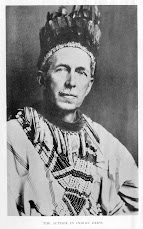

By J.D. Logan
From The
Canadian Magazine, December 1916
Essay II – Canadian Fictionists and other
Creative Prose Writers
It is unfortunate that
hitherto Canadian verse has occupied the centre of the critical stage and has
had the spotlight of sympathetic criticism focused upon it. Hardly has
Canadian fiction and imaginative prose in other genres
had even the fringes of the limelight of appreciative criticism thrown upon its
evolution and qualities. Mr. Marquis has devoted a considerable section of
his monograph to a more or less sketchy, though constructive, review of
Canadian fiction. As a bird’s-eye view of the history of Canadian fiction, and
as a succinct fresh estimate of its literary distinction and value, his review
is informing and critically sane. But even Mr. Marquis hastens to state that
“the chief glory of Canadian literature is its poetry”. The truth is that Canadian
fiction, taken in the large to include such imaginative genres
as novels, romances, tales, prose idyls, animal stories, and creative comedy or
humour, has a more distinctively nativistic origin and history, and a more
distinctively national note, than has Canadian poetry. Here I may not wait to
explain in this essay how the spotlight appreciative criticism and of consequent fame
has been deflected from Canadian fiction or imaginative prose to Canadian
poetry. I need all the available space to present fresh constructive views of
Canadian imaginative prose, and thus to signalize its real glory—which, let me
add, only in fine craftsmanship and sustained inspiration is, at its best, less
impressive, if less conspicuous, than the glory of Canadian poetry. Here,
however, before passing, I may say that the critical neglect of Canadian
imaginative prose has been due chiefly to two causes. Poetry is intrinsically a
more inviting and engaging literary species than is prose for critical
treatment and appreciation. Aside from that, foreign, as well as native-born,
critics of Canadian literature have had no really regardful eye for the
historic process. They were concerned only with individuals and literary works,
as if both were absolutely discrete entities that simply happened. Their
criticisms were merely private appreciations or personal opinions. Whoever,
then, considers Canadian fiction and other imaginative prose genres
strictly with his eye on the historic process in them,
disclosing their beginnings and evolution, will do Canadian
literature and literary criticism a genuine service. The present essay attempts
such a service.
In
the history of Canadian fiction and other imaginative prose genres I
observe a Pioneer, Colonial, or Pre-Confederation period, and a strictly Canadian,
or Post-Confederation period; and in the latter, at least so far as the novel
and the romance are concerned, first, a tentative period, and, secondly, a
constructive, systematic, or renaissance period. As a ready aid to recalling
important persons and dates in a historico-critical review of the creative
prose writers of Canada,
I
note that Canadian nativistic fiction began virtually one hundred years after
the first genuine work of English fiction had appeared, and that the original
creators of fiction, both in England and in Canada, bore the same patronymic,
or family name —Richardson. In 1740
Samuel Richardson published his “Pamela; or, Virtue Rewarded”. It is the first
specimen in English of the authentic novel; for though composed in the form of
letters, there runs through the epistles a skilfully constructed and coherent
plot; and plot is essential to the authentic novel. In 1832 Major John
Richardson, born near Niagara Falls, published his “Wacousta; or, The
Prophecy”, and, in 1840, its sequel, “The Canadian Brothers; or, The Prophecy
Fulfilled”. They are authentic novels of the romantic type, having, as they do,
respectably constructed plots, and being filled with the romance of the passion
of love, heightened with thrilling adventure and incident, and coloured with
pictures of aboriginal character and life against a background of nature in the
wild. We may, then, put it down in our mental note-book that the first
nativistic fiction, having the authentic Canadian note and having the right to
be included by the literary historian and critic in the corpus
of Canadian literature as such, appeared considerably prior
to Confederation.
The
literary annalist, no doubt, would date the beginning of fiction in Canada with
the appearance of “The History of Emily Montague” in 1769, a romance written
and published by Mrs. Frances Brooke, wife of Rev. John Brooke, Chaplain of the
British Forces at Quebec under the Carleton regime. Apart from its matter,
which is lively in movement and made sprightly with engaging characterization
and with the colour of social life and of wild nature during the decade
following the Fall of Quebec, Mrs. Brooke’s novel is imitative, being written
in the epistolary manner of Samuel Richardson. While, indeed, it affords
pleasurable reading, “The History of Emily Montague” is to be valued rather as
a social and historical document, in as much as it faithfully depicts the
customs and manners of the times in British North America after the conquest of
the French. As literature and as history the book is strictly Colonial. There
were other Colonial writers of imaginative prose. They are, however, to be
accepted as quasi-fictionists; for they had no genius for invention, characterization,
and realistic nature-painting in words. Including Mrs. Brooke, all the writers
of fiction in Canada, preceding John Richardson, were, as Mr. Marquis phrases
it, “birds of passage”, and have no right to be considered as producers of a
Canadian nativistic fiction. As “birds of passage”, they have merely a right to
have their existence and work noted in an inclusive Literary History of Canada.
Now,
as Samuel Richardson was the creator of the English novel as such, that is, of
fiction with plot, and as Sir Walter Scott was the creator of the English
historical novel or romance, so James Fenimore Cooper was the creator of the
distinctively American historical romance, and John Richardson was the creator
of the distinctively Canadian historical romance. Moreover, all four were
equally original, independent, and individual; Samuel
Richardson’s novels were a pure invention in literary species; Scott's
historical romances were also a pure invention in literary species; and as
Scott had no influence on the inspiration and the methods of Cooper, so, as 1
shall show, contrary to received opinion, Cooper had no influence on the
inspiration and the methods of John Richardson. Unless a constructive critic
can show the originality and independence of John Richardson as a literary
creator, the critic cannot mark a true beginning of Canadian nativistic
fiction, trace an evolution in it, estimate its literary value, fix its place
in the corpus of English, as well as
Canadian literature, and thus disclose its relative distinction and glory when
compared with British and American fiction, or when, on the other hand,
compared with Canadian nativistic poetry. Let us, then, consider the formative
influences which shaped and inspired the genius of John Richardson, the first
Canadian novelist as such, the creator of the Canadian nativistic historical
romance.
Richardson
was born near Niagara Palls in 1796 (seven years after Cooper) and spent his
childhood and early adolescent days till he was sixteen years of age, that is,
up to the outbreak of the War of 1812, in the vicinity of the Falls and of
Detroit. On the outbreak of the war, he enlisted in Brock’s army. Up to that
time, young Richardson, during his most impressionable and receptive years, was
entertained by his grandparents and parents with tales of Pontiac’s siege of
Detroit, and stories of the thrilling and romantic and tragic events in the
history of the Niagara and Detroit districts—events which are surely amongst
the most enthralling and stirring in the vividly romantic history of Canada
and the United States. These early days of Richardson’s were thus replete with
rare and unique formative influences; they created in him the love of romance,
of the heroic past of his own country, and later, when he came to write,
afforded him the inspiration and the material really to write authentic
Canadian historical novels or romances.
Two
other formative influences, besides those exercised over his heart and
imagination by his grandparents and parents, have been noted by certain
critics as determining Richardson’s genius, inspiration, and literary methods.
In the War of 1812 he had fought side by side with the noble Indian warrior
Tecumseh. Further, on his own confession, he had, as he puts it, “absolutely
devoured three times” Cooper's Indian romance, “The Last of the Mohicans”. Some
critics, therefore, hold that Richardson was a mere imitator of Cooper: that,
first, he studied the mind and ways of Indians at second-hand in the pages of
Cooper’s romance, and that, secondly, he acquired the art of writing fiction
from Cooper’s volume. There is not any real ground for such beliefs. Mr.
Marquis rightly holds that as a historical romancer Richardson was original
and independent. I hold the same belief, but I do so for reasons which differ
from those that Mr. Marquis and others advance. On the first count, that
Richardson got his knowledge of Indians at second-hand from Coopers pages, I
submit that such an opinion requires an absurd anachronism to make it possible
and true. The War of 1812. during which Richardson fought side by side with
Tecumseh, began fourteen years before the publication of “The Last of the Mohicans”,
(1826), or long before Richardson could have read a page of Cooper.
Richardson’s genius was romantically formed in his early days; and during his
association with Tecumseh he came to know Indian psychology and character at
firsthand. That is indisputable. Again, on the second count, that Richardson
acquired the art of novel-writing from Cooper, I submit that the Canadian
romancer had learned the art of novel-writing, and had published novels
some years before be published “Wacousta”. There was, for instance, his
“Ecarte; or, The Salons of Paris”, published in 1828. Rut this is a sort of
demi-monde novel, dealing with the evils of gambling, and, of course, far from
the romantic passion, thrilling incident, and all the colour of life and nature
that appear in Richardson’s “Wacousta” and “The Canadian Brothers”. Possibly
Richardson may have got from his reading of Cooper some “coaching” in the mere
mechanics of writing romance. Yet, when we compare the diction, sentential
structure, descriptive epithets and imagery, and the general style of the two
romancers, Richardson, if not a better plot-maker than Cooper, is the superior
craftsman and stylist, a fact which is proof presumptive that the Canadian romanancer
developed independently his own mechanics of literary composition. Finally, in
the fine art of character-drawing, Richardson is more veracious and incisive
than Cooper. When we compare the American novelist’s characters with those of
the Canadian, we find that Cooper’s are more like “studies” from books than
pictures drawn from real life, whereas Richardson’s Indians are very near to
the real Indian, very life-like: the heroic in them is heroic enough, that is
to say, human and natural. Richardson’s Indian characters, then, are original
creations — absolutely his own. Also his own are the other characters
(soldiers, fur-traders, French Canadians, etc.), the plots, all the stirring
incidents and the colour of the Canadian background from nature. Of his
romances, “Wacousta” and “The Canadian Brothers”, the only aesthetic criticisms
worth while making are that not infrequently Richardson forces the dramatic in
them into the melo-dramatic, that he puts into the mouths of his characters
utterances which are unnatural or not in keeping with the position and
circumstances of the speakers, and that he suits his historical facts to his
own purposes.
In
sum, then, since Richardson had his genius romantically formed, and had engaged
in the art of fiction, long before he had read Cooper, the only possible
influence Cooper could have had on Richardson was to incite him to emulate the
American romancer. Emulation, incited by a contemporary author, does not imply
imitation, and has no significance in original literary creation. Taken by and
large, John Richardson was the first creator of Canadian nativistic fiction as
such. He had first-rate powers of invention, was a respectable craftsman, and
produced at least two original romances that are worthy to be included in the corpus
of general English literature, and to have a distinctive niche in the corpus
of Canadian nativistic literature.
Contemporary
with Richardson, a man of greater creative genius and versatility, who, in
fact, became the foremost native-born writer of his time in British North
America, gave to the world a species of the fiction of characterization and of
the criticism of society and manners that for originality and enduring appeal
to all classes is the most remarkable produced by a Canadian man of letters,
and amongst the most remarkable produced by any modern man of letters as such.
This man was Thomas Chandler Haliburton, who, if he did not absolutely create a
species of fiction without plot interest, at least gave it new form and
potency, as he did, in those ingenious volumes which have Sam Slick as their
chief inspirer and central character. Though born in Nova Scotia, Haliburton’s
genius was indigenous, not so much to Nova Scotia or to Canada, as to the
world; and the fiction he produced belongs, not so much to Canadian nativistic
literature and to general English literature, as to world literature.
It
is as a systematic creative humourist, embracing, as it were, in one genius the
gifts of Benjamin Franklin, Charles Dickens, Artemas Ward, Josh Billings, and
Mark Twain, that Haliburton has won a unique and permanent
place in Canadian, English, and world literature. This is the only angle from
which it is worth while for genuine criticism to view and estimate the genius
and creative prose of Haliburton. Those who deal in literary dominoes, and who
call such diversion criticism, may pother with the fact that Longfellow, by his
own confession, actually did read Haliburton’s account of the expulsion of the
Acadians, or with the possibility that Parkman may have read the whole of
Haliburton’s "Historical anti Statistical Account of Nova Scotia”.
Longfellow and Parkman merely turned to Haliburton, just as Shakespeare,
Scott, and Tennyson turned to Plutarch, the Chroniclers, and the “Morte
d’Arthur”, as “sources” of material for plays, romances. and idyls; and the
“influence” of Haliburton on the creative genius and invention of the American
poet and historian was as insignificant as that of the author of the “Morte
d’Arthur” on the poetic invention of Tennyson. But it is very highly significant
that Haliburton was the author of a distinct—and alas! extinct—type of
creative comedy or humour, that he was the foremost systematic humourist of
his time on the North American continent, that he was in his day the supreme
aphorist and epigrammatist of the Englishspeaking peoples, and that his wit
and wisdom remain part of the warp and woof of modern world literature. In
comic character-drawing Haliburton takes a place beside Cervantes, Dickens,
Daudet, and Mark Twain. His Sam Slick, and even his minor characters, are amongst
the best imaginative creations of
modern fiction, Sam Slick himself being
as unique—individual, real, human, and fascinating —as Don
Quixote, Pickwick, Tartaran or Huckleberry Finn, while being distinguishable
from these others by aphoristic speech that
in form is brilliant wit and
humour, but that in substance is
enduring wisdom.
Now,
it is this abiding philosophical quality of Haliburton’s wit and humour, as we
get it chiefly in the utterances of Sam Slick, that constructive criticism
seizes on to remove the superstition which Artemns Ward first created by
declaring that Haliburton was “the founder of the American
school of humour”, and which so acute and well-informed a Canadian
critic as Mr. Marquis has gone to pains to perpetuate by submitting that
“American humour received its first impulse from ‘Sam Slick’; and Haliburton
was, moreover, the first writer to use the American dialect in literature.
Artemas Ward, Josh Billing and Mark Twain are, in a way, mere imitators of
Haliburton, and he is their superior”. There is not a single grain of truth in
any of these claims, except possibly that Ward, Billings and Twain imitated or
adopted Haliburton’s so-called American dialect, if a manufactured potpourri
of Yankee localisms and slang and mis-spelled diction can
justly be called “the American dialect”. Haliburton created the shrewd Yankee
pedlar and humourist, Sam Slick, and then put him as a “character”, and his wit
and humour, uttered in a dialect which virtually existed in New England, into
literature. That is all Haliburton ever had to do with American humour. He
certainly was not the founder or the father of the American school of humour.
The real “father” of American humour—that
is, the humour of sheer exaggerated nonsense, having on the face of it
seriousness and veracity—was
Benjamin Franklin who in
1765, or thirty years before Haliburton was born, produced the first example of
what is popularly meant by American
humour. The example is to
be found in a letter by Franklin to one of the eighteenth century London newspapers
to offset the idiotic views which Englishmen
then held about the British colonies,
including Canada, in America. I quote from the letter in
part:
“I beg to say that all
the articles of news that seem improbable are not mere inventions. The very
tails of the American sheep are so laden with wool that each has a little car
or wagon on four little wheels to support and keep it from trailing on the
ground. Would they caulk their ships, would they even litter their horses with
wool, if it were not both plenty and cheap. . . . Their engaging three hundred silk
throwsters here in one week for New York was treated as a fable, because,
forsooth, they have ‘no silk there to throw’. Those who make this objection,
perhaps do not know that at the same time the agents from the King of Spain
were at Quebec to contract for one thousand pieces of cannon to be made there
for the fortification of Mexico. . . . And yet all this is as certainly true,
as the account said to be from Quebec, in all the papers last week, that the
inhabitants of Canada are making preparations for a cod and whale fishery ‘this
summer in the Upper Lakes'. Ignorant people may object that the Upper Lakes are
fresh, and that cod and whales are salt water fish; but let them know, sir,
that cod, like other fish when attacked by their enemies, fly into any water
where they can be safest; that whales when they have a mind to eat cod, pursue
them wherever they fly; and that the grand leap of the whale in the chase up
the Falls of Niagara is esteemed by all who have seen it as one of the finest
spectacles in nature.”
That
was written by Franklin in the eighteenth century, and it is written in the
newspaper style of Addison. Yet any well-read student of the history of
literature who did not recognize the authorship would likely credit it to Mark
Twain. But Haliburton, Ward and Billings wrote their humour in a specious or
perverted dialect. How, then, can it be said, with any plausibility, that
Haliburton “fathered” or “gave impulse” to American humour? Moreover, Franklin
began early the publication of “Poor Richard’s Almanac,” a quasi-literary
periodical which gave vogue in America to that sort of aphoristic or humorous
wisdom which is also uttered by Haliburton’s chief character, Sam Slick. It is
more than probable that Haliburton had read “Poor Richard”. Are we to conclude
that Franklin is the literary “father” of Haliburton as a humourist and
aphorist, and that Sam Slick’s epigrams
are an imitation of “Poor Richard’s”
bits of practical wisdom? There
is, in fact, no plausibility in either
view that Haliburton is the “father”
of American humour or that Franklin
is the “father” of Haliburtonian; that is, Canadian humour.
Possibly Haliburton got some “coaching”
in the methods of humour from Franklin.
Still,
Haliburton created Canadian nativistic humour—and
has left no successors. He was the first systematic humourist of the Provinces
that have become the Dominion of Canada—original
in time and original in inventing the humorous character, Sam Slick, and in
being the first to use the so-called American dialect as speech for wit and
humour, and to employ wit, wisdom and kindly satire—not,
note, exaggerated nonsense after the American manner—as
humour. And so Thomas Chandler Haliburton, a native son of Nova Scotia,
appears as the foremost man of letters of the Colonial Canadian period who had
first-rate creative genius and who has won a unique and permanent place, not
only in Canadian and in English literature, but also in world literature. He is
the only native-born Canadian writer to whom we can justly apply the epithet
“great”. As Mr. Marquis puts it: “Of him we can say, as Ben Johnson said of
Shakespeare—‘He is not of an age,
but for all time’ ”.
After
Richardson and Haliburton there were no Colonial or Pre-Confederation
fictionists of any constructive significance in Canadian nativistic letters.
The first stage of the new constructive period in Canadian fiction began with
William Kirby’s historical romance, “The Golden Dog” (“Le Chien d’Or”),
published in 1877, that is, ten years after Confederation, or twenty years
before the publication of Roberts’s “In Divers Tones”, which inaugurated the
First Renaissance in Canadian nativistic and national poetry. It may be objected
that because Kirby was born in England, he is not rightfully to be regarded as
a Canadian. He came, however, to Canada when he was but fifteen years of age,
was resident in Canada for forty-five years before he produced and published
“The Golden Dog”, and chose the theme, setting, and colour of his romance from
Canadian history and social life. Essentially, therefore, Kirby was a genuine
Canadian man of letters. But it is not aesthetically or as a work of artistic
fiction that Kirby’s romance “The Golden Dog” is important, but in its
constructive and inspirational influence on other Canadian fictionists. In
that regard it is more important than Richardson’s “Wacousta”, and better
entitled than Richardson’s romance to a permanent place in the corpus
of Canadian literature. In “The Golden Dog” Kirby went back for his inspiration
to the romantic and heroic past of Canada, and thus brought to the notice of
future fictionists the wealth of novelistic material that lay in the unknown or
the forgotten Canadian past. In short., Kirby and “The Golden Dog” were the
literary progenitors of a series of romances that have a Canadian historical
basis and Canadian incident and colour. While his own historical romance was a
tentative production, that is, not succeeded by other romances on Kirby’s
part, “The Golden Dog” was, as it were, the harbinger of the spring and summer
that were to be in Canadian nativistic and national fiction.
The
systematic Renaissance in the scope, themes and technic of Canadian fiction
and other imaginative prose began about a decade after the Renaissance in
Canadian poetry, and resulted in an impressive body of Canadian nativistic
fiction in all of the chief genres—novels,
romances, tales, prose idyls, animal stories and social satire and humour. Here
I may merely mention the most significant names in the Renaissance period of
Canadian fiction. I lead off with Miss Marshall Saunders, who in 1889 published
her “My Spanish Sailor”, whereas Mr. Marquis gives preference to Sir Gilbert
Parker and his “Pierre and His People”, published in 1890. Parker is
indubitably the most eminent of Canadian fictionists, but in scope he tends to
be Imperial, rather than Canadian, even in those novels which have a Canadian
historical basis, setting and colour, as, for instance, in his “The Seats of
the Mighty” (1896). Miss Saunders is pervasively Canadian, quite as inventive
as Parker, and technically a better craftsman than he. I might have led off
with Mr. W. D. Lighthall’s “The Young Seigneur”, published in 1888, were it not
that this work is a socio-political study and not a genuine novel. In romantic
fiction of the Renaissance period, the salient names, then, are Miss Saunders,
Sir Gilbert Parker, Charles G. D. Roberts, Wilfred Campbell, Duncan Campbell
Scott, Charles W. Gordon (Ralph Connor), Edward W. Thomson, J. Macdonald Oxley,
W. A. Fraser, Mrs. Grace Dean MacLeod Rogers, Miss Alice Jones, Mrs. Carleton
Jones, Norman Duncan, and Arthur Stringer; and beginning again with Lucy M.
Montgomery (Mrs. Ewan MacDonald), the still later generation of Canadian
fictionists, as, for instance, Alan Sullivan, Peter MacFarlanc, Mrs. Isabel
Ecclestone MacKay, Mrs. Virna Sheard, the really creative artist amongst them
all being the author of “Anne of Green Gables”. In another genre
of fiction, namely, social satire and humour, Sara Jeanette Duncan (Mrs.
Cotes), stands by herself as the foremost Canadian woman of letters in her
special field, just as Miss Saunders stands by herself in the fiction of the
humanitarian animal story, as Ernest Thompson-Seton and C. G. D. Roberts
remain sui generis
in the fiction of the psychological animal story, and as Stephen Leacock
remains alone in creative literary comedy or humour and wit. All the foregoing
Canadian fictionists, save “Ralph Connor”, whatever be the genre
they have essayed, have been moved to write by artistic
inspiration and aims, and, on the whole, have succeeded admirably. Some of
them have won world-wide reputation for first-rate invention, enlivening
incident and colourization, and incisive characterization; others have
achieved international reputation; and others are on the way to appreciation
wider than what they receive in their own country. Taken all in all, they have
created a very respectable body of fiction and imaginative prose, quite
worthy, if it does not shine with equal glory, to have an honourable place
beside the body of Canadian creative poetry.
In
this essay I have applied the historico-critical method to the appreciation and
evaluation of Canadian nativistic and national fiction or imaginative prose,
signalizing only constructive authors and movements. From Richardson and
Haliburton to Kirby, and from Kirby to Miss Saunders and Sir Gilbert Parker,
and then onwards to Lucy M. Montgomery and her confreres
or contemporaries we have noted a genuine evolution in literary species and
eventually the systematic production of a body of prose that has aesthetic
beauty or dignity, artistic structure, and imaginative and spiritual appeal.
Some of it will have a permanent place only in Canadian literature; some of it
is worthy to be included, as it is, in the general corpus
of English literature; and all
the best of it, despite the
contempt of those myopic critics who find literature only in antique tomes and
literary beauties only in the supreme masters, is genuine literature. I hold
to that—unswervingly.